

You are on the right track if you are looking for some expert lighting tips for product photography rather than obsessing over high-end cameras and expensive lenses.
When the main focus is on capturing beautiful product images, lighting is the most important parameter. It is not surprising that a wrong background selection can lead to poor lighting, resulting in flawed visuals.
This blog presents a comprehensive guide that reveals the proper product photography lighting techniques that can make your product photography a success. So, let’s get started!
Understanding Lighting Basics
A product photographer must have the basic knowledge of lighting to turn typical visuals into magical and awe-inspiring.
Light Direction
Light direction plays a pivotal role in shaping the highlights and shadows of product photos. It can affect the overall tone, mood, and atmosphere. You can set up lighting from the front, side, or back area.
Light Intensity
Light intensity determines the brightness level of the product. It also impacts the exposure, contrast, and overall image quality. An appropriate technique enables you to make the product details visible clearly.
Soft vs. Hard Light
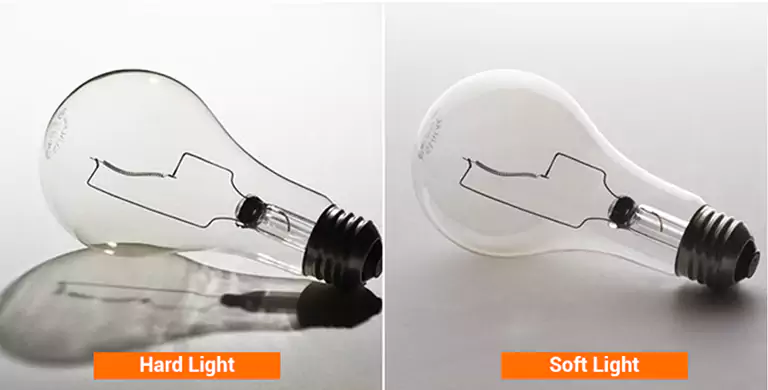
Soft or diffused lights are a gentle, diffused effulgence source that produces minimal hard shadows. There is a smooth and gradual transition between the light and shadow.
- Soft effulgence softens dark parts and erases visible edges
- They create a natural, pleasing aesthetic with reduced contrast
- Diffused refulgence highlights product details, texture, and colors better
- They are ideal for garments and beauty products
Hard illumination kits offer direct and intense refulgence sources. They are strong and directional, mainly focusing on the object.
- Hard refulgence creates strong shadows and lots of contrast
- They produce harsh and well-defined shadows
- High-contrast luminous showcases the product’s texture, shape, and details
- They are perfect for jewelry, watches, or detailed gadgets
Natural vs. Artificial Light
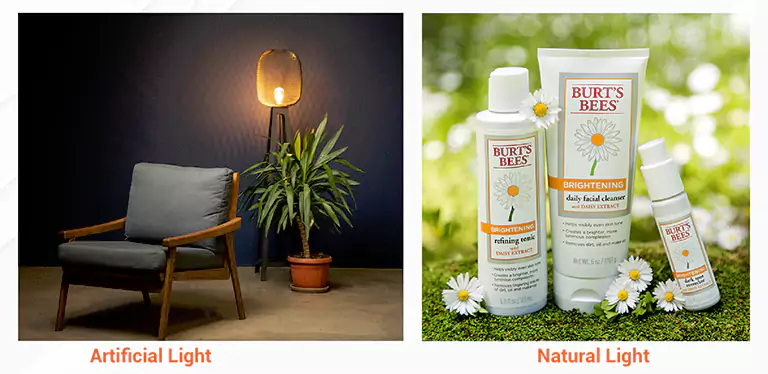
You can use natural or artificial effulgence for product photography. It depends on your preferences and what you want to highlight.
Natural luminosity is the best choice for soft, warm, and even illumination. It is perfect for food, plants, lifestyle, art, etc.
Artificial refulgence is a better choice for photographers who want consistent and more control over illumination. They are great for electronics, furniture, home decor, etc.
Different Types of Lighting for Product Photography
Primary Lights
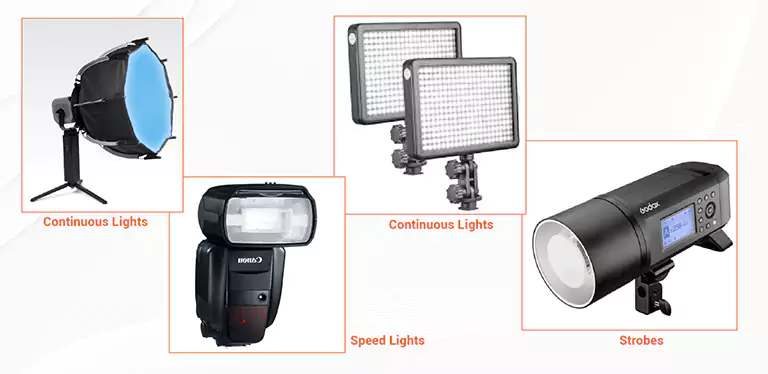
They are known as the primary source of effulgence. Photographers place them at a 45-degree angle from the camera to create natural, flattering illuminations. The shadows and highlights look well-balanced.
- Speed Lights: Small, portable flash units that are perfect for freezing motion and capturing fast-moving subjects
- LED Lights: Solid-state refulgence that offers better control over brightness and color temperature
- Strobes: Stroboscopic lamps that produce ample bright effulgence and are versatile to use in different temperature conditions
- Continuous Lights: Great for real-time visualization without flashing on/off
Fill Lights
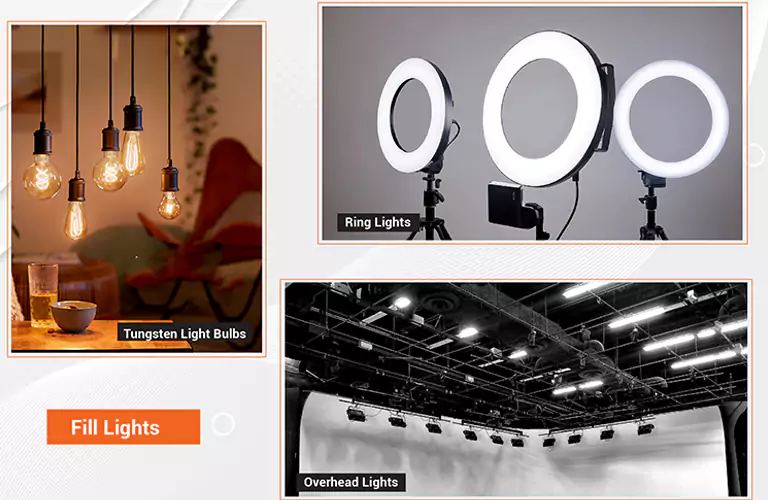
This type of effulgence is mainly used for softening shadows and balancing the overall illumination. They add extra refulgence to the primary source. Photographers place them opposite the main effulgence.
- Tungsten Light Bulbs: Produce a warm, natural glow and maintain better color accuracy
- Ring Lights: Circular luminaires that provide a balanced and even distribution of light
- Overhead Lights: Improve texture, contrast, and depth by illuminating subjects from unique angles
Backlights
This type of effulgence is placed behind the product. It creates a unique silhouette or halo effect as the refulgence source shines towards the camera. Backlights separate the main subject from the background to maintain the focal point. You can use LEDs, CCFLs, fiber-optic luminaires, or even sunlight as backlights.
Light Modifiers
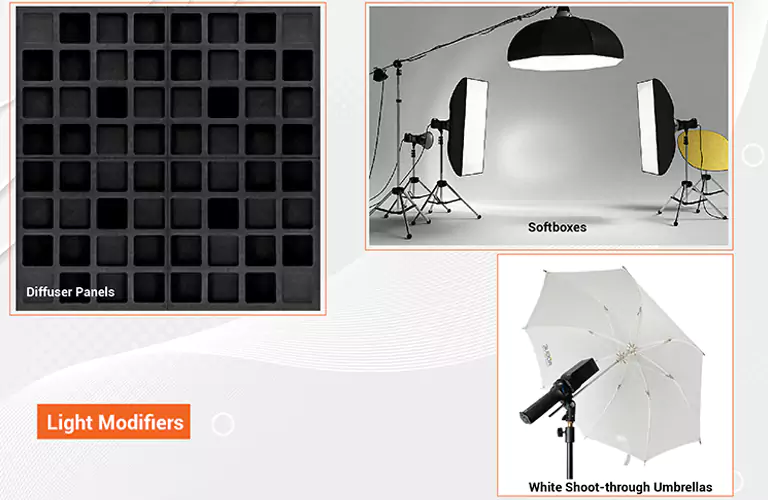
Light modifiers are one of the best choices when it comes to achieving a specific mood or atmosphere. This attachment enables you to shape and control the primary and fill lights effectively and highlight essential features of a product.
- Softboxes: Creates soft and diffused illumination while complementing the product’s features
- White Shoot-through Umbrellas: Produce soft quality illumination and wraparound effects while flattering the product’s main subject
- Diffuser Panels: Creates a more natural and even Illumination while allowing the subject to relax without squinting.
Light Reflecting Tools
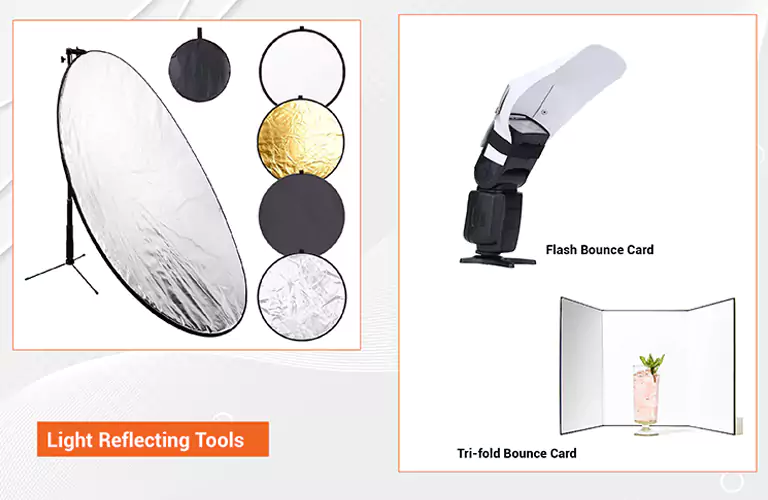
If you want to produce more balanced, evenly lit product images, light reflecting tools are an excellent choice. They showcase the product with well-defined edges and accurate colors and textures.
- Reflectors: This photography tool redirects or bounces the primary effulgence source, minimizes reflections, and softens shadows. This extra luminous source makes the key effulgence less harsh and obvious.
- Bounce Cards: This is a simple, flat piece of material that balances the contrast and exposure of product images. Product photographers place it at the opposite 45-degree angle.
How Does Background Selection Affect Lights in Product Photography?
A specific background color, style, or material may play a pivotal role in how illumination interacts with a product. This can affect the overall illumination environment and product visual appeal. Let’s understand how.
Contrasting or Opposite Colors
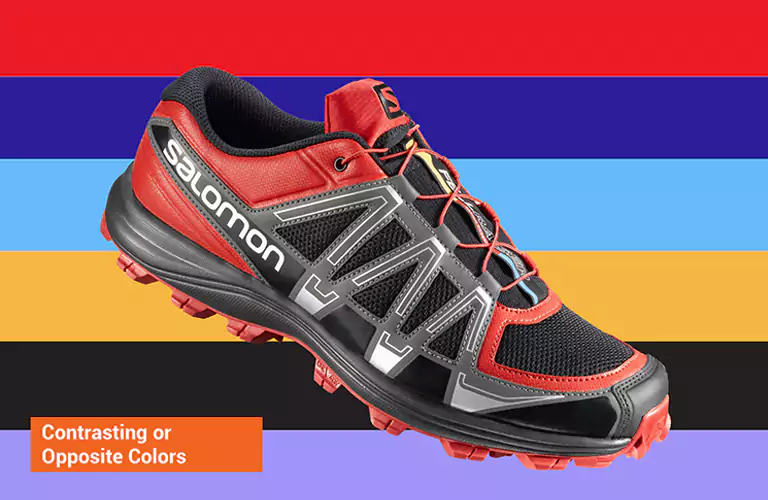
When you use an opposite color of a product in the background, it affects the overall lighting, such as color temperature, refulgence reflections, etc. For example, setting up a blue background against a red-colored product can affect the warmth or coolness of the visual. It makes the product more focused.
Neutral Tones
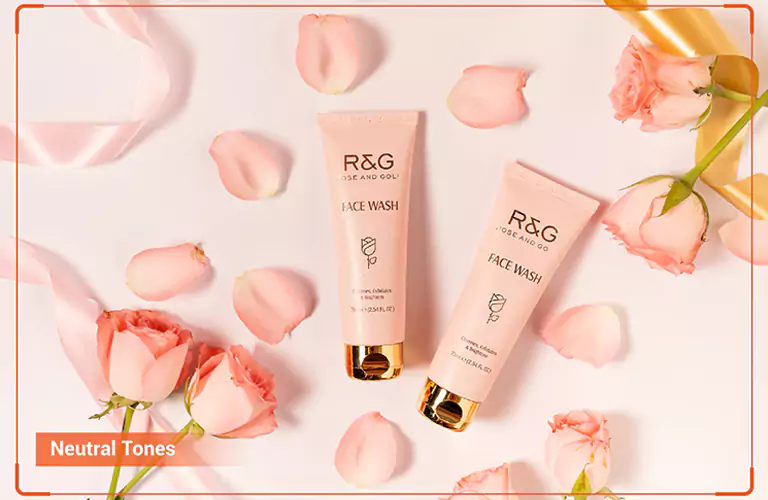
Neutral background colors like white, off-white, gray, or beige reflect illumination evenly. They help illuminate lights consistently across the item. You won’t have to worry about unnecessary color casts. This enables photographers to highlight the actual colors and details of the product.
Textured or Patterned Backgrounds
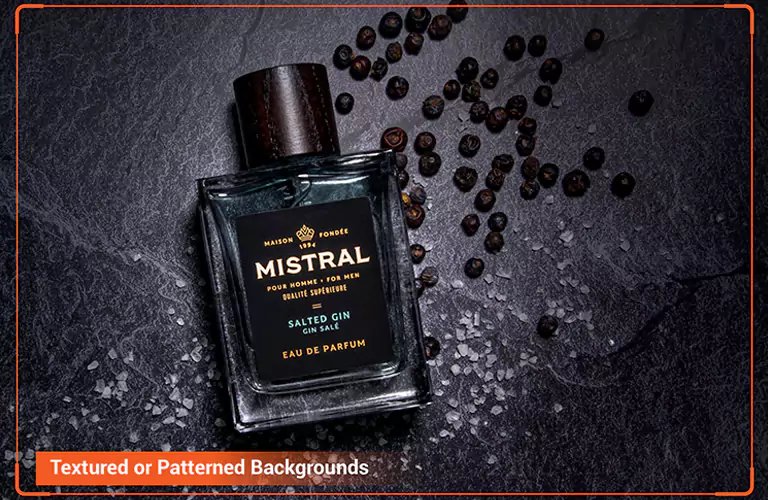
When it comes to adding depth and a tactile dimension to product visuals, textured or patterned backdrops can play a key role. This type of background makes a deeper connection with the illumination by creating complex shadows or highlights. It creates a sense of balance and harmony in product visuals.
Pro Lighting Tips for product photography
Sometimes, even pros fail to play with luminosity appropriately. Knowing the proper techniques is the key. You have to consider different aspects to make your product photographs pixel-perfect.
01. Effulgence Size matters!
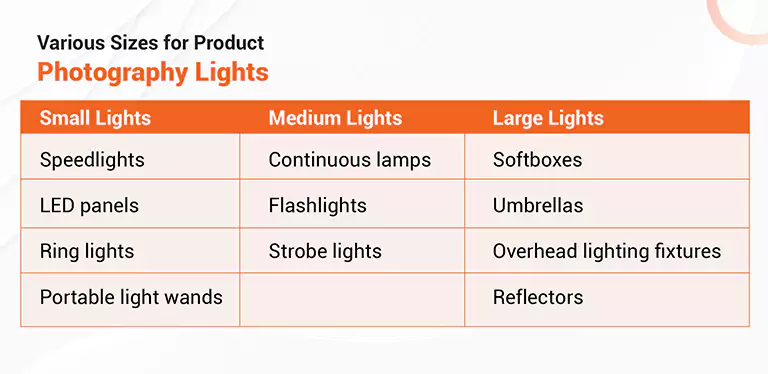
Light size can affect the softness level and the shadow quality in product photography. For instance, larger lights generate softer shadows, whereas smaller ones produce harsher shadows.
| Small Lights | Medium Lights | Large Lights |
| Speedlights | Continuous lamps | Softboxes |
| LED panels | Flashlights | Umbrellas |
| Ring lights | Strobe lights | Overhead lighting fixtures |
| Portable light wands | Reflectors |
02. Play with the Light’s Angle Carefully
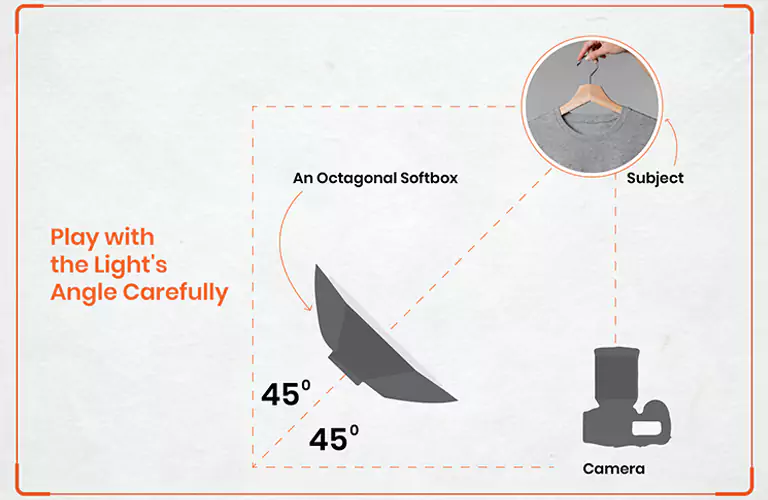
Your effulgence angle can make profound impacts on photo quality and overall look. You can place lights from the side, back, front, or above. The key is finding the optimal one. For example, a 45-degree angle is a mid-position between the side and front views. The primary advantage is creating a balanced and even distribution of lights.
03. Place Lights Technically
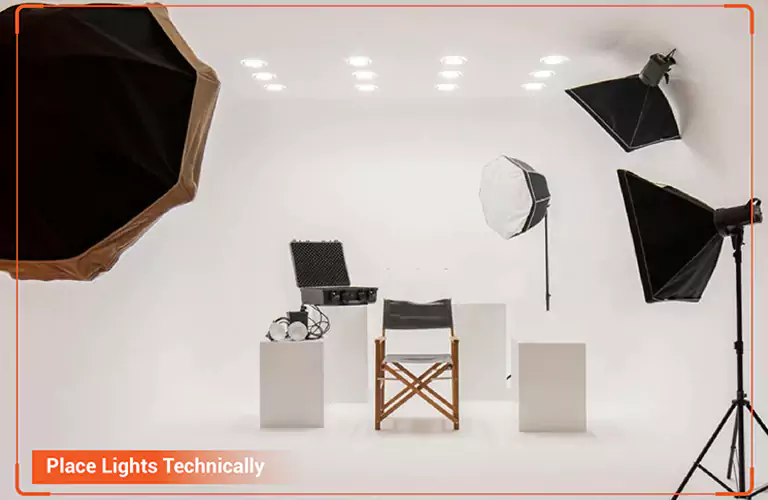
Should you keep your lights too close to the product or further away? How much distance do you maintain? There are no hard-and-fast rules. Placing the illumination kit very close to the subject creates fewer shadows. But keeping it away makes it more challenging.
04. Utilize V-Flats to Shape Shadows
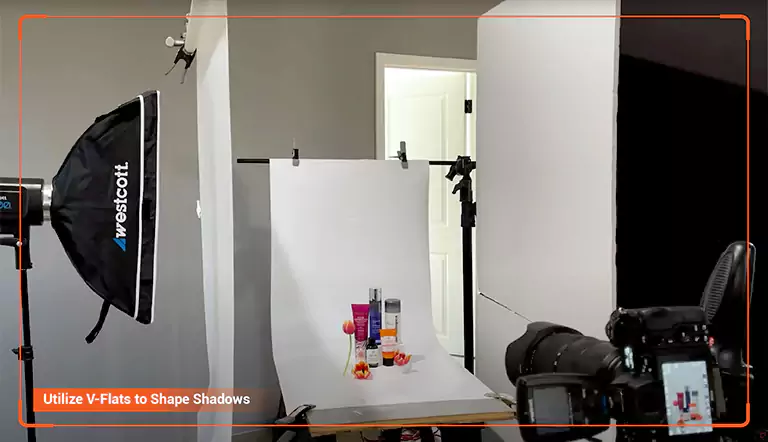
Are you thinking of manipulating lights, like adding a subtle or negative fill to the product photography? You can use V-flats to block lights and shape or fill shadows. They act like a flag to spread lights over a wide area. Besides, you can use this large movable piece of foam board as a background to achieve more focused and simpler shots.
05. Employ Rim Lights
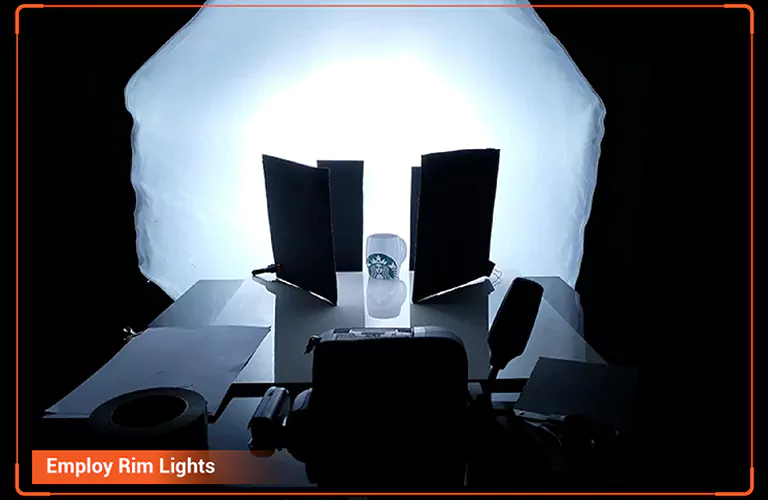
Do you want to illuminate the edge of your product’s subject? You can use rim Lights placed at the back of the product to expose the outline or rim of your item. It creates a halo or outline effect. Add a grid or snoot to limit the luminous spread and include better contrast in images if using any backlights.
06. Leverage Natural Light
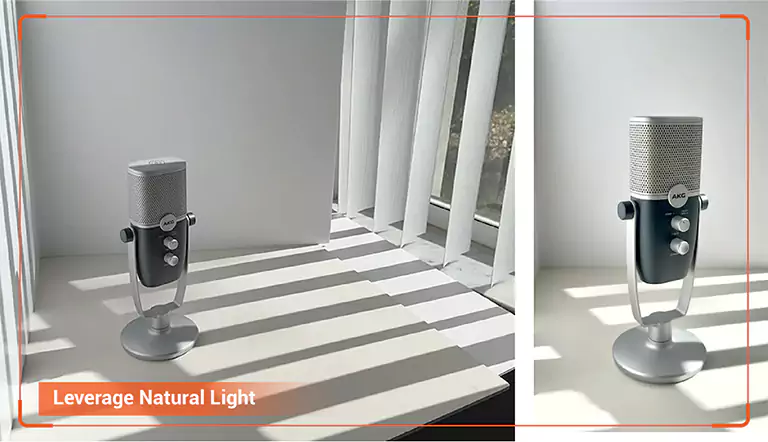
Sometimes, free options can be a turning point in your product photography journey. Set up your studio near a north-facing window to get flat, soft, diffused light from sunlight. Add sheer white curtains to the window to diffuse harsh light and include ambiance to shots. You can also use a large silver reflector to bounce a substantial amount of light into a specific area.
07. Experiment with Light Tents and Shooting Tables
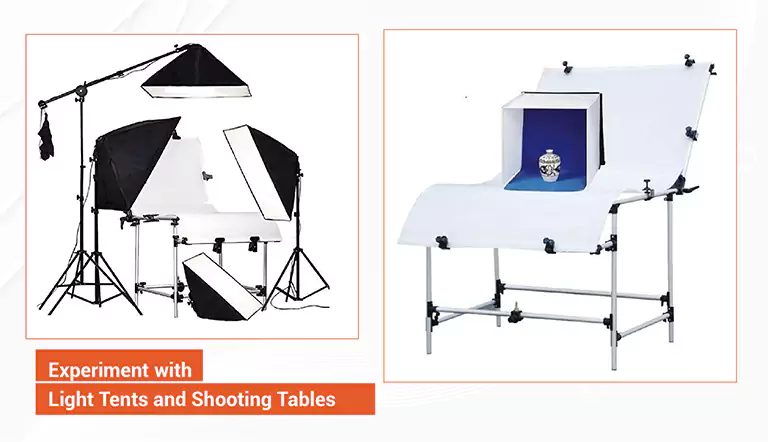
Are you shooting products like jewelry, electronics, or craft items? If so, you may need a more controlled environment. A light tent comes in handy to minimize reflections and harsh shadows. A shooting table will add extra value. It has a translucent curved surface to create a seamless, evenly lit background.
08. Play with On-camera LED Panels
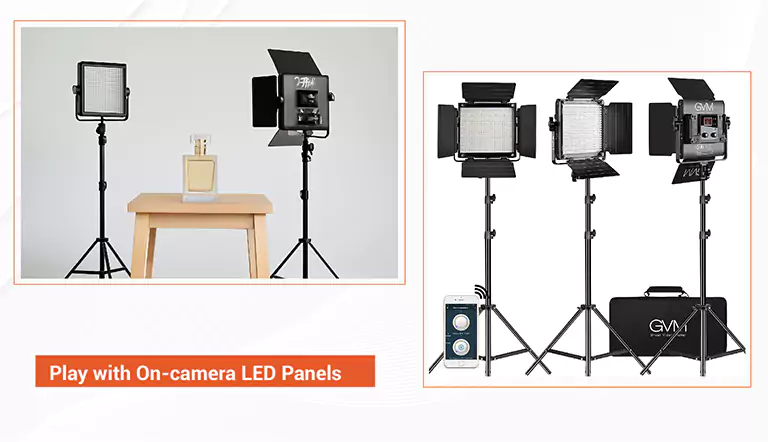
Have you heard of on-camera LED panels? This compact effulgence is mounted directly onto the camera to create consistent lighting. It enables photographers to light up the main subject without overdoing it. Your target audience can discover different dimensions of the product image.
How to Choose Lights for Product Photography?
An appropriate refulgence choice can help you maintain true-to-life product representation. The following are some key techniques for choosing the proper illumination kits.
01. Lighting Type
You can choose a wide range of lights, like speed lights, strobes, continuous lights, overhead lights, etc. Select one or multiple options that can suit your needs and budget. However, both main source lights and supporting ones should be used to get the best result.
02. Product Type
Not all products require the same illumination. You have to consider its material, textures, and other vital attributes. Most importantly, determine what you want to highlight during your photoshoot. Plus, consider what your target audience wants to see in the specific product.
03. Photography Style
You can use different photography styles like individual shots, close-up shots, group shots, lifestyle shots, etc. They don’t need the same type of illumination. For example, flashlights with reflective umbrellas are the best choice for group shots. However, soft diffused lights work better for close-up shots.
04. Portability
Photographers sometimes need to utilize both indoor and outdoor environments to achieve the best results. Or you might be hopping from one studio to another every week? In such cases, small and portable lights are the best choice. They often run on batteries or have plugs. Otherwise, it will be a hassle lugging bulk lights to multiple locations. Or at least choose those ones that are easy to install quickly and easy to transport.
05. Camera and Lenses
What type of camera are you using? How powerful is your DSLR camera? How versatile are your lenses? Your camera’s capabilities and specific lens can significantly affect the lighting effect. You must understand your camera’s sensor size, ISO range, and lens characteristics. These attributes can help you select a specific type of lighting and its intensity level.
Frequently Asked Questions about Product Photography Lighting
-
What is the best way to get good lighting for product photos?
Combining natural and artificial lights is the best practice for taking better product photos. It will help you create a more balanced and consistent illumination.
-
What are the best lighting angles for product photography?
Most experts recommend keeping the camera angle anywhere from 25 to 75 degrees. It can be anywhere from a straight-on to overhead position.
-
Should you use continuous lights or strobes for real-life adjustments?
Continuous lights are better for real-life adjustments as you can quickly adjust the light placements and power while tracking the final output.
-
Where can V-flats be placed to fill shadows in product photography?
Keeping V-flats at the opposite end of the primary light source is best to fill shadows and create a more balanced exposure.
-
How much distance should be maintained between the key light and the object?
Experienced photographers recommend maintaining at least 3 feet between the key light and the object. It enables you to achieve a softer, more natural-looking light.
Closing Thoughts
These effective lighting tips for product photography are a holistic process of getting the right light through a variety of tools and techniques. It doesn’t end with choosing a fast lens with a wide aperture to produce good quality images in limited light.
Edit RAW images properly in post-production to match your brand. Use a wide range of lighting options, including key lights, fill lights, and back lights, to get the best results.
Finally, your final product images experience increased engagement as soon as they are served, and that’s when these product photography lighting techniques will echo their effectiveness immediately.