

Changing the behavior of visitors towards products. This is the main reason why visual search optimization (VSO) is taking over the eCommerce industry.
Still looking for a product by typing its name in the search engine? Know that this tendency is shifting towards searching by uploading its image. And, surprisingly, this is happening very quickly!
Besides search engines, this groundbreaking change follows social media and eCommerce stores. Even AI itself is being trained up for this. A study by Intelliarts has revealed that the global visual search market is on track to grow to $33 billion by 2028.
To dissect this evolution, our analysis has identified 10 reasons that collectively determine the necessity of optimizing visual search in the eCommerce field in 2026.
Key Takeaways
- Clear understanding of visual search optimization terminology and its techniques
- The reliance of search engines, social media, and eCommerce stores on images and videos
- Frequent adoption of AI in visual content
- Demand for Interactive interfaces: Real-time product discovery and virtual try-ons
What is Visual Search Optimization: How it works
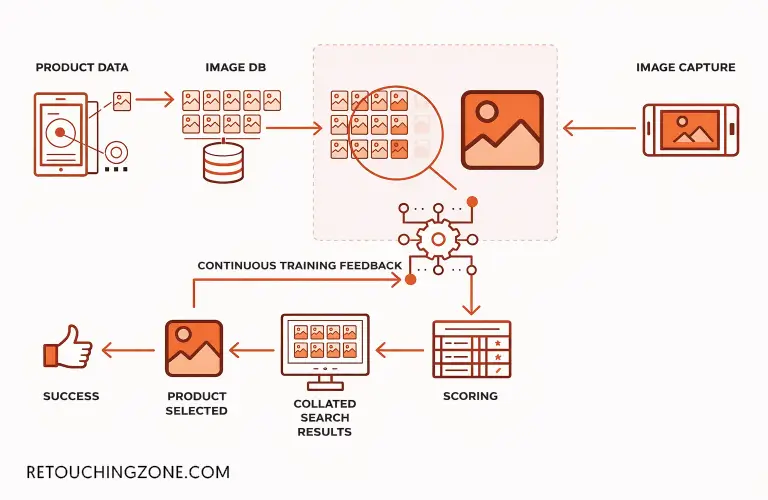
There is something on your mind, but you can’t name it. You type it in the search bar and write a short paragraph to explain it. Even then, it seems like the thing that is bothering you is not getting completed.
Surely you are familiar with this feeling. This whole attempt is wrapped in a problem, and the perfect solution to it is visual search, where all you have to do is just show the image to the search engine.
Now, think of yourself as a seller of a product or service. Then, you need to create your website and the content within it in such a way that your potential customers find your site right when they search for it using visuals. The fancy name for this technique is visual search optimization.
For example, when you click on an image on the Google homepage, it takes you to the Google photo search. There, among other options, there is also an image attachment.
Just after you upload the image file here, Google shows you several other similar images in its search results. This is very basic; you don’t often get what you search for.
Visual search optimization for e-commerce
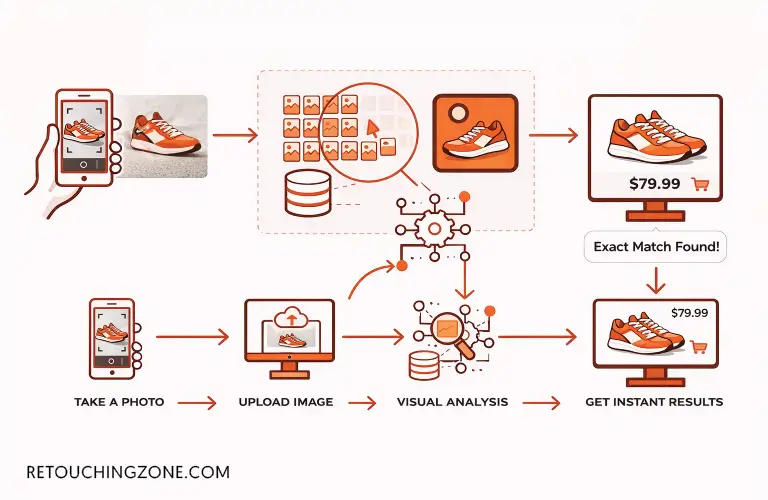
Suppose you see a pair of sneakers somewhere, take a picture of them with your phone. Then you upload it to a store, and in the blink of an eye, it shows you the exact product they have in stock.
This is exactly what the visual search system for eCommerce does. It can identify the product, its pattern, and color in the uploaded image. Amazingly, this entire process of product discovery from the image captured happens in real-time.
By using the Image search API, the product features are compared with a huge database of product images. Thus, the system gets instant suggestions for the right match. This is a visual lookup process, where reverse image search eCommerce technology is used.
In simple words, here, shoppers can find the product of their choice even if they don’t know the exact name.
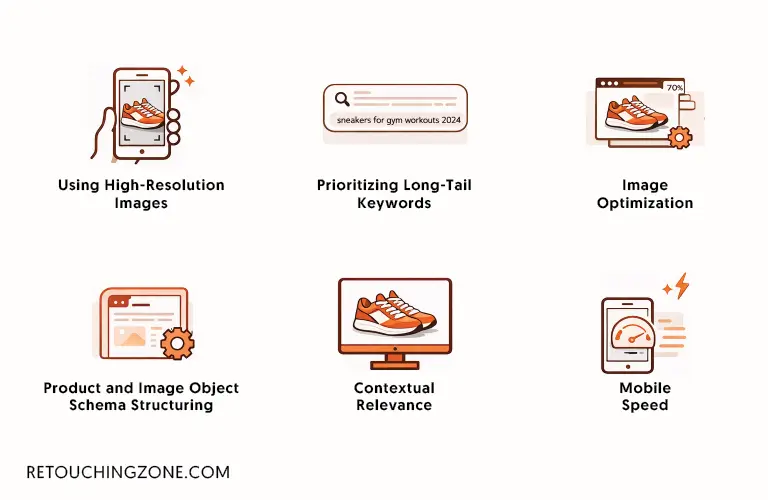
The 6 Pillars of VSO in 2026
The 6 Pillars of VSO in 2026
As a digital marketer, to make your site visually search-friendly, you need to use some optimization techniques when making content or building your site. They involve-
Using high-resolution images
The first condition is that the product image must be understood very well. After this comes quality; that is, the attractive aspect of the image. More attention should be paid to resolution.
Google favors indexing pixel-perfect images. So even if the image is accurate, if it is not high-resolution, it will lag behind in search rankings. As the resolution increases, the colors, lighting, and shadows of the image are highlighted in the proper way.
Prioritizing long-tail keywords
The shorter the keyword people type, the broader the intent gets, whereas the longer they type, the more specific it becomes. Any search engine takes this specificity into account more than enough.
The search intent of the users holds the main game here. One user may be searching for one part, while another is searching for another part. And a long-tail keyword includes the parts searched by a large number of users.
Compared to “earbuds for men”, “earbuds for men with big ear holes amazon 2026” represents a high level of optimization.
When placing these keywords, you need to be careful to ensure that they fit naturally in the headers, image titles, and descriptions.
Image optimization
In the case of image attachments, if you give importance only to high-resolution, its size keeps going up. You must be aware that large volume graphics have a negative impact on webpage loading.
And this is where the effectiveness of image optimization comes into play. In accordance with the blog or website, you will keep a close eye on the aspect ratio of images. Alternative text on the back-end helps images to index in search engines.
Plus, if the webpage is delayed in loading, then the alt text is displayed in place of the image, and this helps the visitor understand what the image is actually loading.
It is not very complicated, but it is still overlooked, so do not forget about the image caption. It is also a good place for primary keyword placement.
Product and image object schema structuring
A schema is basically some data that adds additional information behind the product images in your store. This helps Google understand what exactly you are selling.
For example, if you sell sneakers, then the schema tells Google what this image is of (sneakers), what the brand name is, and how much it costs.
When users later search with images, Google’s visual search and shopping results show images of your products with this information.
Contextual relevance
Context refers to whether the product images represent their features, benefits, and name. For this, you must place the image right next to the description.
For example, if a picture of a shirt is placed next to text based on its color, size, and fabric information, Google will understand that these texts are actually talking about the image of that shirt.
In this way, potential buyers can easily find the product through image search.
Mobile Speed
Most people are more comfortable shopping using mobile devices like smartphones. If product images take a long time to load, shoppers will leave the store without seeing the product.
Google’s algorithm can notice this and will rank slow sites lower in search results. Naturally, your customers won’t be able to see your products.
10 Key Shifts Making Visual Search Optimization Vital for eCommerce in 2026
It doesn’t mean that texts are no longer being used. Rather, the combination of texts and images is creating experiences that speak to you as a loyal seller and product expert. Let’s explore the 10 changes that have helped eCommerce gain momentum.
Photograph-first tendency
From morning to night, people now want to shoot every moment. And when it comes to buying a favorite item, taking a snap of it is a must. It is almost impossible for Generation Z not to take a picture when they are doing business with someone.
This concept is now widespread in the market, so it’s clear why marketers are taking it very seriously to understand the market.
Not long ago, it was a common scenario where people would show a picture of a product on their smartphone and ask a shopper if they had it. So you can understand how strong the need is!
Browsers search with images more than keywords
When technology is way more advanced, why would you even think of relying on keyword based searches? Moreover, language limitations are also a big obstacle.
Image language is easy for everyone, regardless of country; it is a global language. Even people who cannot type letters from the far corners of the world can easily search using images.
According to Click Vision, 1 in 10 Google searches comes from image-based searches. This drastic shift has long been in the planning of the world-renowned platforms; now they are being seen in action.
Visuals attract more audiences
People now prefer to watch things more than read, and that’s why videos, reels, and shorts always top still images. In between these two are animations and GIFs.
Webfx (a tech-enabled digital marketing firm) states that visual content gets 94% more views than text-only content.
Lifestyle-based images have long been a sensation in blogs and articles. Plus, charts, tables, graphs, slides, etc., when used in a relevant and responsive way, can also drive huge traffic.
The need for representing with icons or symbols and, of course, photos, has come to such a point that developers are making algorithms get used to this type of graphical search.
However, instead of visual categories, you need to think about the file format for upload, which can be either JPG, PNG, or WebP.
Search engines are becoming image-oriented
Google Lens
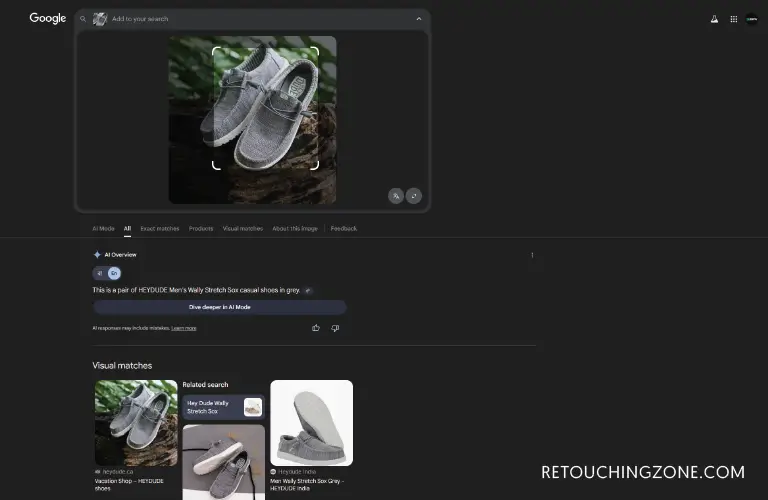
Google users are enjoying Google Lens quite a bit, as it allows them to identify any real-world image and get related information.
Its Style Match feature is the best for finding products for shopping. When you take a picture of a product and feed it to the system, it shows you similar and relevant items and tells you where to buy them. It also makes recommendations based on your favorite items.
Google Lens is built into all Google Pixel phones. It can also be accessed through Google Assistant, Google Photos, and Google Maps. So, it can be your personal guide when it comes to finding places to visit while traveling.
.
Bing Visual Search
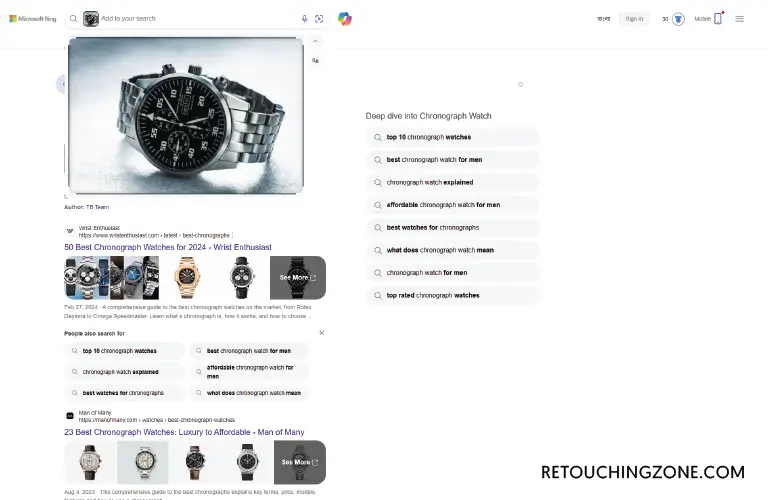
Search engine Bing is following in Google’s footsteps. You won’t be able to distinguish its image search tool from the one of Google’s at all. It analyzes photos, identifies objects in the image, and also suggests similar products.
For those who prefer Microsoft, it is the best Google alternative.
This visual search tool is available on Bing, the Bing app, Microsoft Launcher, and Microsoft Edge.
.
Social media literally adores pictures
You already know that images and videos are the most shared on social media. But do you know how much? That’s 40 times more than text content.
Visual search tools are being tested for Instagram and Facebook. Once it’s implemented, you’ll be able to search for products by image to purchase. As a result, shopping in the metaverse is about to grow exponentially.
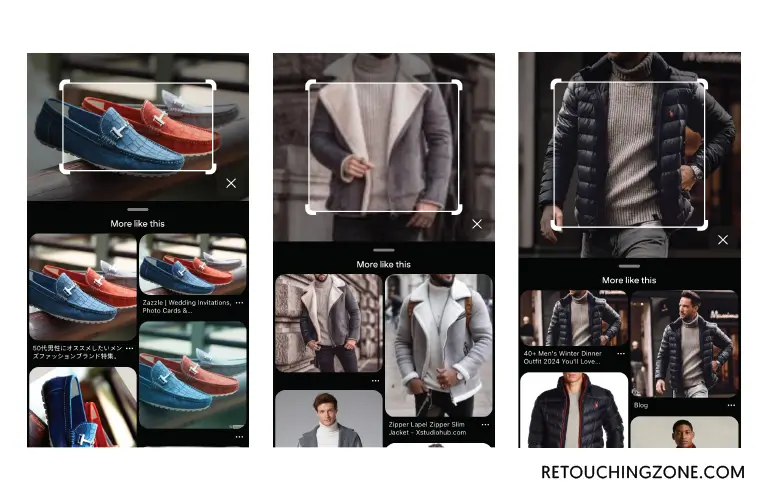
Another visual search tool for scanning the physical world with your smartphone is Pinterest Lens. You can search here for a specific watch or pair of shoes you’re looking for. Pinterest will scan its entire Pins and create a list of styles similar to the searched item.
This is a great visual search tool for retailers. Most of Pinterest’s content is about fitness, fashion, decor, and cooking.
AI image and video generators are getting smarter
Since the market inception, AI models have not stopped for a moment. You can hardly track how quickly one model surpasses the other with new ones.
According to WebFX, 75% of video marketers use AI tools to create their videos.
Most of the modern AI video and image in the industry is now dominated by Diffusion models, as they are able to create highly detailed visuals from a simple text prompt. In recent years, their images can convey text and portray perfect facial expressions.
They can even go along with the continuity of the scene, which you previously found very far from real.
You won’t be able to tell the difference between the results Adobe Firefly produces and the photos you take with your digital camera. You’ll see the same thing happen when you try Google Nano Banana Pro.
Look out for subtle flaws like contrast limitations, aggressive sharpening, and phone camera processing.
You’ve noticed how good OpenAI’s Sora2 has been at making video clips with mere text input. Even Googlers are not far behind. They have happily reached up to version 3.1 while enjoying VEO.
Online stores are getting more interactive
E-commerce sites are certainly changing to reflect changing customer needs; they are the visible result of this significant shift.
StyleSnap, Amazon

E-commerce giant Amazon allows shoppers to upload photos of clothing and accessories and recommends similar items available. They have had visual search functionality since 2019, which was launched as part of a feature called StyleSnap in the Amazon Alexa app.
Snapchat users on Amazon can scan a product using their smartphone camera and instantly get Amazon shopping links.
Image Search, Alibaba

A similar function is also available on Alibaba called Image Search, where you can directly upload a link to an image of the product you are interested in to search.
Style Match, ASOS
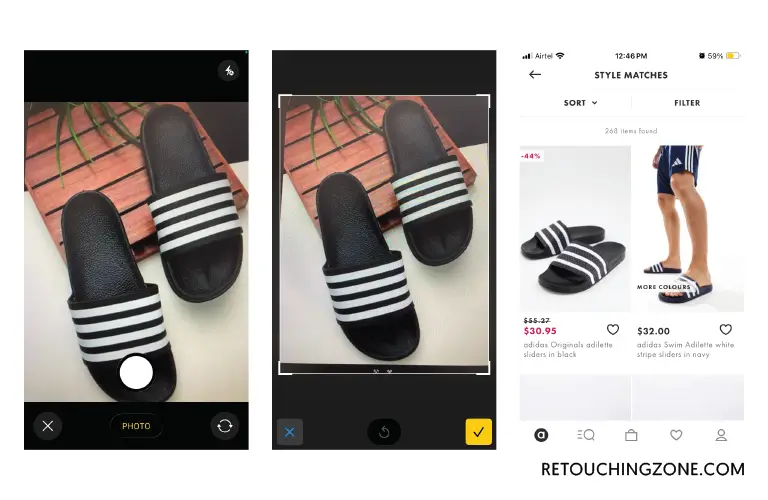
ASOS, a British online fashion and cosmetics retailer, offers a Style Match visual search functionality. You can use your phone’s camera to take a picture of an item of interest or upload an image from your photo library to search online.
Camera Search, Boohoo
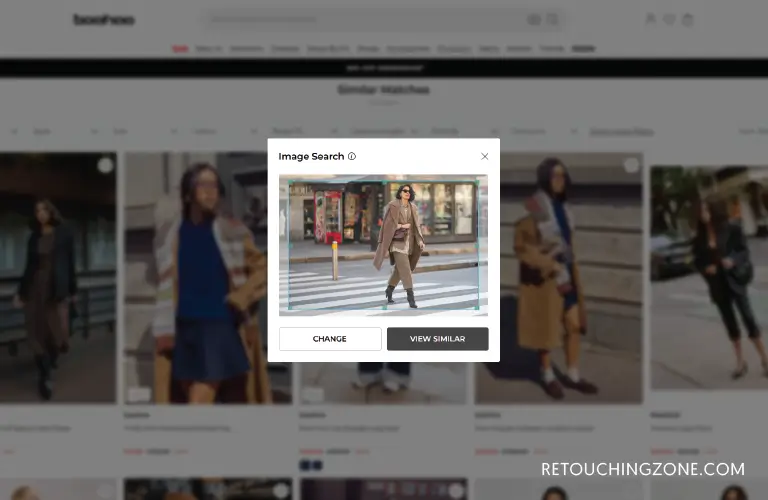
Boohoo, a UK-based online fashion retailer, has a Camera Search. It allows searches based on screenshots taken in real-time from the phone’s camera.
Marketers look for more precision
A huge part of search engines and social media browsers are marketers. They stay active in various community portals, including groups, pages, profiles, comment sections, and forums, to better understand the search behavior of their potential customers.
These activities give them measurable insights about their customers, and this is why marketing is no longer the same. Conventional AB testing has also undergone significant changes that allow marketers to understand customer engagement in small time frames.
Now marketing is not just ad-centric; rather, it offers an entire journey in front of the audience. Here, the audience becomes a user, i.e., they are no longer just reading and watching; they are engaged in various activities.
Webfx says that 62% of marketers are now eager to include interactive content in their strategies.
Instead of being limited to conventional forums, quizzes, and polling, games and digital adventures are now being added to sites and content. And, most importantly, all these center around images, videos, and augmented reality (AR).
Surge in real-time product discovery
AI’s knocking at the window of online stores is exciting as well as daunting. Every brand is now entering into an open competition over who can give instant and interactive experiences to customers.
Everyone takes it as a condition that the system will identify similar or relevant products as fast as a photo goes online.
This visual search is the new trend of online shopping as world renowned stores are adopting it. Large retailers like Albertsons, Staples, and you can also name Boohoo that have already gotten in line in the front row.
Virtual tryons come along the path of VSO
Now tech gets attached to shopping even more, which causes consumer demand as well as expectations to pile up. You definitely want to try on that favorite T-shirt from the comfort of your own home.
AR is making it possible, as shoppers can see how things like clothing, accessories, and furniture will look in real life. Virtual try-ons are penetrating almost every domain, from fashion and beauty to gadgets and accessories.
So you can’t call it the future of visual search; it’s already here. Famous brands like Farfetch, Sephora, Warby Parker, Nike, L’Oréal, and Kendra Scott are using AR and AI-powered try-ons.
A recent case study by Banuba (an AR software development company) found that integrating Tint AR increased their sales by up to 300% while their add-to-cart rate increased by 1,000%.
FAQs of Visual Search Optimization
1. What is visual content?
Still or moving images and videos (all content other than text-only and audio-only) are called visual content. There is a broad selection, containing pictures like photos, infographics, illustrations, memes, charts, and even diagrams.
Among videos, there are vlogs, tutorials, animations, motion graphics, and GIFs.
Presentations are more like included in the blended category (slides; combined with images and videos).
2. What are the famous visual search engines out there?
To experience visual search, you can use Google Lens and Bing Visual Search. Among social media, only Pinterest Lens is out there.
For product search by image in eCommerce stores, you can try Amazon’s StyleSnap, Alibaba’s Image Search, ASOS’s Style Match, eBay’s Image Search, IKEA’s Kreativ, Boohoo’s Camera Search, and Sephora’s Virtual Artist.
3. Why is visual search optimization important for eCommerce?
In search engines, browsers are now searching more by uploading images than by typing the name of the desired product. In that case, if your eCommerce site is not at the top of the search results, the chances of visitors entering your website are reduced.
And with this, the chances of buying your product are also decreasing. This is why it is essential to make your online store visual search-friendly in the right way.
4. What is an interactive experience on a website?
You are not a merely vistor when you visit a website, but there is also a part where you give input into it through actions such as clicking, scrolling, typing, or hovering. You are already aware of the elements, like quizzes, polls, filters, animations, and calculators.
Today, interactive maps, 3D product models, personalized live chat, 360° views, and gaming are just some of the features that are available.
5. How does visual search relate to real-time product discovery?
When somebody uploads an image of any product on the website for the store and does a search, artificial intelligence based visual search methods will use computer vision and neural networks to recognize things such as shape, colour, texture, and also pattern.
After extracting these types of features, they are compared to the product catalog of the shop, and then you get results that are relevant. And the whole thing happens in real time; instantly.
Final Take
Overall, visual search optimization is going to make the growth of eCommerce businesses in 2026 visible in a huge way. Its footprints are starting to be visible in all, regardless of search engines, social media, and eCommerce stores.
In view of this, businesses are eager to dive deeper into the tech ocean to survive in the competition. Google has already indexed billions of images, which is now more than enriching the product search experience of browsers by uploading images.
Now, virtual try-on features are moving at the same speed as real-time product discovery. Therefore, optimization capabilities are drawing the finish line ribbon of the product promotion race.