
It’s no wonder that apparel brands in USA are becoming so strategic in 2026 to reduce product returns! Size inconsistency, coupled with wrong colors between the ordered and delivered dresses, increases product returns as well as loses customers forever.
So, how original and verifiable you present your clothing products on your ecommerce site sets how stable your conversion rate will be.
Now get ready, because today’s blog is going to explain the most effective ways of using photo editing that top US apparel brands are currently adopting to control their product returns.
Let’s see where exactly in your online clothing business you are not paying attention to, which hinders your growth.
TL;DR:
- US clothing brands are taking into account restoring original colors, increasing easier detail verification, and providing tailored visuals for everybody, regardless of body characteristics.
- 3D views and virtual try-ons gain momentum to take product detail verification to a unique level, and real-world backdrops in pictures and videos uplift connections between customers and products.
Quick Chart: US Apparel Brands’ Photo Editing and Its Uses
| Photo Editing Strategies US Apparel Brands Adopt | Uses That Reduce Product Returns |
| Color Adjustments | Matches the original product color and corrects improper lighting |
| Clipping Paths | Removes spots, dirt, and distractions (ideal for 360° views, deep zoom, and virtual try-ons) |
| Ghost Mannequin Effect & Shadow Creation | Creates a realistic 3D look that improves buyer confidence |
| Photo Manipulation & Background Replacement | Adds real-world backdrops that match the product style and use case |
| Resizing / Rescaling | Maintains consistent product visuals across different body sizes and shapes |
Matching the Original Color and Using Lighting Correctly
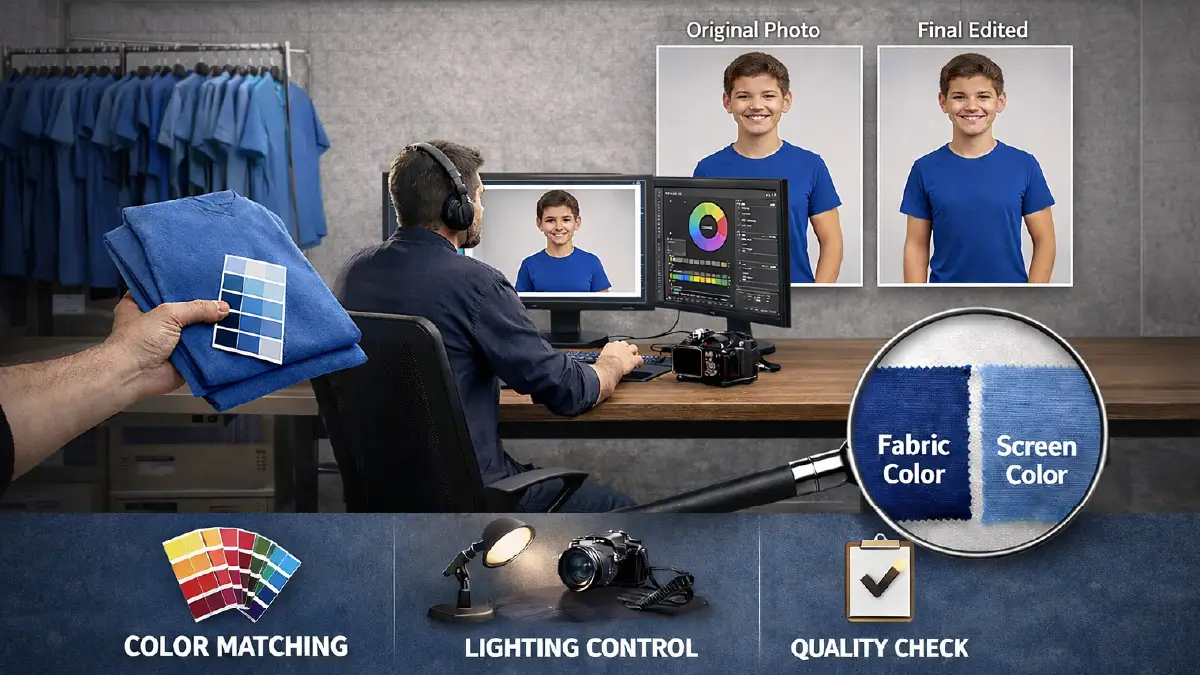
It is a basic business requirement to deliver the exact color of the garment that the customer ordered. This constraint is not something that US clothing brands take the risk of taking, even during photography, when a slight change in lighting can change the color of the fabric.
Whether you call it color matching, adjustment, or balance, they insist on this process at all costs when working with photo editors.
How modern editing tools the retouchers are using is not important here; companies see that the color on the screen matches the actual color of the fabric in their warehouse.
Creating Visibility to Check the Fabric in Detail
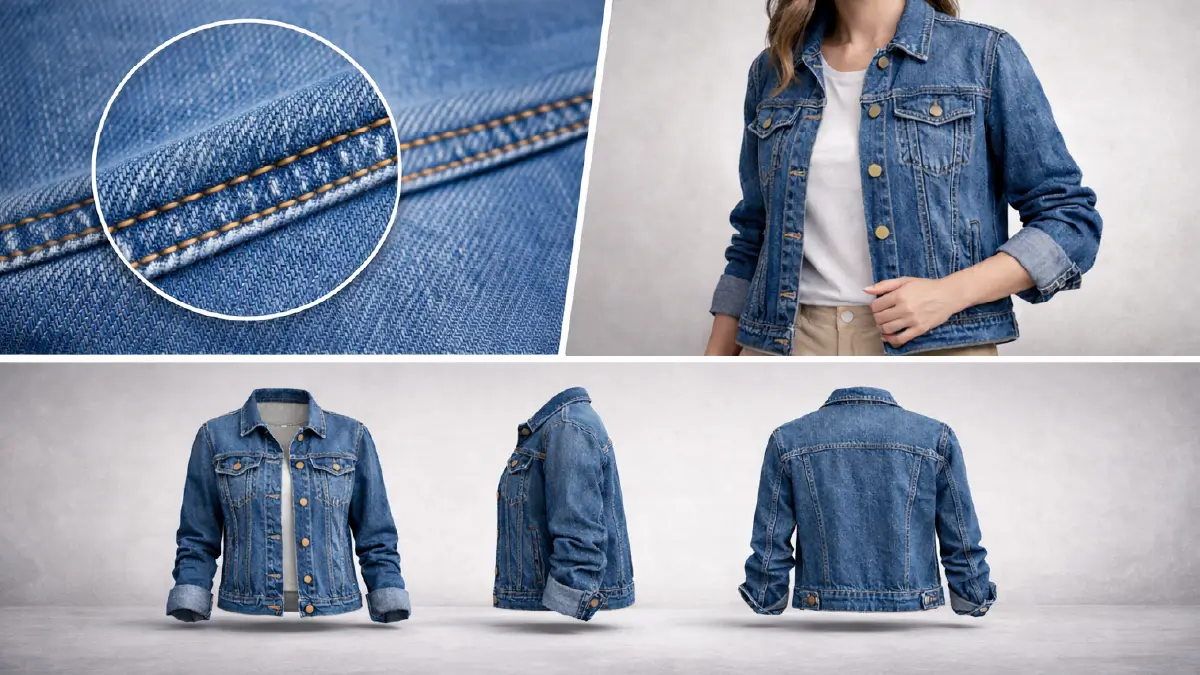
Nowadays, images of clothes are deeply enlarged, viewed from multiple angles before getting into the ‘add to cart’. This experience is something that American apparel brands take very seriously, which leads them to resort to image editing techniques such as deep defect removal.
In particular, they use clipping paths and photo retouched images for the following purposes:
- Showing flawless parts of the clothing, even when zoomed in deeply
- Keeping the folds that were visible in real life intact, so that customers can see how it would look if the clothes were worn and moved
- Showing the entire garment by rotating it 360 degrees
Showing Precise Dimensions with 3D View
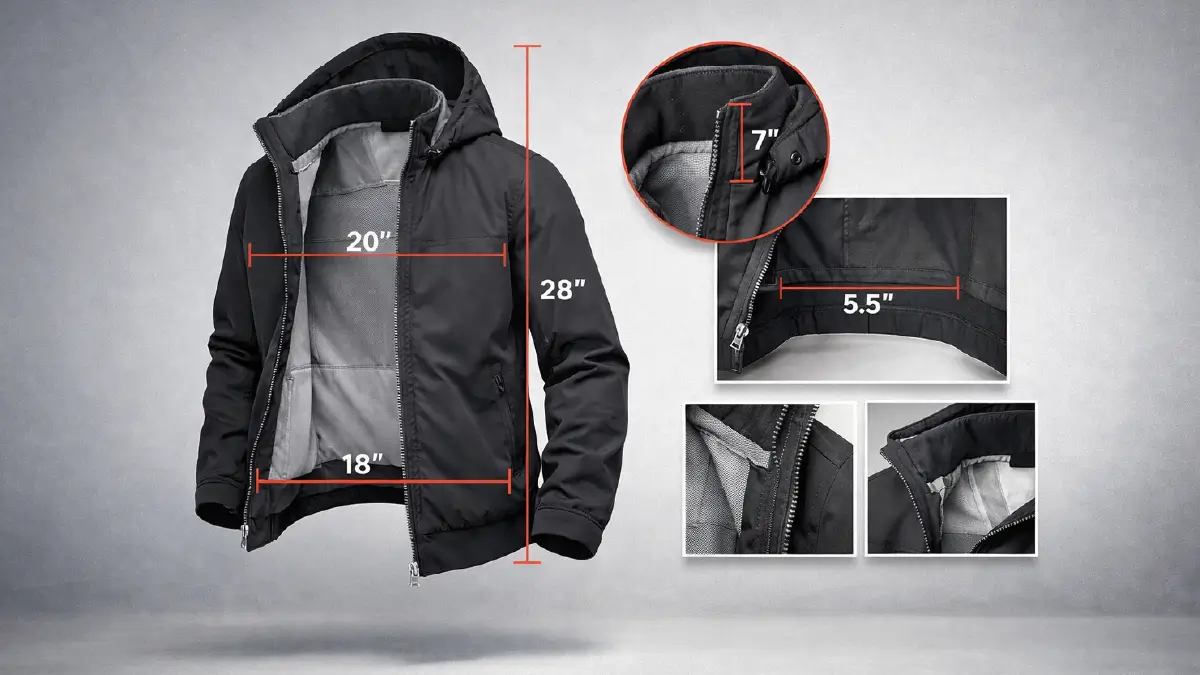
The ghost mannequin effect is nothing new, and it has been put into action by leading US apparel companies to provide this experience. The method for photo retouching, together with ways to make shadows, provides this material an appearance where customers could view sections that mostly stay unseen inside.
So, spaces such as zipper lines, neck joint plus stitching can be visible clearer to the eyes. It is no wonder that seeing these details of a product increases customers’ trust in brands.
Image Production for Virtual Try-Ons
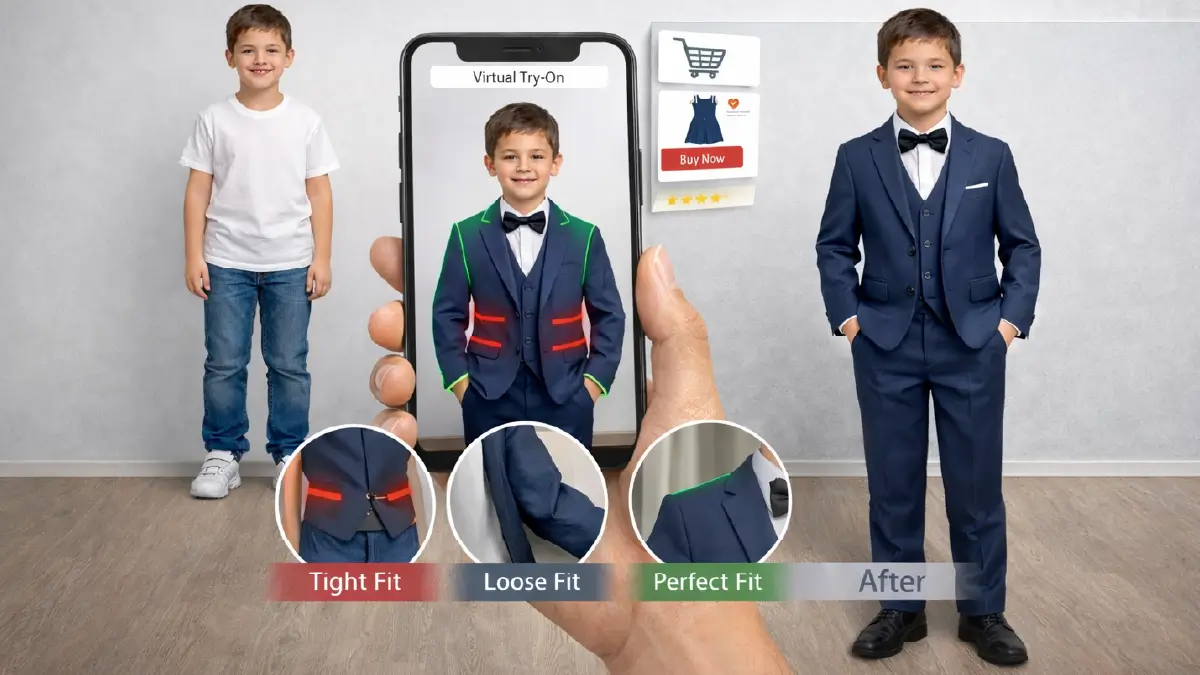
This is no longer a thing of the future, but uploading a full-size photo of yourself and seeing how the dress will look on your body has already started gaining importance.
Developed with a combination of AI and AR, these virtual try-on visuals allow your e-commerce store visitors to see which parts of the fabric are tight or loose.
This technology not only increases visitor engagement on the website, but also helps buyers buy dresses with almost 100% satisfaction. Of course, brands do not forget to make the images free of distortions through skillful photo editing.
Tailored Visualization Based on Different Body Features
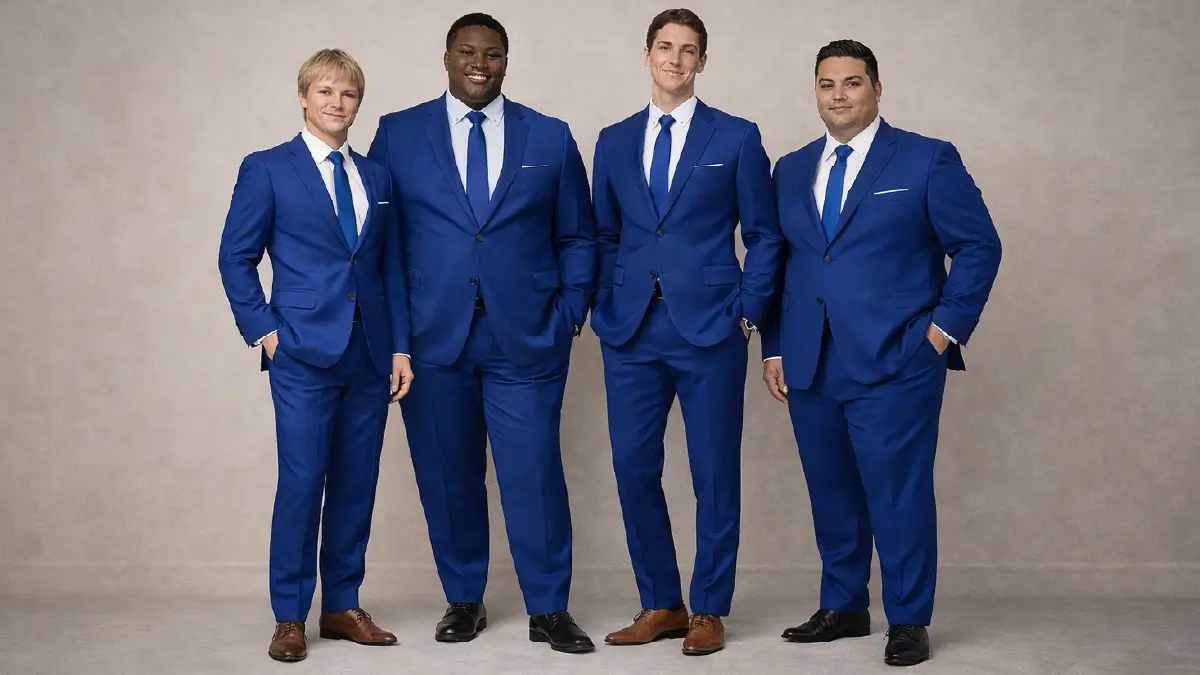
To eliminate the disadvantages of the common size era, the different sizes for different people is trending across the US in 2026. Businesses are moving towards campaigns with diverse models to make their image editing investments more effective.
In this case, the visuals are getting prepared keeping in mind the following conditions:
- Body-neutrality: Showing the same design of the dress on all body types, whether it is short, thin, tall, or fat.
- Skin Color-neutrality: Presenting the dress for different skin tones, including white, black, and brown.
Bringing Real-World and Cross-Media Relevance
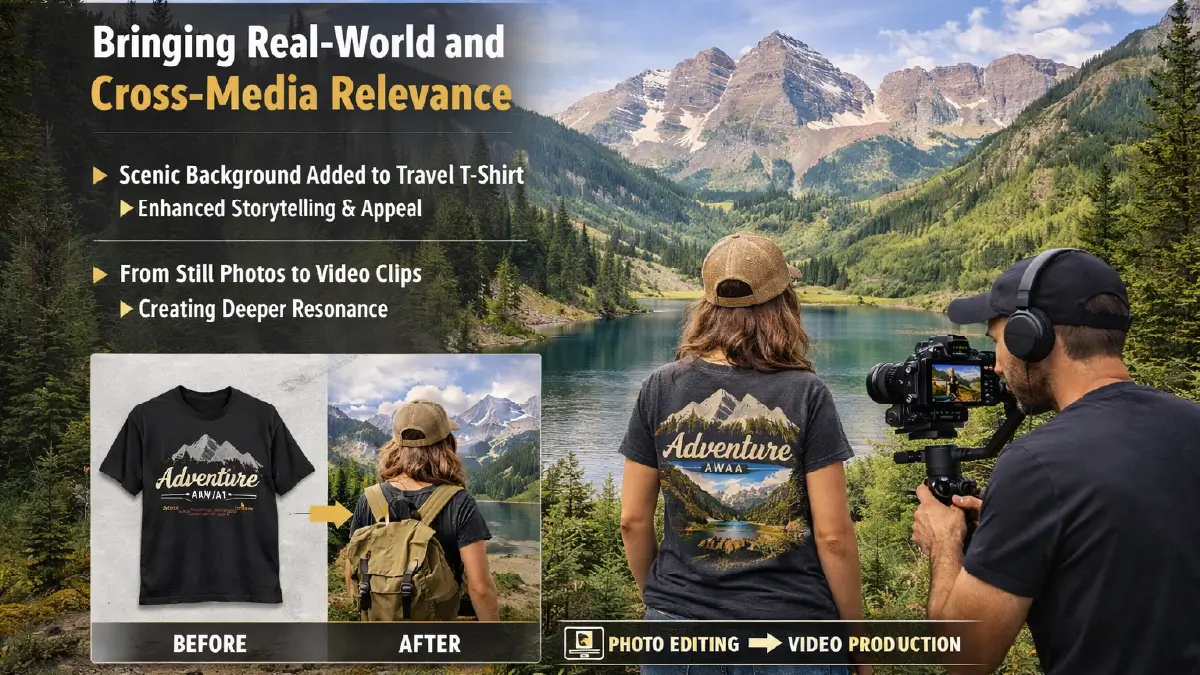
How much do you think the image would resonate with your audience if a scenic vista landscape were added to the background of a travel t-shirt? This has now become a best practice that is often followed by leading American apparel brands.
This is a clear implication of how much of a story an image can tell with premium photo manipulation, including skillful background replacement. Even brands go the extra mile to create this resonance when shifting from stills to video clips.
Frequently Asked Questions about Photo Editing Use of US Apparel Brands
1. How does restoring a product’s original color reduce its returns?
It is quite natural that buyers expect a product upon delivery to be in the same color they selected when ordering the product from an e-commerce store. Otherwise, they return it.
That is why professional photo retouchers strive to restore the color of the product in real life during photo editing. Therefore, matching the color of the products in your e-commerce store to their real-world counterparts means reducing the chances of its’ returns.
2. What photo editing apparel brands in the USA take into account to bring about improved 3D views?
Ghost mannequin effects and shadow creation are usually capable of giving 3D versions of apparel products. That’s why USA brands are paying more attention to the quality results of these techniques when working with editors.
3. How do Virtual Try-Ons ensure full customer satisfaction when purchasing products?
Virtual Try-On is a visual experience combining AI and AR, where shoppers can check whether a product will fit them well when wearing it without having to physically visit the store.
4. Are deep zoomed and 360 degrees views enough to drive visitors to purchase products?
These two features alone allow buyers to view only products from different angles, directions, and magnifications. But if they see spots or other defects on the product in these views, it’s natural that they won’t feel like buying it.
So, along with these visuals, you also need to remove the defects caught in the relevant views of the photo through deep image editing.
5. What photo retouching can I do to add a relevant real-world background to the product?
You can provide a contextual backdrop to the product background with the help of background replacement. Photo manipulation is another way in which you can remove the product from the previous background and place it on a relevant background.
In a Nutshell
Just as apparel brands in the USA use photo editing to reduce product returns, you can do the same for your business. Match the original color of your product, give it the highest level of verifiability, and provide unique visuals for everyone, regardless of body features.
3D and 360-degree views and contextual backgrounds are now more than mandatory, and virtual try-ons will take your ecommerce store to a competitive level.
But above all, you need to make your product images free of all distractions, including eyesore spots and messy light reflections at all costs.