
Choosing jewelry photography equipment means that you have to focus on the camera sensor, tethering, micro lenses, lighting setup, tripods, and props like non-reflective surfaces. This even extends to workflow after the photoshoot, like focus stacking and image editing.
Each of the above criteria has its own broad territory where you need to go in-depth, especially when you are up for macro photography, like jewelry photoshoots in 2026.
Keep going because this blog is set to take you deep into the things to consider when picking the right equipment, along with the latest industry-standard recommendations.
Camera Body for Jewelry Photography
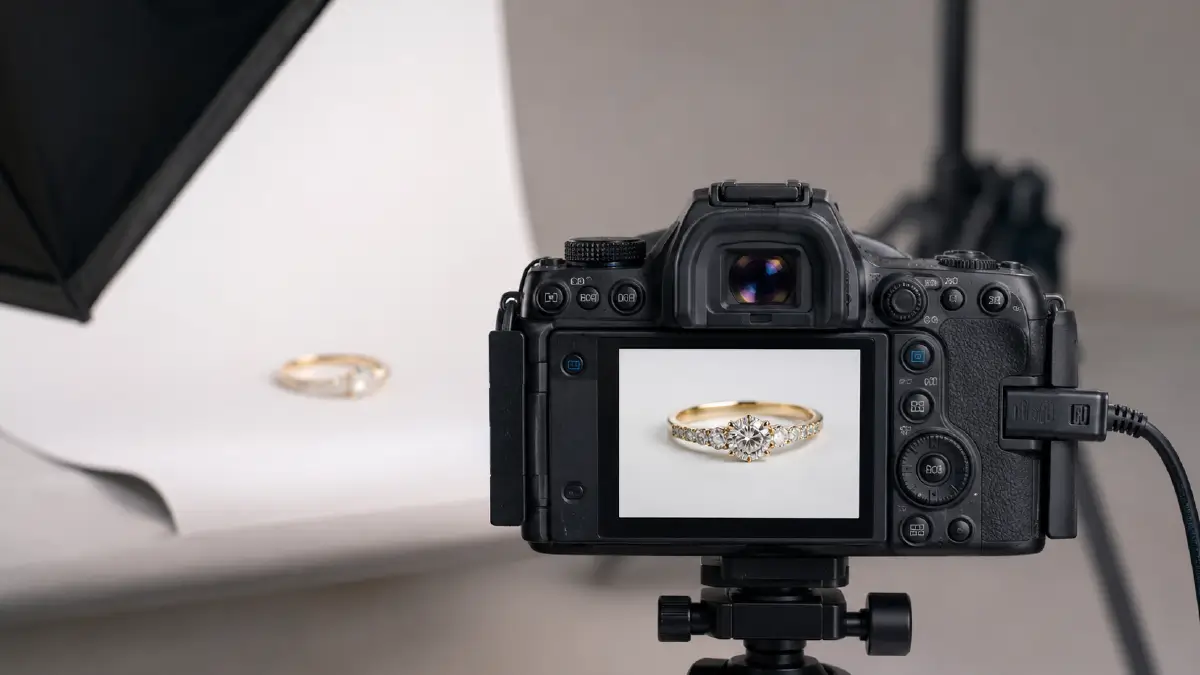
Like other product photography, it is also true for jewelry that getting a camera with a high-quality sensor, tethering, and functions from the very beginning sets a good foundation.
Sensor for Gemstone Photography
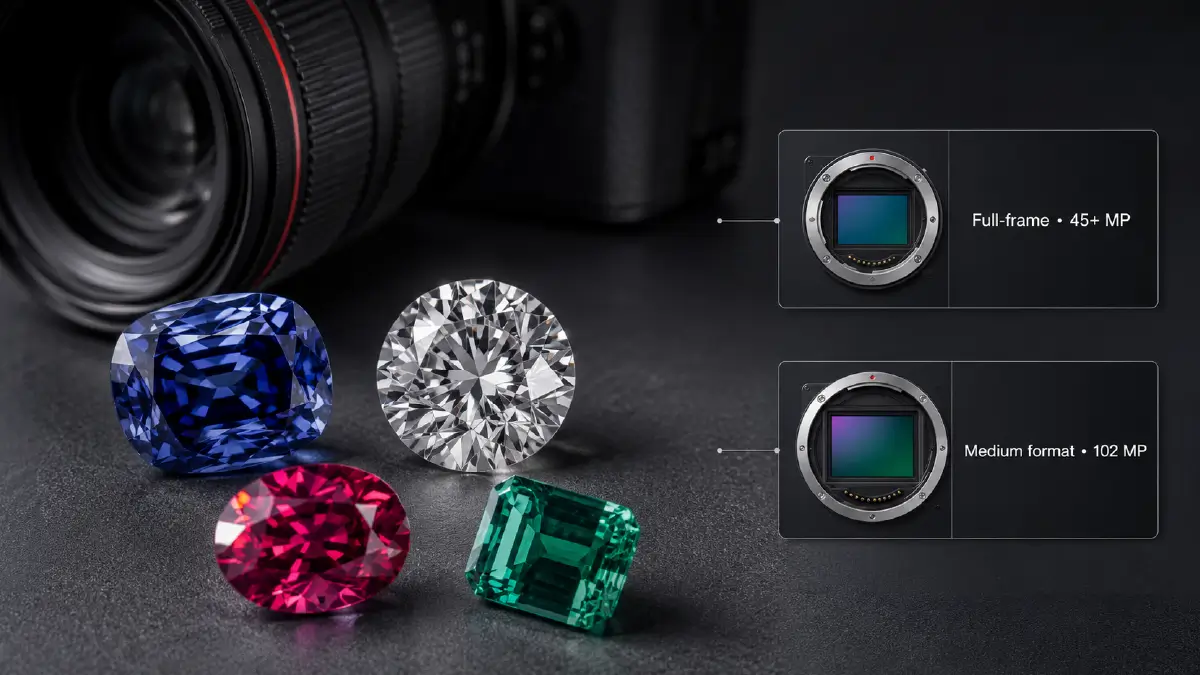
The surfaces of the gemstones need to be exposed at a microscopic level so that you can crop them later if necessary without losing clarity. For such quality photoshoots, you need to go for a full-frame sensor with at least 45 megapixels.
You can also go medium-format, but in that case, you need to choose 102 megapixels.
Focus Bracketing Feature
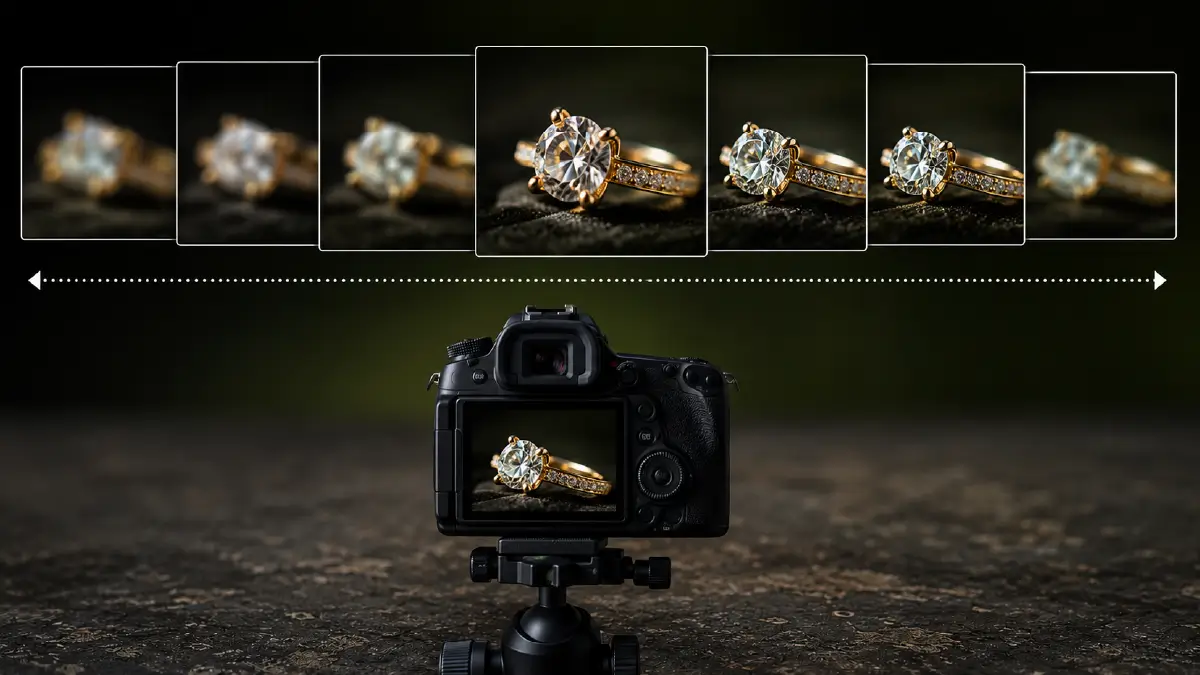
You’ll definitely want to look for built-in focus bracketing these days, as it allows you to automatically capture off-field slices. This saves you from having to change focus manually, plus you have stacking software for clear compositing.
Tethering for Jewelry Photoshoot
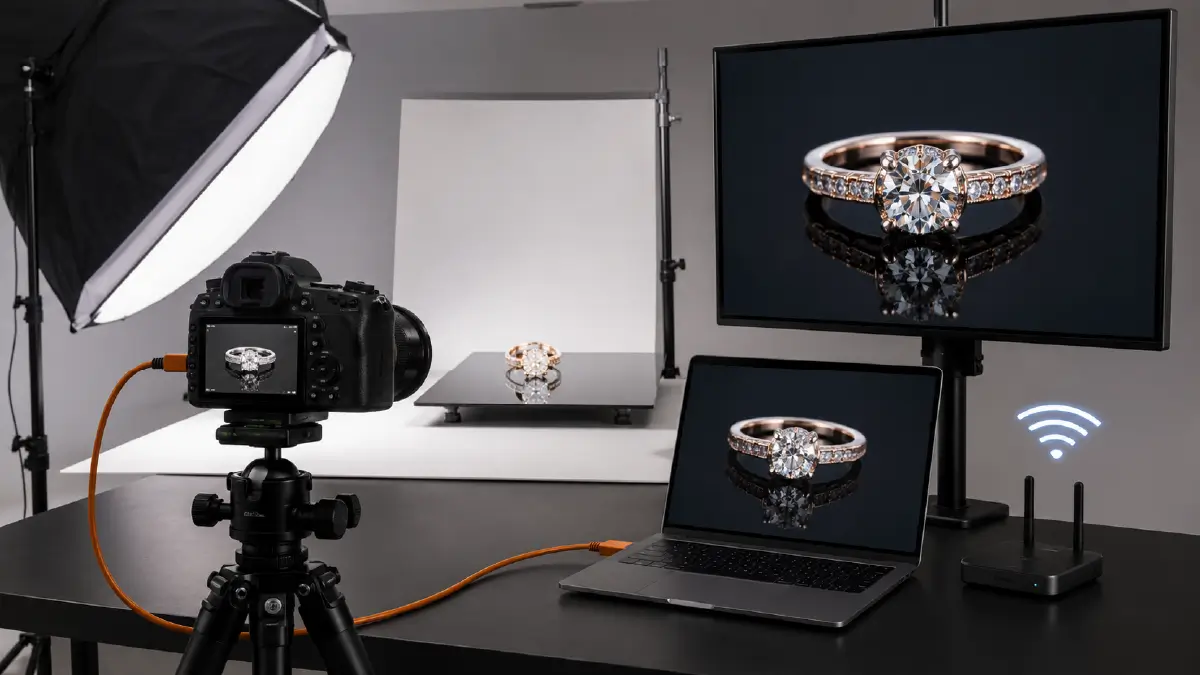
You have high-resolution shots, but if you can’t transfer them immediately, you’re going to be stuck at a loss. What you really need is a tethering system where you can check your shots in real-time to see how they’ll look on the big screen and how they’ll reflect.
And USB-C 3.2 or Wi-Fi 6E can give you just the right setup.
Recommendations
- Among the flagships, try Fujifilm GFX100S II, mainly for its massive 102-megapixel medium-format sensor.
- Sony A7R V and Nikon Z8 for a great combination of high pixel density and fast processing (autofocus and focus stacking tools).
- And the best of the mid-range is the Canon EOS R5, for its 45-megapixel sensor with its easy-to-use focus bracketing tools.
Macro Lens for Jewelry Photography
Here comes the capturing of details that dictates the demand for your best lens for jewelry photography. Let’s take a look at what factors will help you determine if your macro lens is the right one.
Focal Length
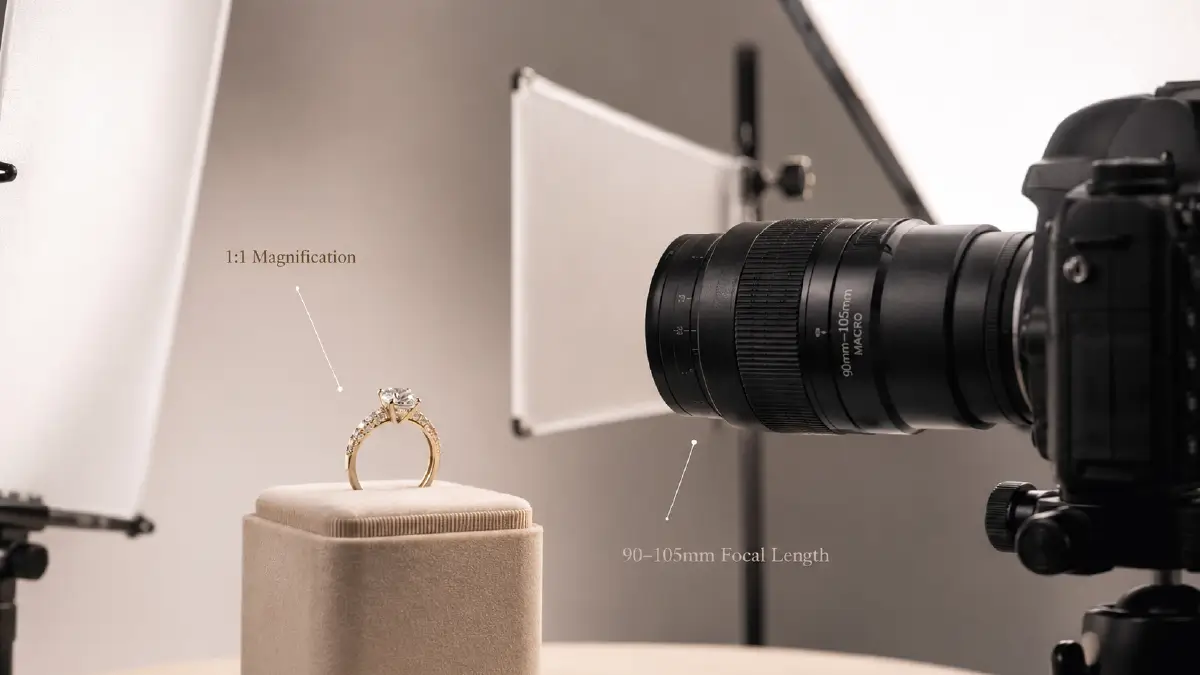
As you are dealing with macro photography, you don’t want to shy away from a 1:1 magnification ratio. You should keep the focal length of your lens and jewelry between 90mm and 105mm to allow for enough room for diffusion setup and lighting.
Glass Quality
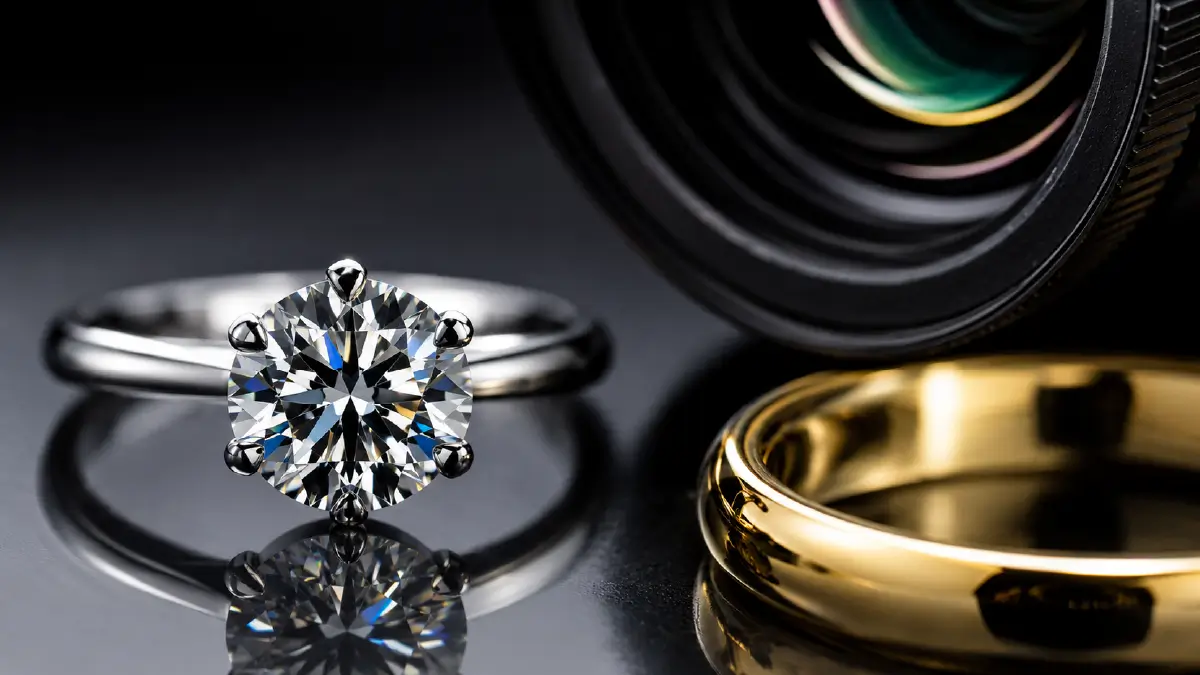
You can’t do anything about the natural spectral characteristics of precious metals like diamonds and polished gold. But what you can do is try to overcome the color fringing and chromatic aberration of highly reflective metal edges.
Look for macro lenses that use apochromatic elements, which will largely meet your needs.
Recommendation
- Among the mirrorless natives, the Sony FE 90mm f/2.8 Macro G OSS and Canon RF 100mm f/2.8L Macro IS USM perform well. Their edge-to-edge sharpness results are astonishing.
- The Laowa 100mm f/2.8 2x Ultra Macro APO offers a 2:1 magnification, which makes an enlargement twice the size of a typical life-size photo.
Jewelry Photography Lighting Setup
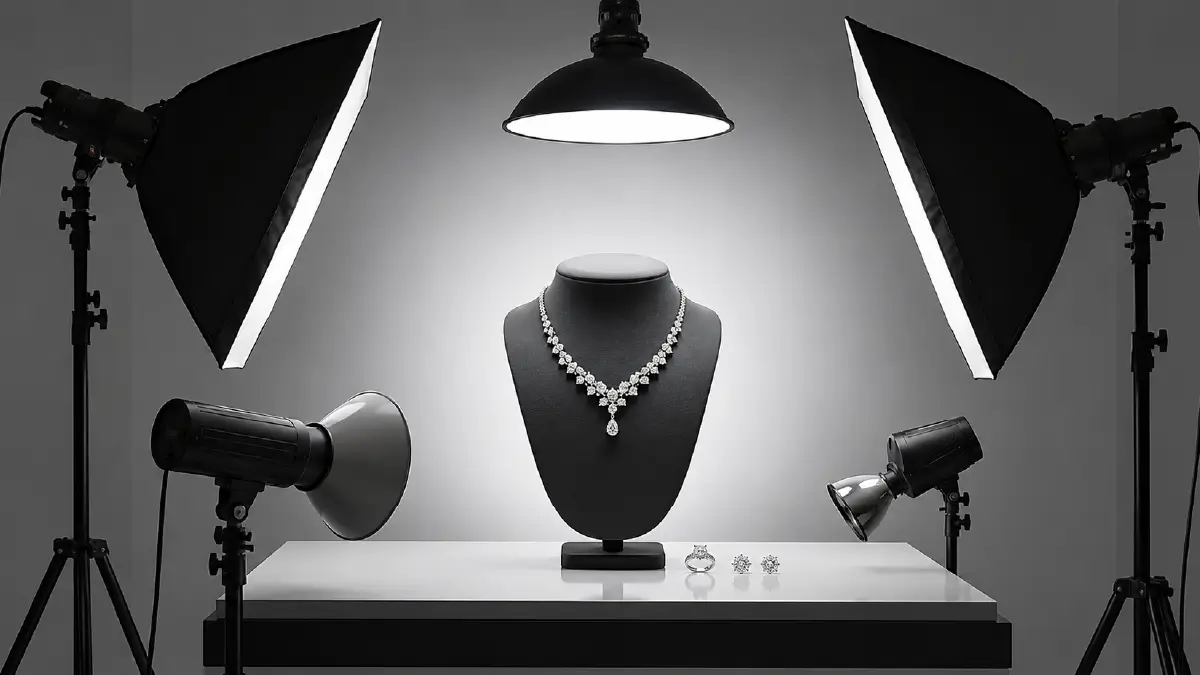
For products with shiny and highly polished surfaces like jewelry, light and shadow issues are of great significance. And therefore, it is important to know the types and modifiers of lighting equipment well.
Lighting Type for Gemstones
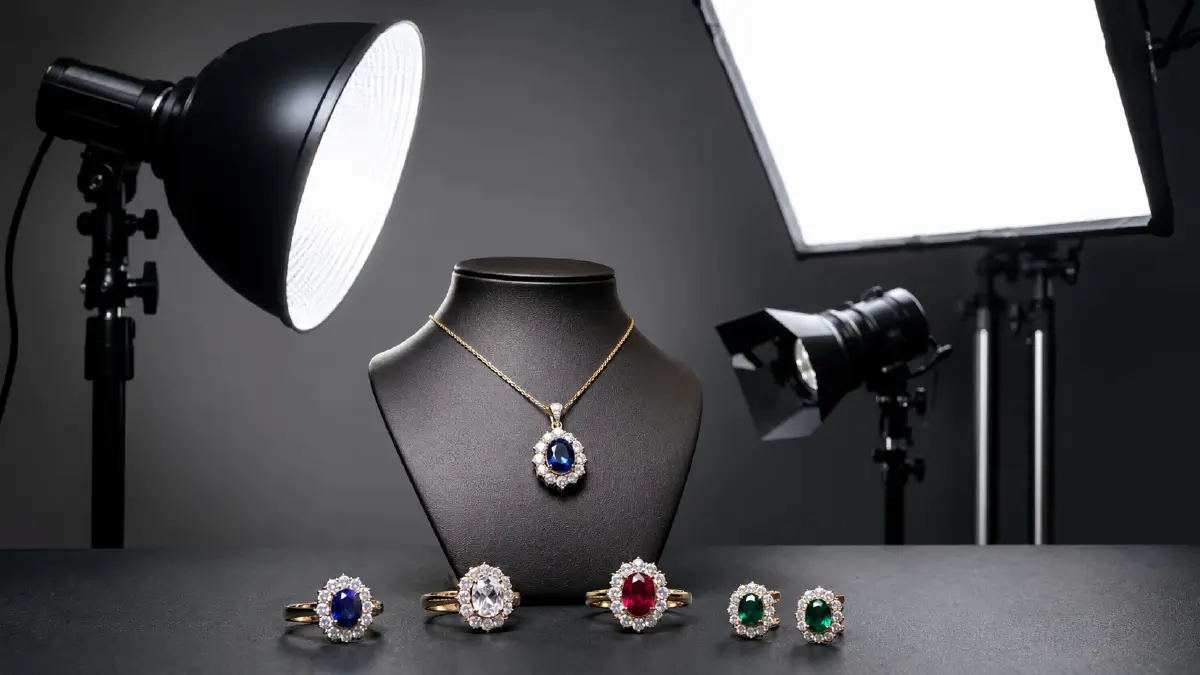
Here, you need to bring out the perfect tone and saturation of precious metals by all means. You can go with high-speed (CRI of 97+) sync strobes or high-color LEDs to complete a great hybrid system. It takes care of all your stabilizing small vibrations and continuous light.
Specular Highlight Modifiers
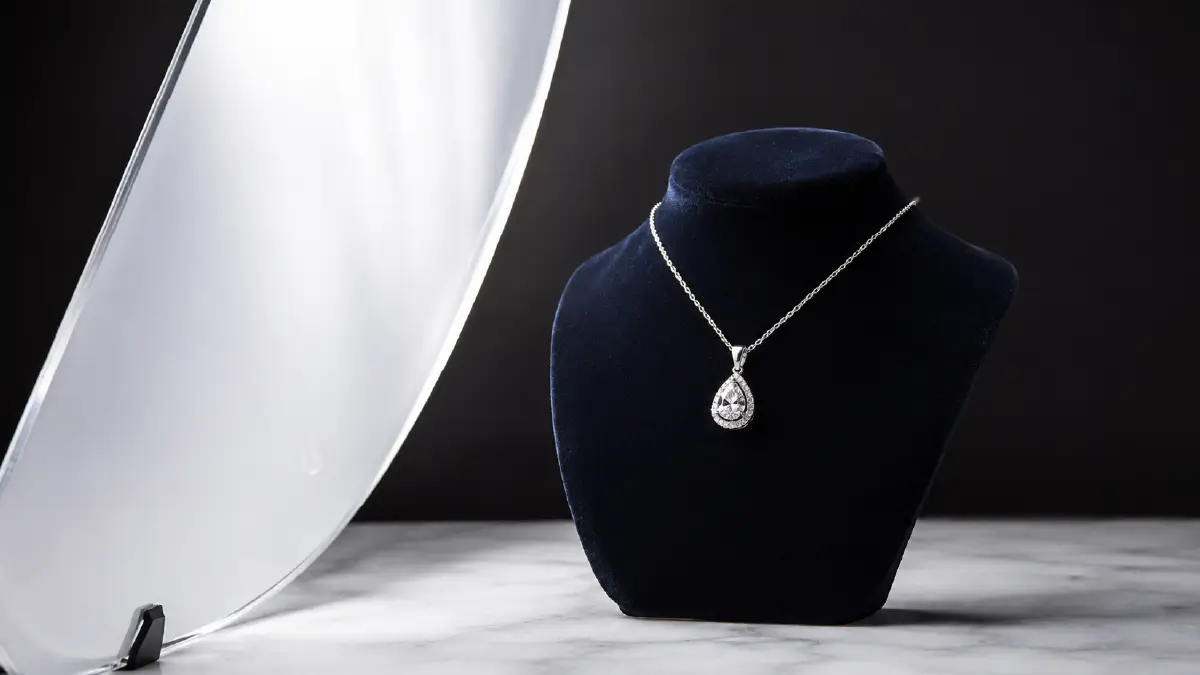
You’ll need a diffusion tool that wraps light around the subject, controlling specular highlights. It also brings out the shape of the jewelry without being affected by its polished nature.
High-opacity acrylic sheets or light cones are specialized modifiers that you can consider as jewelry props for photography when styling.
Recommendations
- Main Lights: Godox FV150 with continuous LED and a high-speed flash for main light.
- Strobe: A Profoto B10X with portable studio power is a good choice.
- Precision tool: the Dedolight DLH4 with projection attachment can effectively project a very sharp spotlight onto each hallmark of the diamond.
Stability and Precision Rigging for Macro Photography
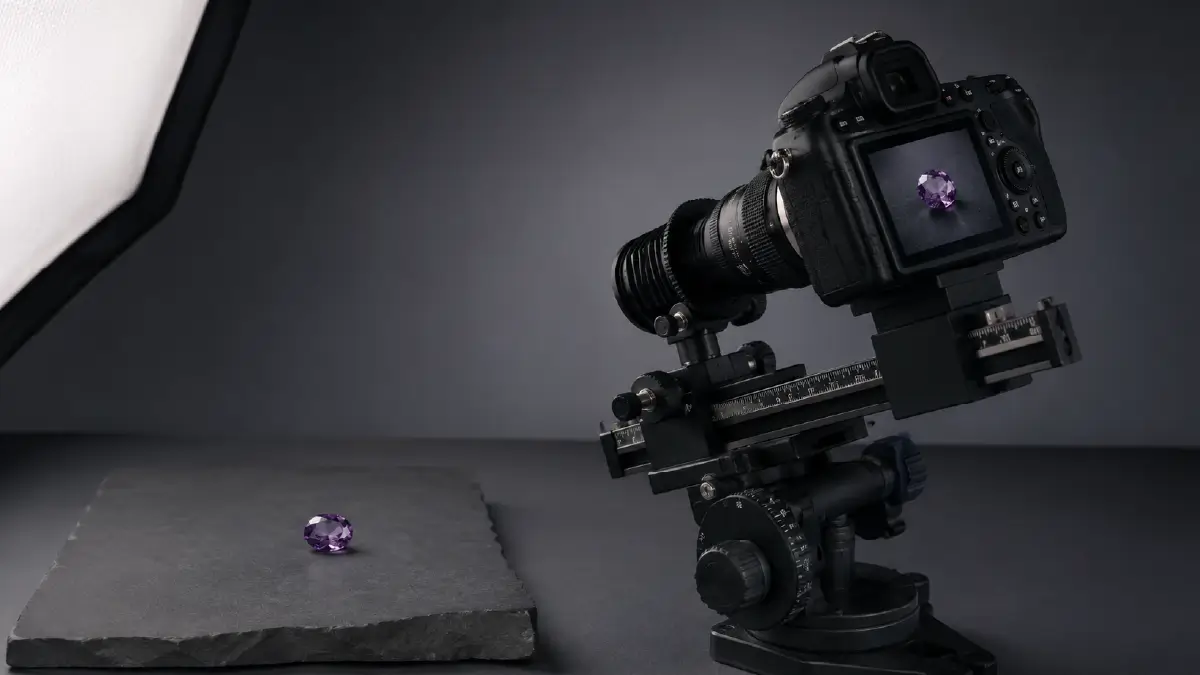
Keeping your camera steady when photographing gemstones is one of the professional jewelry photography tips to follow. But what you’ll need to do it? The answer is a tripod and a geared head.
Carbon Fiber Tripod
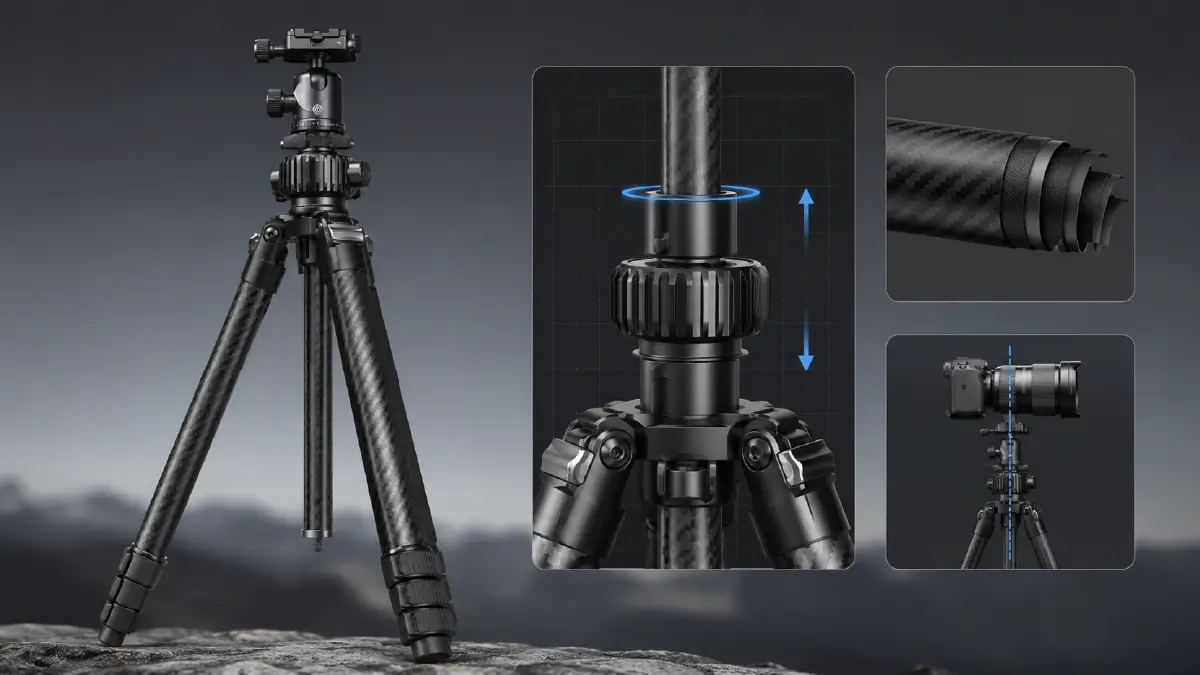
How much do you think a heavy-duty carbon fiber tripod can do for multi-frame stacking? That is quite good, but if you add a geared center column to it, the base will be solid.
Then you will have no worries about reducing mechanical vibrations and perfect vertical alignment during extreme magnification.
3-way Geared Head
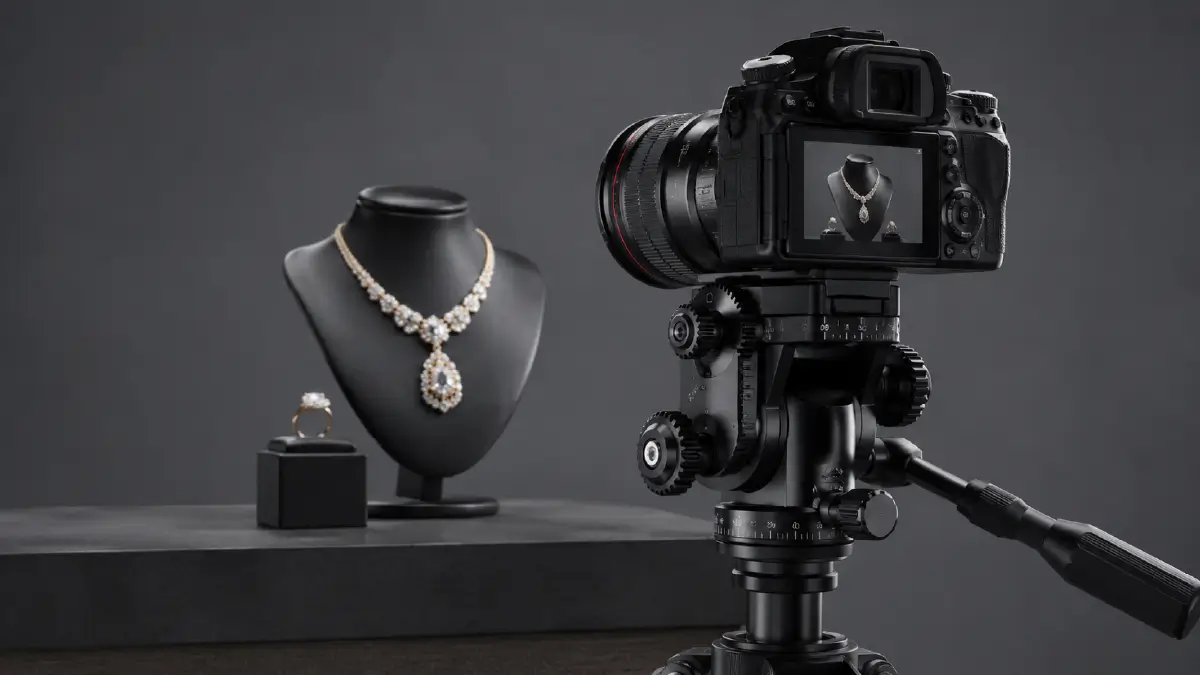
Independent adjustment along the tilt, lateral, and pan axes is essential for products like jewelry. To keep your delicate composition intact throughout the photo shoot, the head needs to remain stationary. And that’s exactly why you should go for a 3-way geared head.
Recommendations
- Geared head: Manfrotto 410 Junior, for step-by-step adjustments for architectural and macro framing. Arca-Swiss D4, for a geared manual system engineered with ball head motion.
- Macro rails: Sweet-Maker electronic rail, for automatic step-by-step advancement at sub-micron speeds. Or the Nissin NM-180, for smooth lead-screw control.
Jewelry Photography Props and Environments
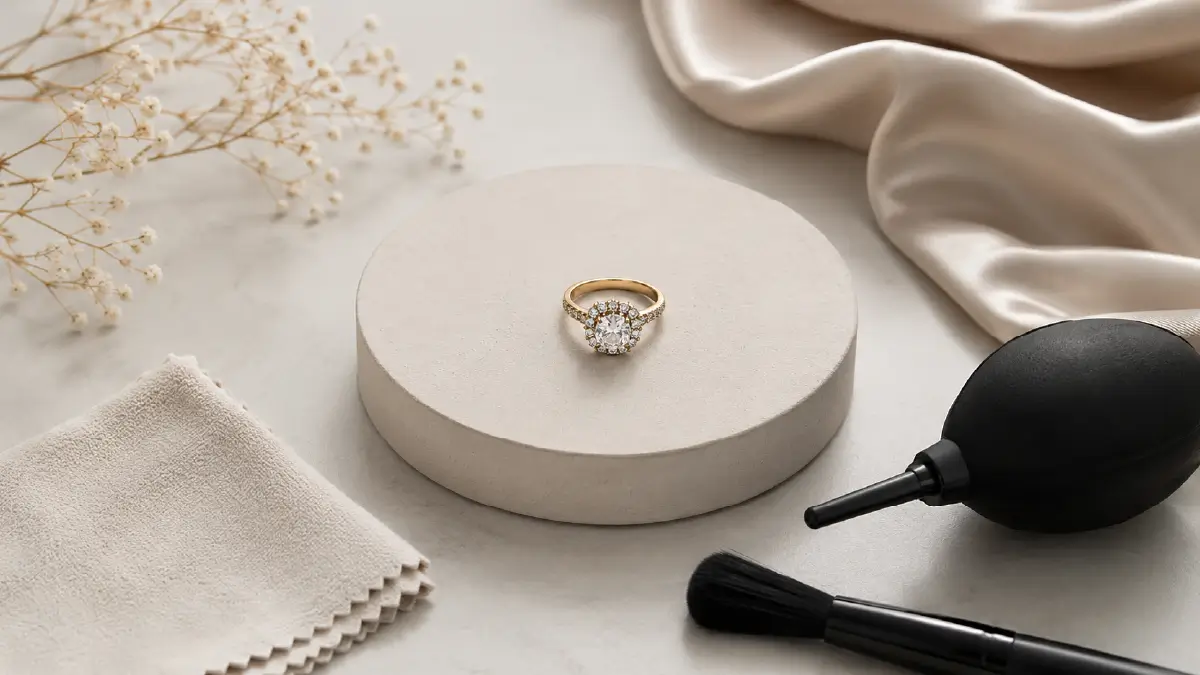
Non-reflective surfaces and dust-removing tools are some of the best props for jewelry photography that add style to your precious stones and bring out their inner brilliance. Let’s dive deeper and see how this can be possible:
Non-reflective Surface
You need to deeply enhance the realistic reflections and shadows of the jewelry, with no secondary bounce. In this case, non-reflective white or black acrylic sheets can meet the requirements for suitable surfaces.
Dust Removing Tools
One of the problems with highly polished metals that you have to face is the microscopic dust particles attracted to them. An efficient solution is an ionization air gun that neutralizes static electricity.
Pro-tip: Pair this tool with museum wax, and it will greatly reduce your image retouching hassle later on.
Recommendation
- Museum wax and Blu-Tac work well together to protect rings and earrings still in 2026.
- Giotto’s rocket blower is best for removing dust without touching it while leaving delicate gemstone settings intact. And for ionizer guns, the ones of the SMC brand can be a professional choice.
Post-Photoshoot Software
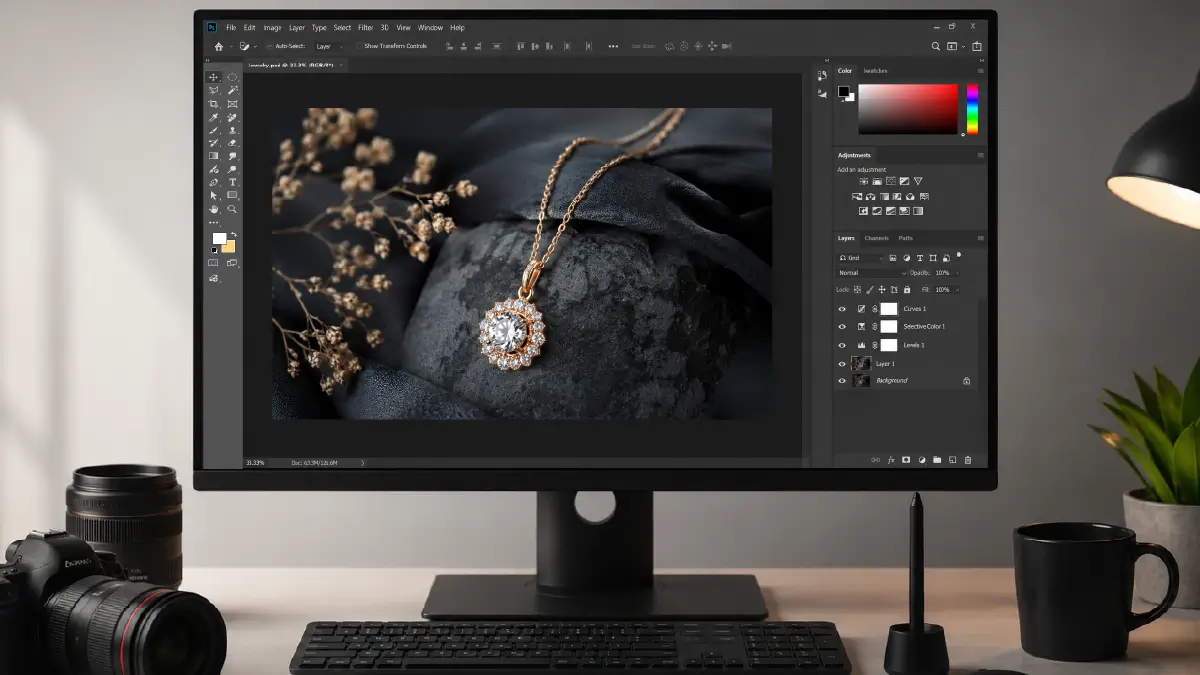
Although the software used in post-production is not part of the physical equipment of photography, it completes the photography by providing the necessary editing.
Focus Stacking and Image Editing Workflow
Tackling the deep challenges of your macro photography, there are jewelry photo editing software that take care of GPU-accelerated focus stacking. Plus, you can go with volume-level image production with AI-enhanced retouching.
Recommendation
- Focus Stacking: Helicon Focus for its complex overlapping facets handling algorithm. And, Jerene Stacker for its high-fidelity DMap and PMax algorithms at the macro level.
- Photo Editing: Adobe Photoshop, for its advanced creative layers, AI neural filters, and generative fill. Or Capture One 26 for its quality tethering-friendly interface.
- AI Tools: SoraiPixel or NeuroViz for jewelry-specific AI retouching
Frequently Asked Questions About Jewelry Photography Equipments
1. What is the ideal Depth of Field (DOF) for macro photography?
The ideal depth of field in macro photography is a small aperture range between f/8 and f/16. This balances the diffraction limit with sufficient focus on the subject, while keeping the background soft.
2. How to know if my macro lens for jewelry photography is the right one?
You’ll know you have the right macro lens by its magnification ratio, which is 1:1, which is commonly known as life-size. Plus, you’ll want to make sure whether you can keep jewelry between 90mm and 100mm focal length when taking photos of it.
3. Why are light tents used in gemstone photo shoots?
During a jewelry photoshoot, if you use a light tent, it encloses the jewelry in a tent. This allows the light to spread evenly from all sides, which creates a soft and consistent glow around jewelry, rather than hitting it diagonally.
4. What resolution sensor should I choose for photographing gemstones?
To photograph gemstones, your camera sensor should be a full-frame with 45+ megapixels, or a medium-format with 102 megapixels.
5. What should be the CRI of strobe lighting for the perfect metallic tone of jewelry?
To ensure high-quality metallic tones in jewelry, your strobe lighting must have a CRI above 97.
Closing
This is exactly how you can choose the best jewelry photography equipment in 2026. On the camera body, look for the sensor, built-in focus bracketing feature, and tethering.
Since you are into macro photography, you should look at the focal length and glass quality when picking a macro lens. Checklist things like strobe or LED lighting speed, tripod, surface props, specular highlight controlling, and dust-removing tools.
Finally, don’t forget to consider the right focus stacking and image editing tools that you can use in combination with the AI tools.
The recommended equipment has been expertly picked from the latest industry toppers, with which you can easily create your ultimate checklist. You can fully focus on taking photos and leave the hassle of post-production to the professionals.
Retouching Zone has been a trusted name in the jewelry retouching service industry for over a decade. The most convenient part is that they come with a free trial, so see the work first and then decide.