
Different types of graphic design mean different ways in which messages reach the intended audience. A well-designed image carries a sales pitch that sometimes cannot even hold hundreds of pages.
Since the main premise is business transactions, how little time it takes to convey the whole message in one go becomes important. And how quickly the graphical content reaches the right people’s eyes.
In this article, we are going to tell you about 8 different types of graphic design, where you will know how they provide visual content in different ways.
1. Graphic Design for Marketing and Advertising
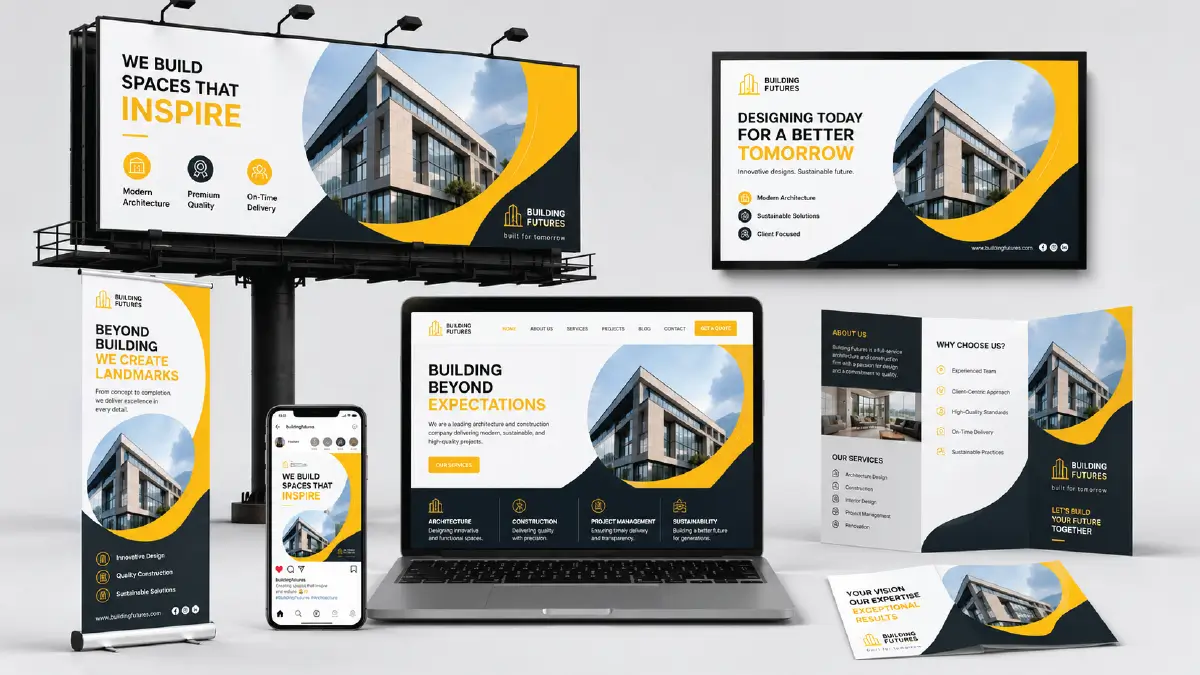
If you think about the broadest category of graphic design, you will come across marketing and advertising. Being a business function, any graphical content you come across, even if only indirectly, falls under this process.
For a magazine, whether you are advertising on social media or on print media like TV channels or billboards, both serve the marketing purpose. These days, business people will keep leaning towards digital content owing to technological trends.
You can now get traditional items like postcards, flyers, banners, and brochures, etc. digitally in beautiful designs.
2. Graphic Design for Brand Identity
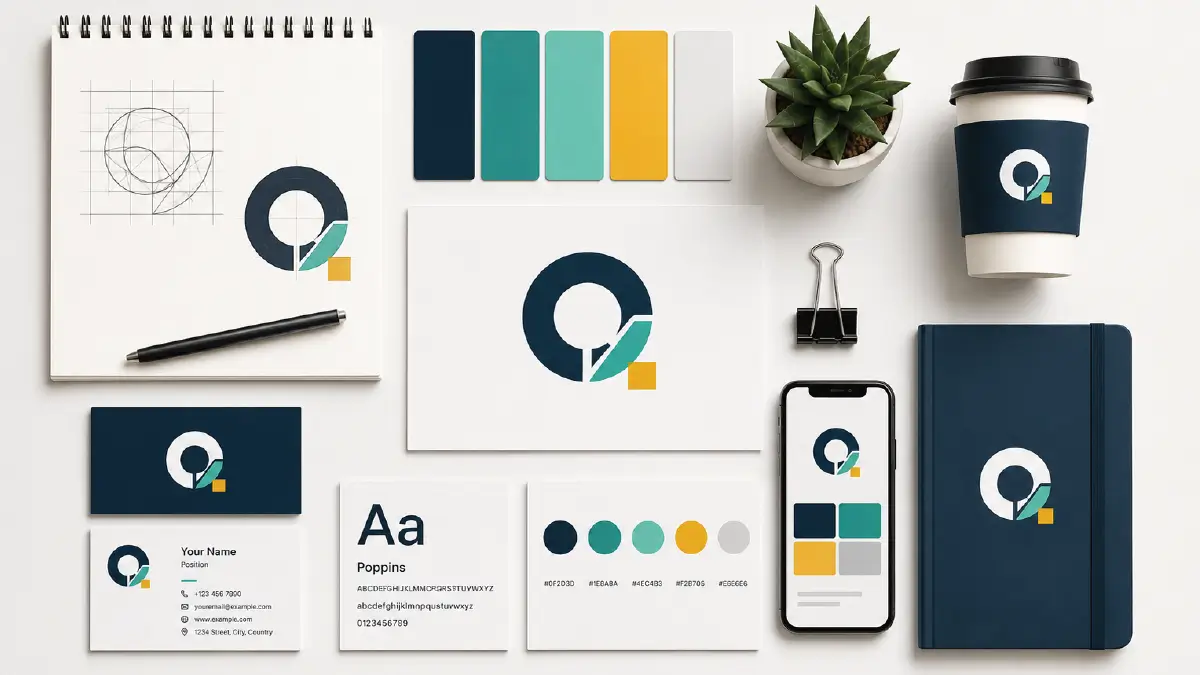
If you are serious about your business from day one, you will put in the work to see that your brand is built to be strong and endure. It is an identity that gives a company a distinct personality, attitude, and ideals.
Entrepreneurs want to show these features, so they put effort into having special logos, color choices, and also different shapes to become the face for their brand. For reaching this, confident choices of typography, choosing a color scheme, and putting together things like a big brand style guide and storing images are all important.
And this is where graphic designers come into play. Once created, these items carry the brand name across every company campaign (such as business cards or calendars).
3. User Interface (UI) Design
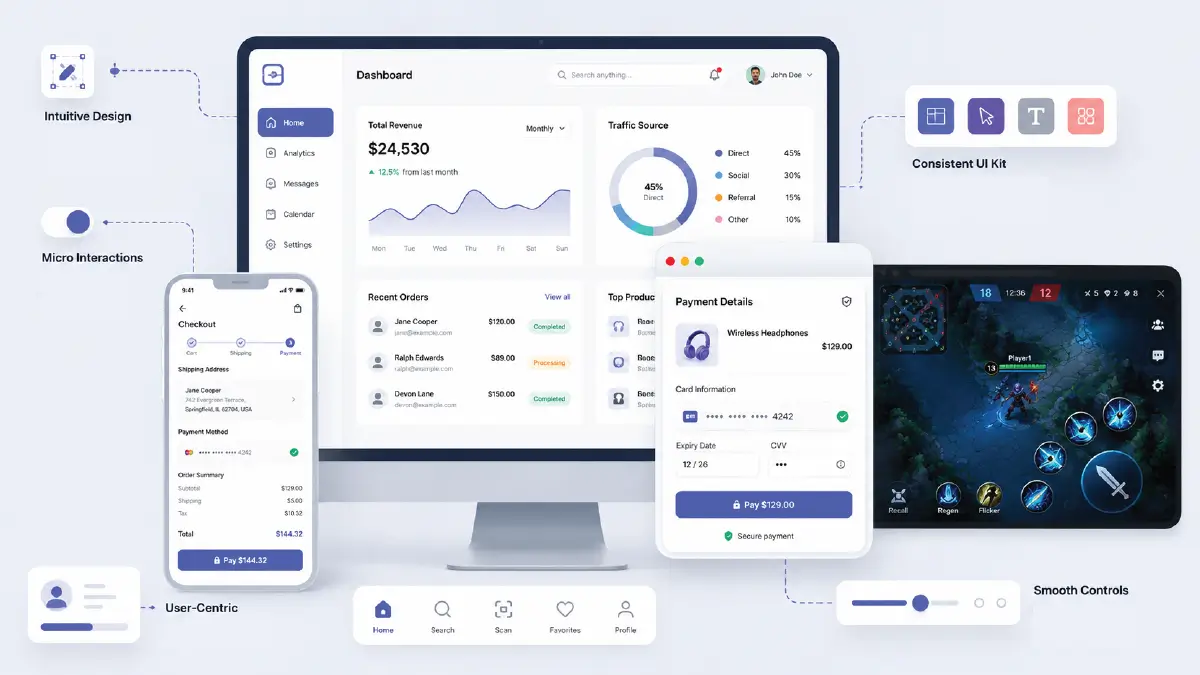
This tool, which is so important nowadays, allows the user and their gadget or an app to make a stronger connection. A user interface that is designed to be simple means that using it is without difficulty, while users easily collect the data they need right from their convenient place.
All buttons, screens, keyboards, mice, the menus, and even the micro-interactions are included in this kind of design. Check out the following services; you will be able to relate better to UI:
- Product web page design
- Operating system (OS) theme design
- App customer checkout page design
- Game multiplayer interface design
4. Motion Graphics Design
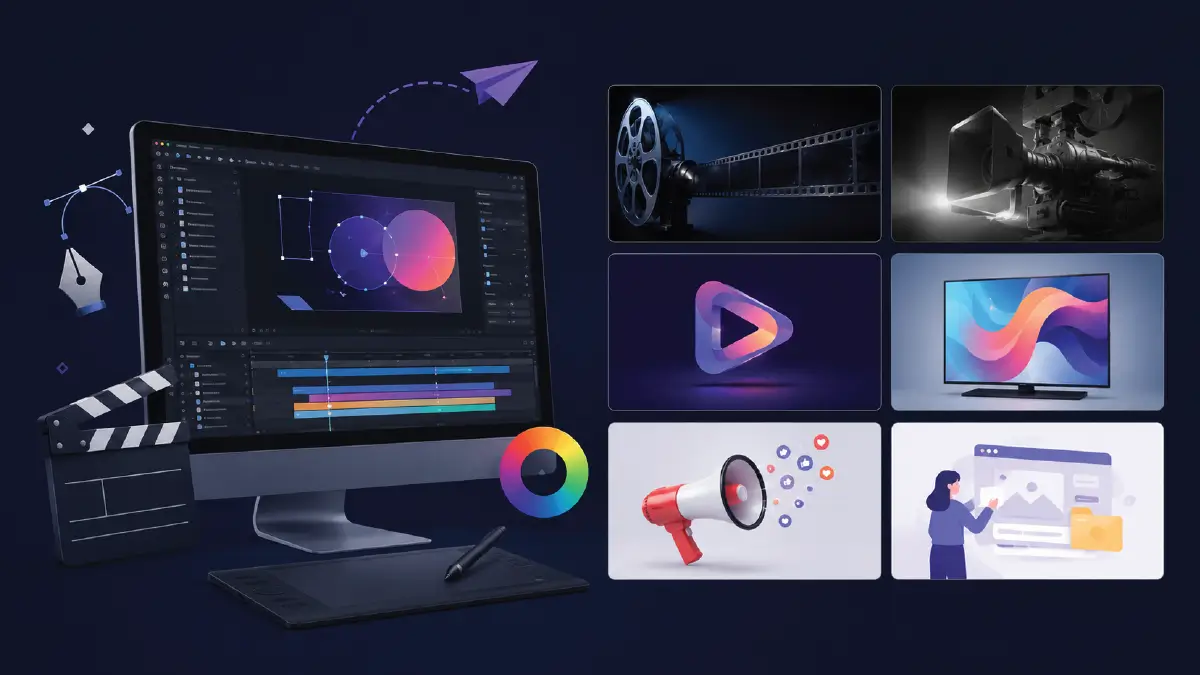
Motion graphics include all content that contains elements in motion, other than still images. That is, everything we see in mass media and video platforms on social media, like animation, typography, and visual effects, is all motion graphics.
Designers create a meaningful storyline here, then combine various types of active elements to make a complete video. Now, let’s see where you can see the applications of this design widely:
- Title sequences and end credits of dramas or movies
- Teasers/trailers
- Animated logos
- TV commercials
- Promotional videos
- GIFs
5. Editorial or Publishing-Centered Graphic Design
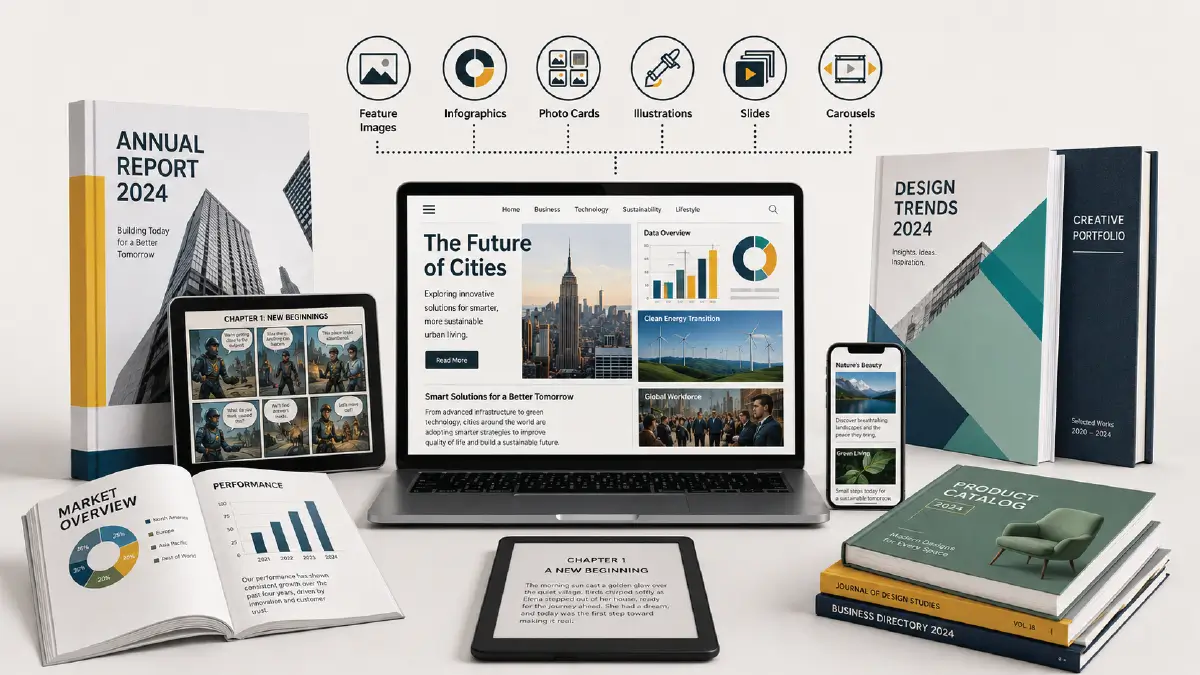
The most drastic shift in graphic design has occurred in the publishing industry; the boom from print media to online editorial. Cover mockups have taken the place of the classic paper cover.
Newspapers and magazines each have online versions that are rich with-
- Feature images
- Infographics
- Photo cards
- Illustrations
- Slides
- Carousels
Besides that, things like annual reports, comics, product catalogs, journals, as well as directories those have not disappeared; rather have been redesigned with new sides. Many of those have become big reasons that Kindles or PDFs are getting much more attention.
6. Graphic Design with an Environmental Visualization Bent
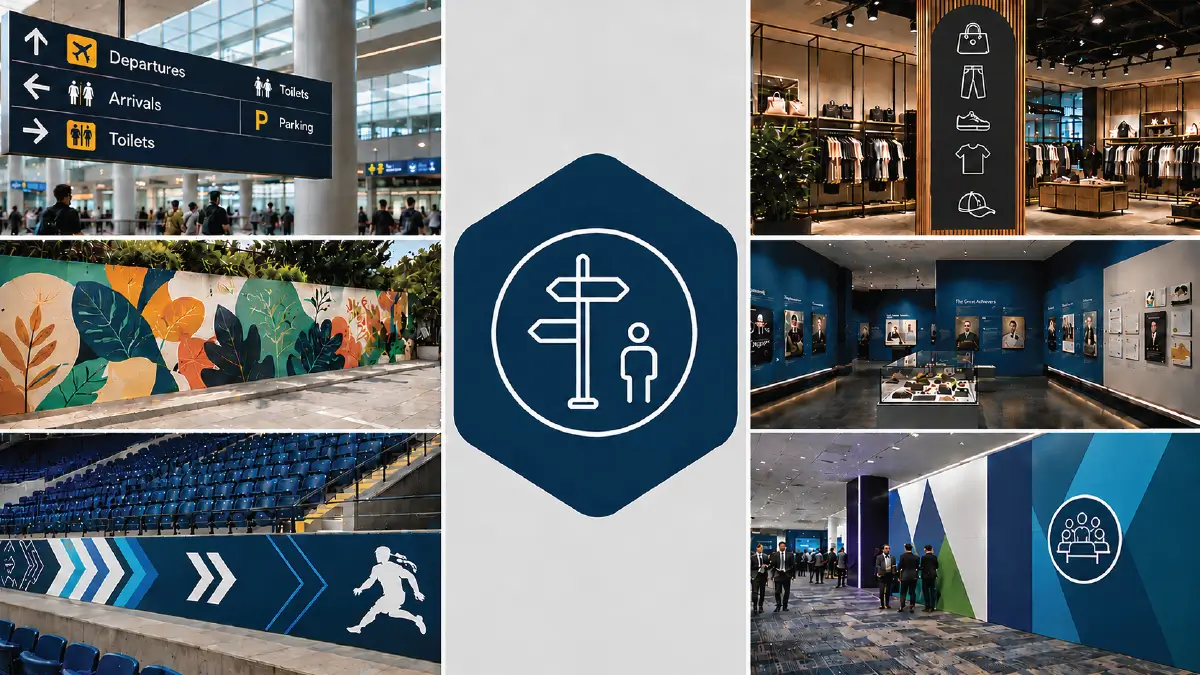
As cities expand, you still have the need for some form of coverage and planning. That is where environmental graphic design is born. It gives shape to the built environment so that a person can make a visual connection with the place.
You will find designers putting their mark on things like road signs in hospitals, airports or schools. The design techniques combine signage, landmarks, and visual cues in a way that makes it clear to people where to go with respect to where they are.
So the target audience gets the required information via these items:
- Public transport navigation
- Retail interior decoration
- Murals
- Museum exhibits
- Stadium branding
- Event and conference venues
7. Graphic Design with Illustration & Artwork
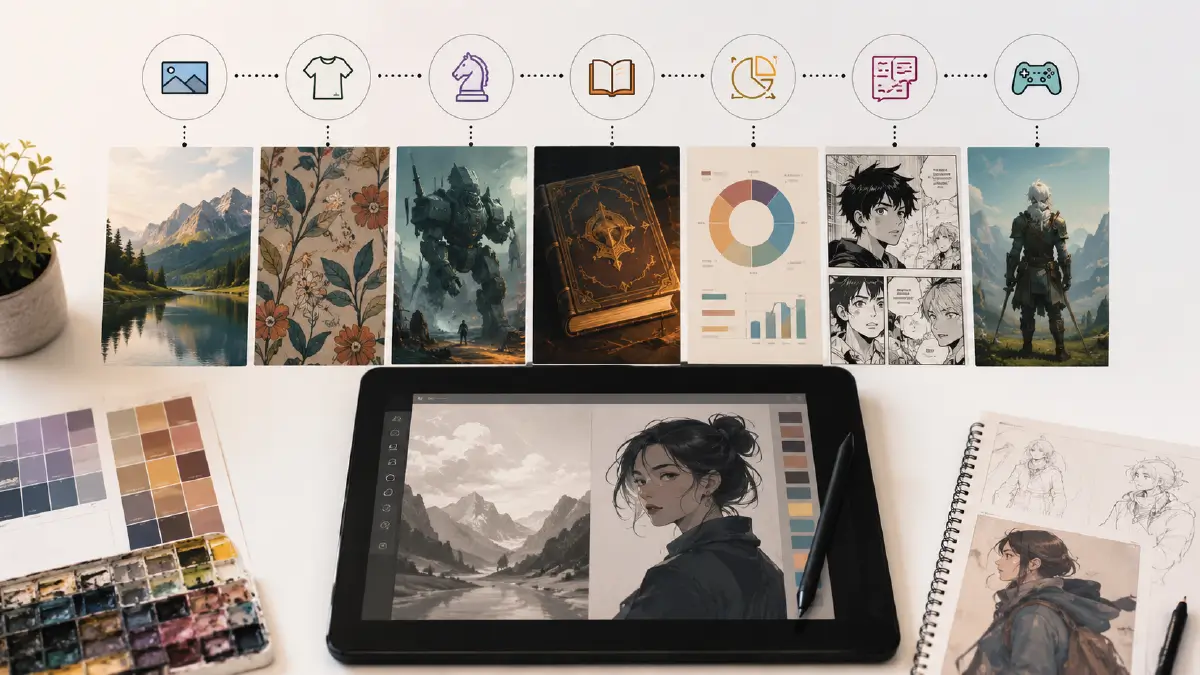
Art and illustration go hand in hand with more creative artwork. This great way of practicing fine art is not technically part of graphic design, yet in a commercial sense the two have become complementary.
And that’s why you see the following creative works that have huge industries around them:
- Stock images
- Cloth designs
- Concept art
- Book covers
- Infographics
- Cartoons, manga series
- Graphic novels/comic books
- Video games
8. Graphic Design for Product Packaging

Like marketing, packaging is a business process (specifically, part of the supply chain), and adding graphical content to it is just a small part of that marketing.
You see images and text of various designs on every surface of the box that the product is packaged in, and even on the product itself. These graphics don’t just tell you what the product offers; they tell a whole story around it.
There are other sub-processes associated with this design that you don’t see:
- Product photography or illustration
- Product concept development
- Mockup creation
- Preparing print-ready files
Frequently Asked Questions About Different Types of Graphic Design
1. What tools do professionals use for these 8 different types of graphic design?
Except for motion graphics, Adobe Photoshop, the best image editing software of all time, is more than enough for all the other 7 designs. Some alternatives to the well-known Adobe program started appearing in the market. Such ones are Adobe Lightroom, Luminar Neo, and Capture One.
For motion graphics, Adobe After Effects takes the lead in giving a smoother user experience than everyone else. After it come Cinema4D, 3DsMax, Maya, and Blender.
2. How much do logos and colors affect a product’s brand identity?
Branding, centered around its color and unique logo, determines how much customers will remember a product. Through a shape that grabs the attention of a viewer at first glance and makes a lasting impression is what a logo designer aims to create.
Color plays an equally important role in achieving this effect throughout, as it makes the logo neat visibly and clearly.
3. What is the difference between UI design and UX (User Experience) design?
UI design tells you how the overall elements within a website or application will appear to users when they use it. For example, where buttons, icons, and navigation menus will be, what their colors will be, font size and color, etc.
UX, on the other hand, determines how users will use each activity within that website or application. For instance, which screen will come after which screen, which button does what function, which menu navigates to which screen, etc.
4. What are the different styles of typography?
The typography styles vary depending on what purpose they serve exactly. The most commonly used are Serif (professional look), Sans Serif (modern type), Script (handwriting style), Display (for headlines).
5. What situations are best to use illustration art as design?
Illustrations work in best way for international brands not wanting issues about cultural bias in different markets. On top of that, when you need to clarify something complex, illustrations make things easy to get, particularly in describing a difficult concept or some processes. Above all, technology companies mostly turn to illustration to visualize innovative or near-future messages.
Summing Up
Each of these 8 different types of graphic design covers a broad range of industries. Among them, branding, marketing, and packaging are significant key business operations that impact every product or service trade.
Illustrations are just as important in advertising as motion graphics are now familiar and effective. Plus, where even non-tech companies are downplaying web and mobile apps as a necessity, you can’t consider UI design as optional.
Last but not least, the publishing domain has gained more volume in digital media than in its paper era. Nowadays, when people-first content is the first condition, environmental visuals can reach people very close.
Which of these types does the industry you have been working in mostly use? Are you having trouble creating relevant graphical content and looking for a quick solution?
Retouching Zone is home to graphic design experts who deal with just the level of complexity you are facing. Wondering where to start? Just start with their free trial, where you’ll get results within hours and know what you should actually do next.