

The 4:3 aspect ratio has come a long way since the inception of its popularly used CRT monitor. Still in 2026, it makes its own space in the modern video and image arena.
The 16:9 aspect ratio indeed dominates the entire market, but many nostalgic and small-screen users are still fans of the 4:3 aspect ratio. Most importantly, you can still find the 1.33:1 aspect ratio used in docu films to create retro visuals.
4:3 creates an incredible comfort zone for photographers as well as the final users. Its extension starts from the documentary genre, and it doesn’t really stop at entertainment either; it also goes into promotional work, kinda like that.
So, read on, and you’ll find out more about how this aspect ratio spreads across social media and modern devices.
Defining 4:3 Aspect Ratio
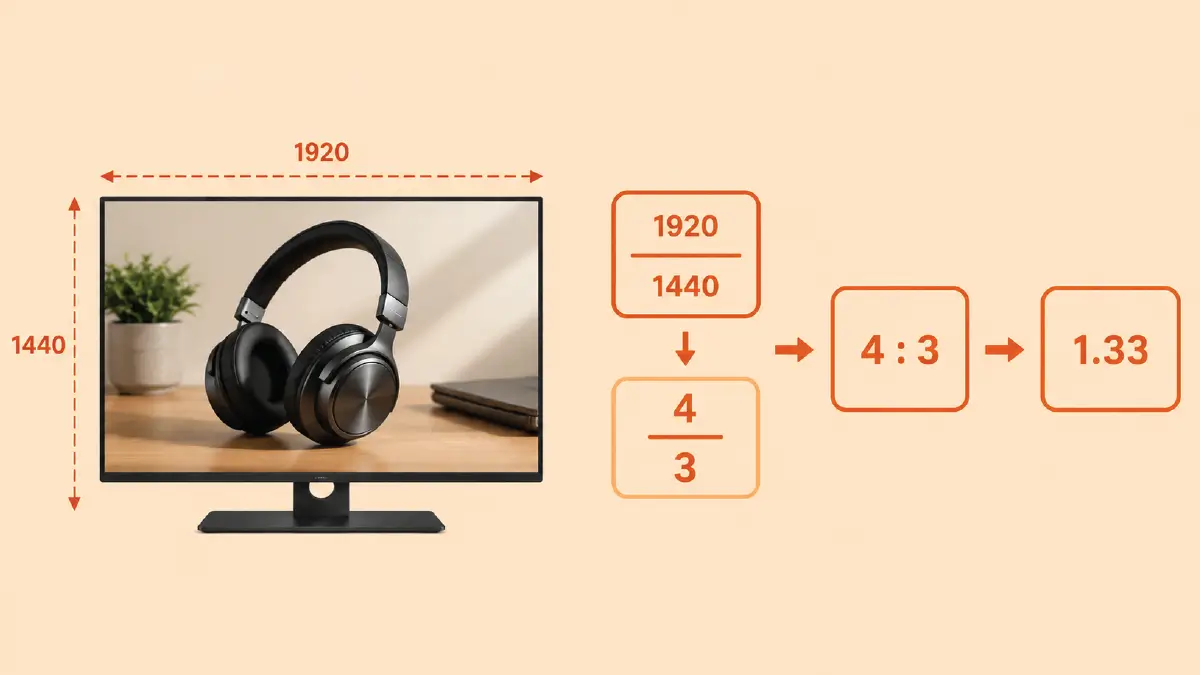
As applied to images, displays, or frames, this ratio refers to a measurement of content or display where the ratio of width to height is 4:3.
For example, if the height of a digital photo is 1440 pixels and the width is 1920 pixels,
The ratio = 1920/1440
= 4/3
The universal rule is that aspect ratio has no units because the units of width and height are truncated during division. Apart from using the colon, this ratio is also expressed as the direct quotient (4/3=) 1.33, especially for device displays.
Most Popular Resolutions Run with the 4:3 Format
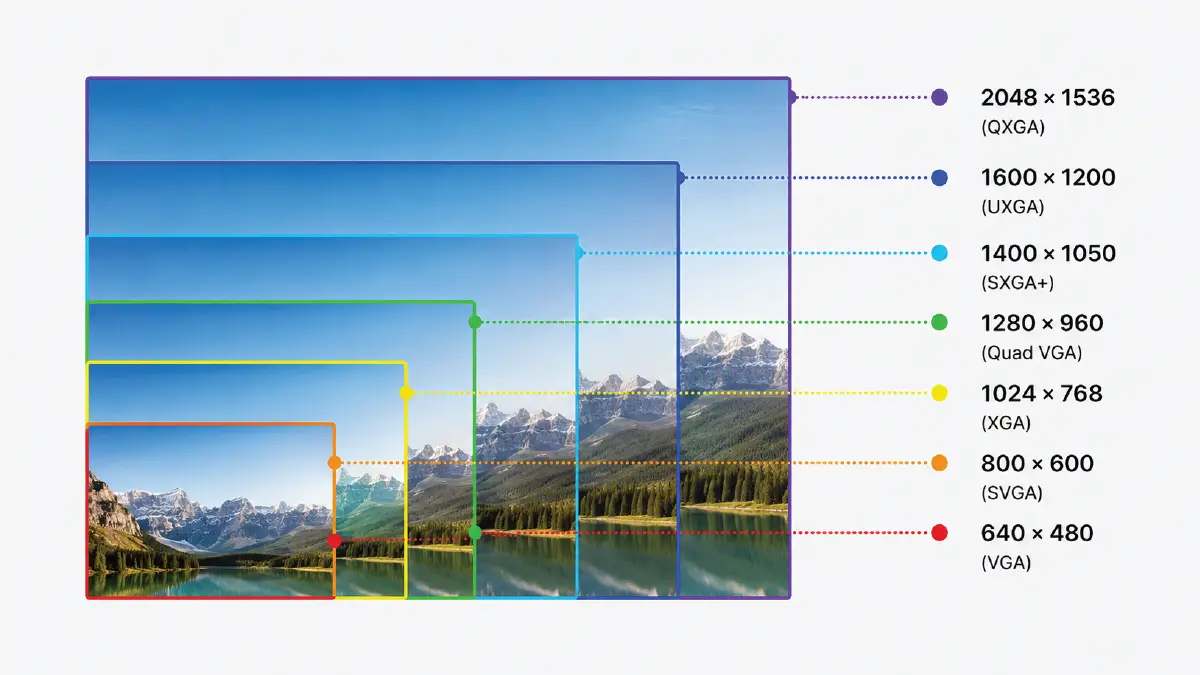
Resolution is an important parameter of digital photos through which you can get a clear idea of the width and height of the image in pixels-per-inch. Here are the widely used photo resolutions that carry the 4:3 ratio inside:
- 640 × 480 [VGA (Video Graphics Array)]
- 800 × 600 [SVGA (Super VGA)]
- 1024 × 768 [XGA (Extended GA)]
- 1280 × 960 [Quad VGA]
- 1400 x 1050 [SXGA+ (Super XGA plus)]
- 1600 × 1200 [UXGA (Ultra XGA)]
- 2048 × 1536 [QXGA (Quad XGA)]
4:3 Ratio Across Social Media
Following the evolution of technology, social media has now replaced the old NTSC TVs or CRT monitors. And here, 2026 sees the presence of 4:3 in front of everyone’s wide-open eyes.
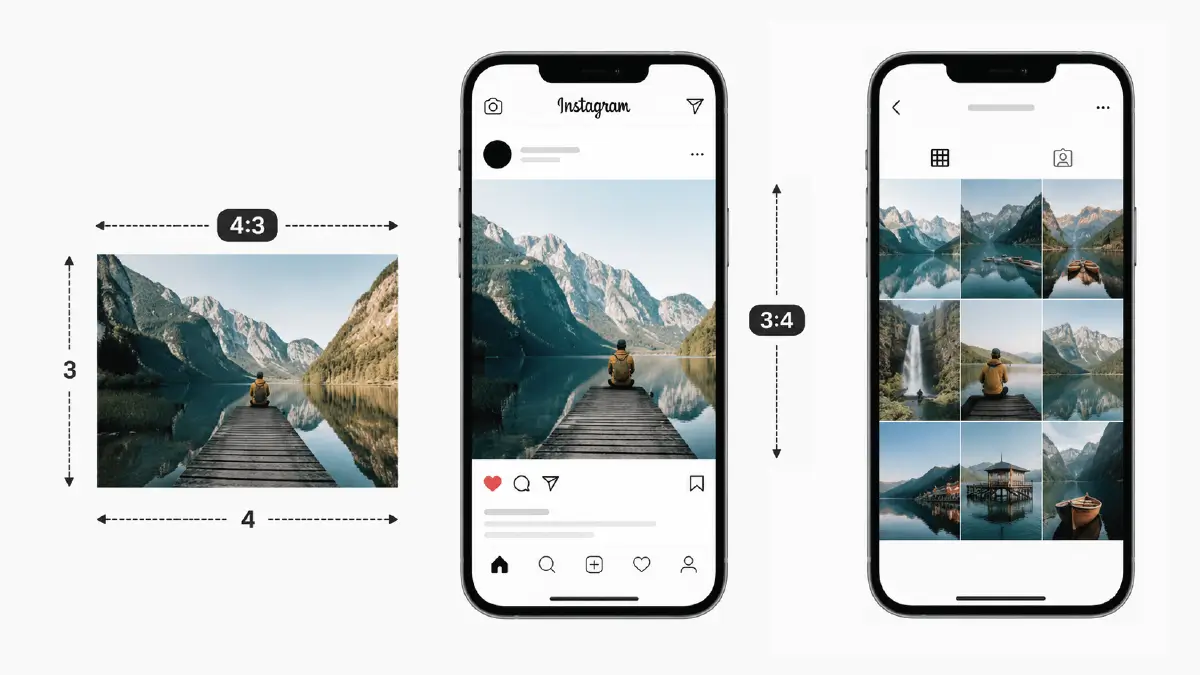
I’d not call it exactly ideal from a technical perspective, but instead, Instagram photographers use the 4:3 aspect ratio well. It works even better on smartphones, as you don’t have to change it horizontally.
The most useful thing is that you don’t have to crop the pillarboxing to fit the photo on the smaller screen of a smartphone. From a user’s perspective, images of 1080×810 pixels in particular are great for scrolling.
And if you change it vertically, it fits Instagram’s grid layout without any problems at all, which is 3:4. You’ll find that most Instagram influencers prefer to use 1080×1440 pixels.

If you put several 4:3 or 3:4 ratio images together, Facebook’s user interface creates blocks in such a way that no essential elements of the images are left out.
When you go to upload images targeting both desktop and mobile, the horizontal 4:3 takes up more space vertically in the mobile feed. However, if you look at the desktop version, you will see that it has not been unnecessarily shortened at the bottom.
This is why the content with resolutions starting from 1200×900 pixels to 2048×1536 pixels happens to gain a huge user engagement. And in the vertical, Facebook blocks usually support 1200×1600 pixels due to its wide acceptance among platform users.
YouTube
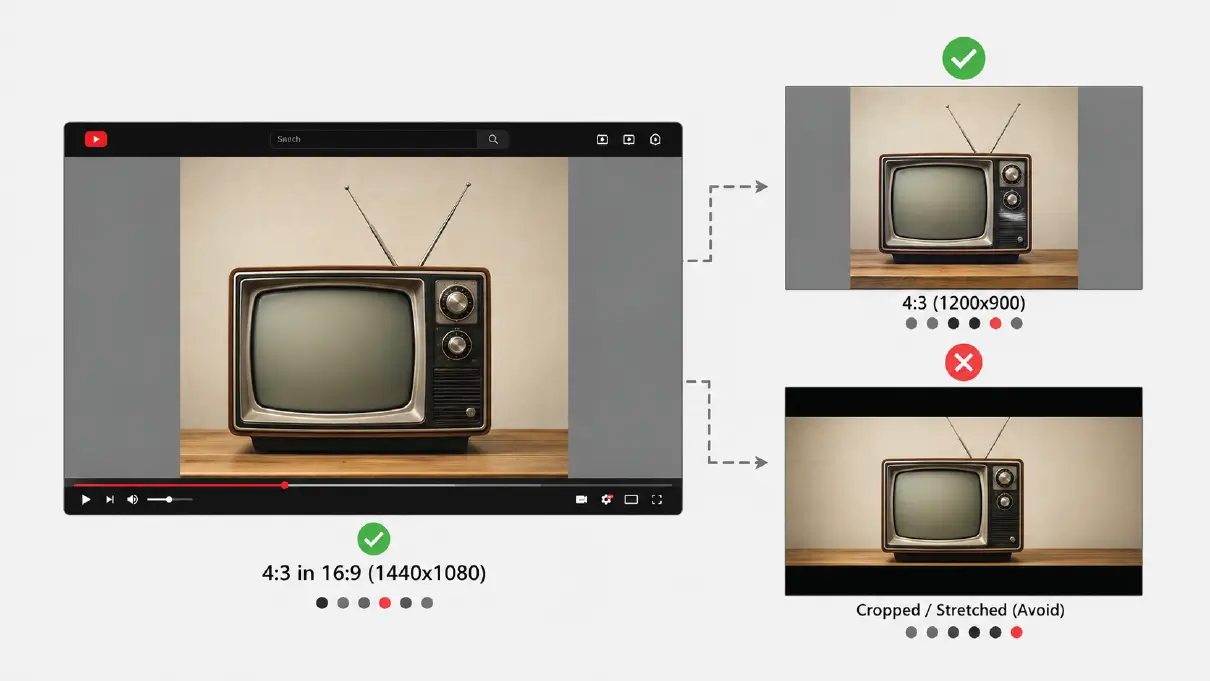
Retro or old TV content is one of the popular genres on YouTube, with 4:3 getting the most attention out of all the aspect ratios. These days, with old content always comes old quality, so you don’t want to risk ruining the composition by stretching to fit it in the big frame.
However, when trying to fit it into a 16:9 layout, all you need to do is just forgive the gray areas on the left and right sides of the image. For documentary-type content, creators often take 1440×1080 pixels as their first choice.
Apart from that, though, technically, there isn’t really much space for 4:3 on this video platform. Still, you will see the use of 1200×900 pixels for images in community posts widely. And, if you want to leave it at horizontal, then the layout covered with black lines without cropping is your only hope.
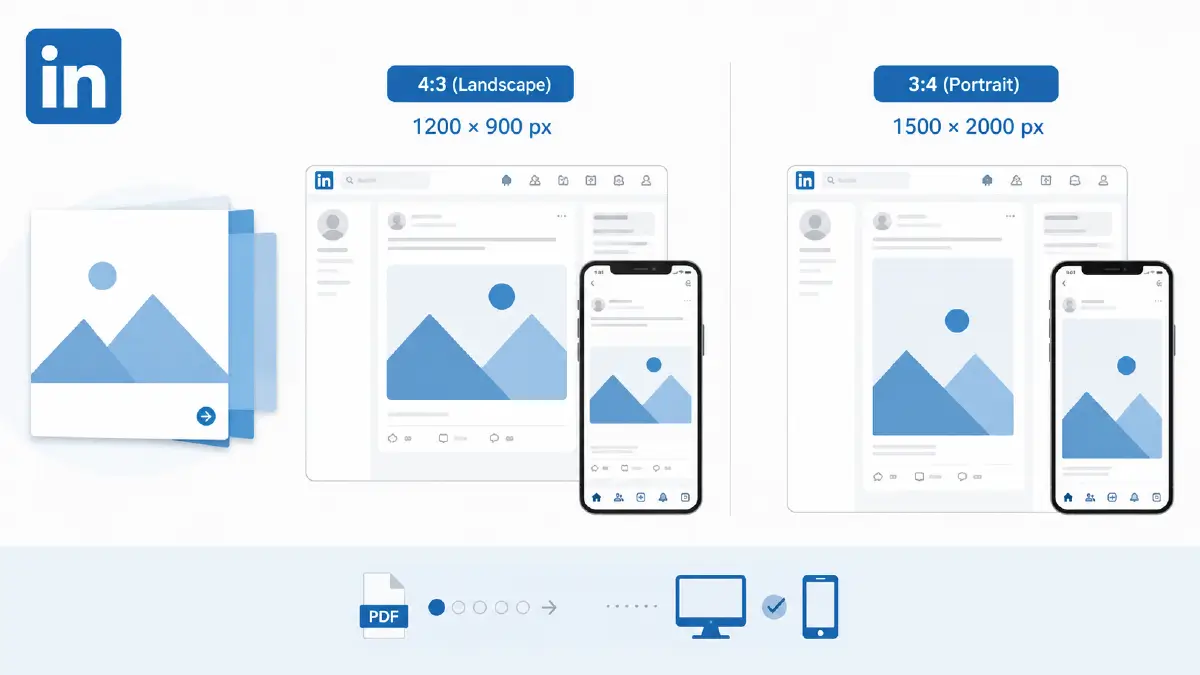
While 1:1 is the most common, both 4:3 and 3:4 work well for slide carousels that you often find useful in the corporate arena of LinkedIn. This landscape configuration gives a corporate look similar to PowerPoint slides.
Mostly, you’ll see PDF carousels at 1200×900 pixels, while 1500×2000 pixels take the front row for vertical documents.
The best part is that content created in this ratio, centered around the platform, is in continuous alignment on both the desktop sidebar and the mobile app.
Modern Devices 1.33:1 Aspect Ratio Works Best With
iPad and Android Tablets
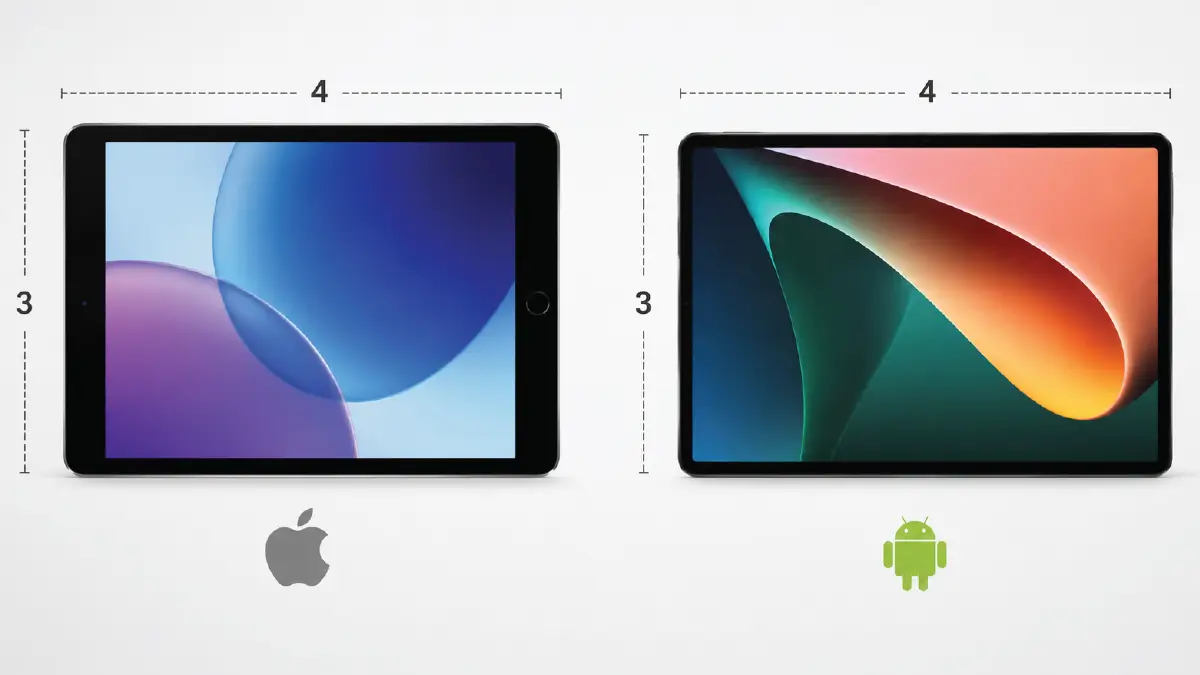
The iPad has long recognized the 1.33 aspect ratio, so it can adapt to any variant very well. The best proof of this is Apple’s affinity with 4.3:3 (1.43, which is very close to 1.33).
Besides, classic tablets like Retina, with 2048 pixel width and 1536 pixel height, have been synonymous with the 4:3 aspect ratio for a long time.
Android tablets are not far behind in their affinity with 4.3. You’ll find them entering the tech battle over this ratio as an alternative to laptops.
Digital Photography Camera
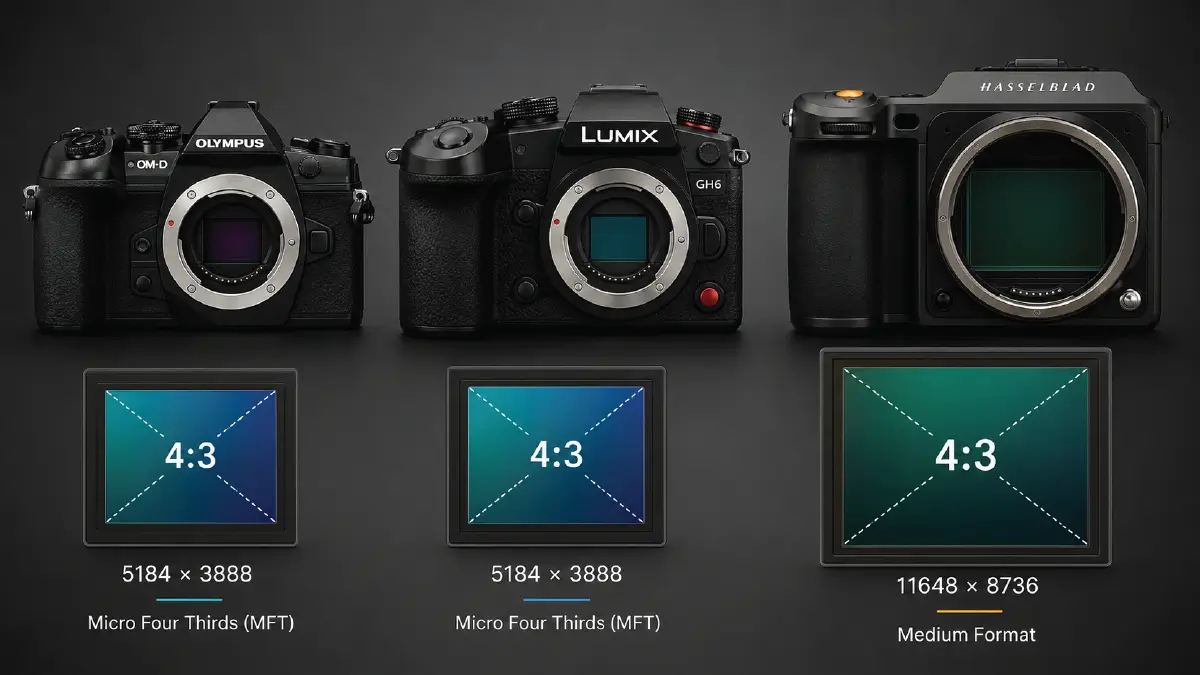
16:9 is more relevant to video content, whereas 4:3 goes best with still images, which is the reason behind 4:3 being tagged along with Micro Four Thirds. Are you up for M43 shots? Then have an MFT sensor with resolution set at 5184 × 3888 pixels, and you are good to go to shoot.
For mirrorless cameras in particular, you don’t have to look far; you’ve Olympus and Panasonic Lumix very close by. Their names proudly reveal the 4:3 aspect ratio imaging sensors they have inside.
Want a little more vertical information? You can check out the Hasselblad, which is used to 11648 × 8736 pixels. The Fujifilm GFX also has a frame shaped like a box for you to get great studio portraits and even editorial prints.
Mid-90s Retro Gaming Machines Renewed
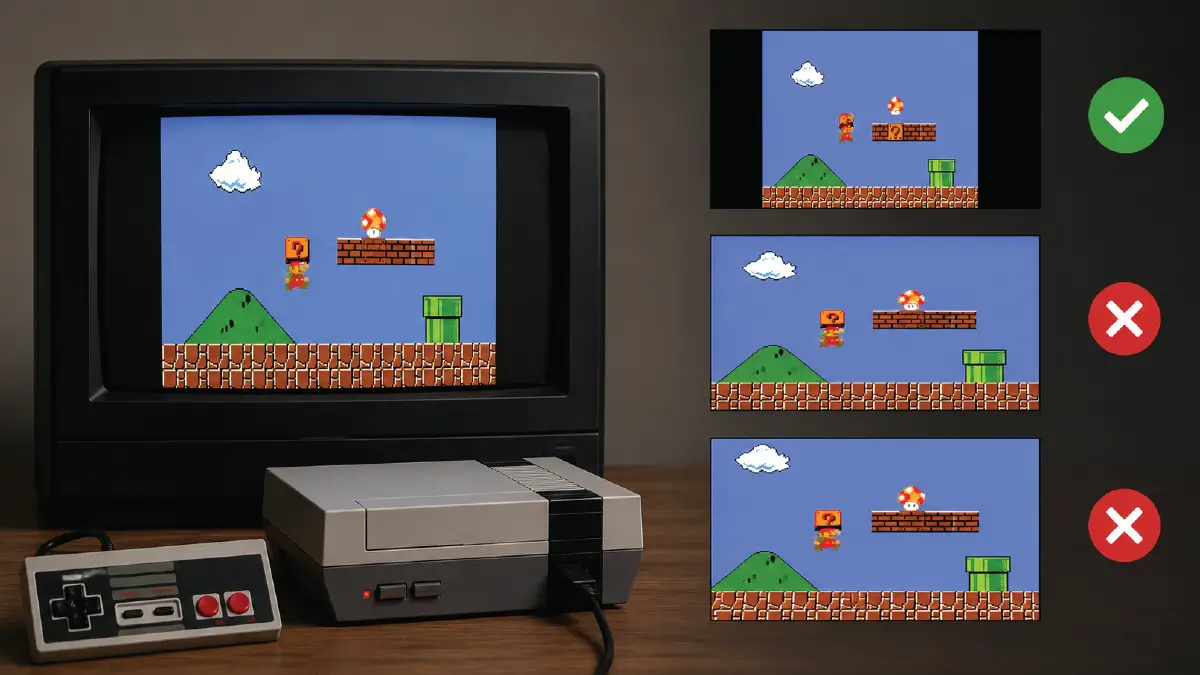
Nintendo’s older series that kind of captivated gamers in the mid-90s; well, it’s already back in a renewed form. Game developers lovingly keep the 4:3 ratio herein, combined with other aspect ratios.
You’ll notice the benefits of these modern game emulators when you find out they don’t mess with black bars. Moreover, they work so well at that old 640 x 480 pixel resolution that you don’t have to worry about screen stretching.
Smart Video Doorbells
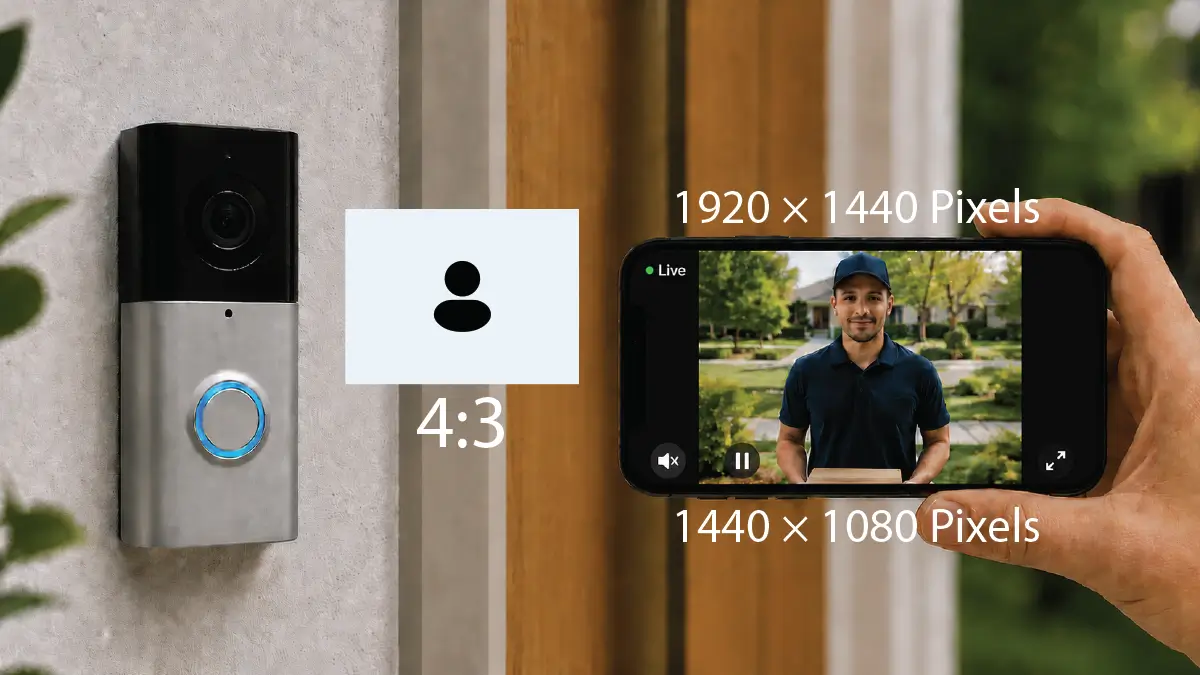
The association of 4:3 with today’s home automation is no coincidence. At least, smart video doorbells acknowledge it. Like 1:1, this 1.33 camera sensor allows the person inside the house to see the person standing outside the door with complete clarity.
And these sensors do this visualization quite well, thanks to resolutions: 1920 × 1440 pixels or 1440 × 1080 pixels.
Comparison of 4:3 with Other Popular Aspect Ratios
| Aspect Ratios | Popular Platforms | Shape View | Display Fit |
| 4:3 | Retro gaming devices | Almost Square | Grey bar on the top and bottom sides |
| 16:9 | All the latest devices and social media | Widescreen | Perfectly fit |
| 4:5 | Especially social media | Almost Square | Black bar on the left and right sides |
| 1:1 | Instagram specially mobile feeds | Pure Square | Large black bar on the left and right sides |
Frequently Asked Questions About 4:3 Aspect Ratio
1. What does the Micro Four Thirds system relate to the 4:3 aspect ration?
Known as MFT or M43 or M4/3 for short, this system sets the standard for the design and development of mirrorless cameras and their lenses, and camcorders. Like other compact digital cameras, this system uses a 4:3 image aspect ratio.
2. How do I find the new height of my image to add it to my blog based on a specific aspect ratio?
Suppose you have an image that has a resolution of 1024 x 768 pixels. Now you want to add it to your blog, but the blog template only allows the width of an image to be 500 pixels.
Now you have to keep the width of your image fixed at 500 pixels and find the height, right? Again, the condition here is that you can’t compromise the aspect ratio in any way. How can you find out the height in this case? Look at the following formula and calculate accordingly:
New height = (Old height ÷ Original width) x New width
(768 ÷ 1024) x 500
= 375
3. 4:3 or 16:9; Which should I go for?
If you think it through from all angles, the 16:9 ratio is far ahead in the game, as it fits well on all devices these days, which consequently accommodates more quality in the image.
Meanwhile, you will find the 4:3 ratio to serve a specific purpose, which is to create the most suitable look for certain types of content, such as retro gaming.
4. What are the most common uses of pillarbox views with a 4:3 aspect ratio?
You’ll usually see the 4:3 aspect ratio pillarbox view in older TV programs like movies, dramas, and cartoons. It can also be seen in archival footage, creative documentaries, retro game emulations, etc.
5. Can I get 4K resolution in 4:3 ratio?
Yes, there is, and that resolution is 2880×2160 pixels, which you will most likely hear as 2160p vertically. This format is mainly used by customizing ultra-wide monitors or camera modes to get a longer image.
Pilling Up
The 4:3 aspect ratio keeps merging with modern visual formats in 2026, and it still keeps its own distinct genre, too.
You don’t really have to stress about shorts and reels, because the trimming of certain segments works well for this format, and it feels natural. What’s more, as devices have moved forward, they haven’t become strange at all to 1.33 either.
Rather, the foundation still remains. And that’s why you can find traces of this measurement in Apple, Android, and even digital cameras.
You can rely on experienced experts who are ready to take care of all the hassles related to the sizing of your product.
Retouching Zone is just the photo editing company that has been running its decade-long glorious presence in the industry. Give their free trial a chance and check by yourself how far they go in making things in the proper size!