
Are you selling clothes online? If yes, then you know how important it is to show your garment product accurately. It helps customers better understand what exactly they are getting for their money. Ghost mannequins are one of the best post-production techniques for accurately and in detail presenting attire. If you are wondering about the question of ‘What is ghost mannequin?’ and who and why you need it, this article will give a clear answer.
What is Ghost Mannequin?
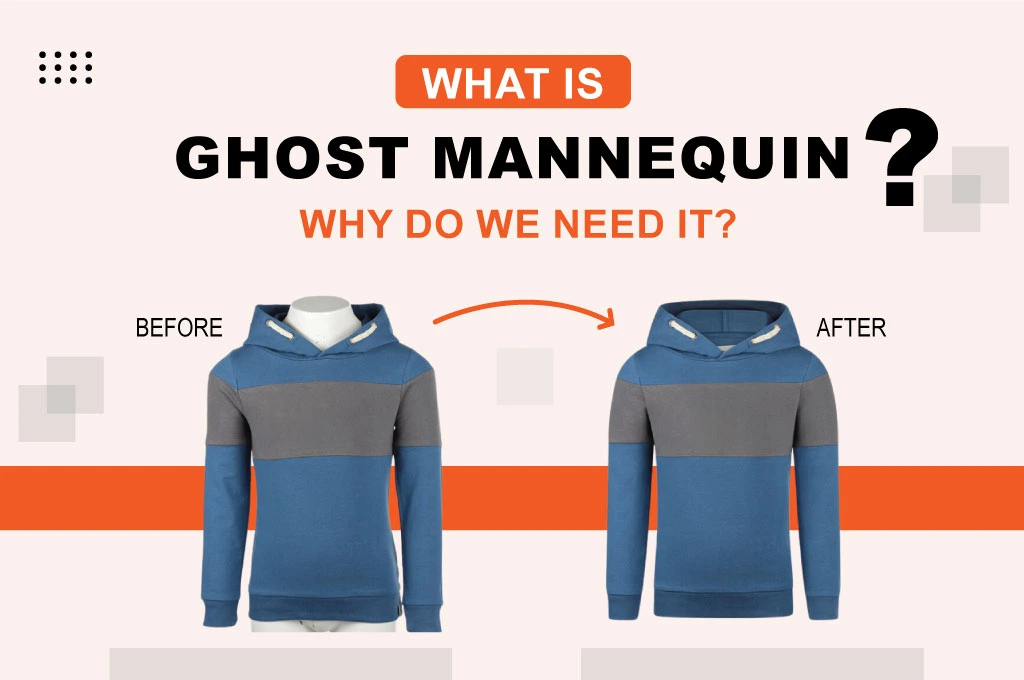
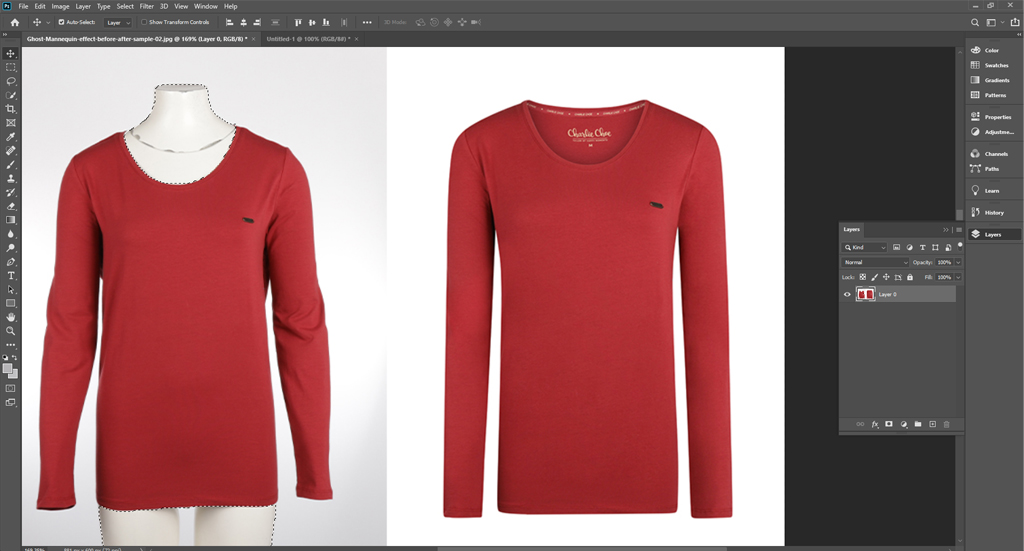
Invisible mannequin is a special image editing technique used mainly in the fashion industry for garments. In this effect, a photo editor creates an illusion to present the clothing so that the attire is worn by someone invisible in the photo. The main objective of the hollow mannequin effect is to help buyers visualize how the apparel will fit after wearing it. You can see the cloth’s front and interior parts in an invisible mannequin.
How Does Mannequin Effects Work?
- Mannequin Removal: In a hollow mannequin technique, an editor first removes the mannequin from the clothing photo.
- Image Compositing: Then, the editor combines several images of the garment to show the front and back sections.
- 3D-Like Depth Creation: Finally, a realistic 3D-like effect with proper alignment is applied to the apparel image.
- Natural Garment Structure: The final image must maintain a natural shape and structure without visual distractions.
- Neck Joint Editing: The editor performs a neck joint to merge the inside label with the front view.
Benefits of Ghost Mannequin Effects
- Realistic Garment Presentation: It allows you to create a realistic look and display clothing in accurate shape, size, and fit.
- Cost Efficiency: You don’t need to invest in professional models, which can cost several times more than invisible mannequin editing.
- Product Variety Showcase: Hollow mannequins make it easy to display products in multiple colors and sizes.
- Detailed Product Visibility: Buyers get a clearer idea of the garment by viewing it from multiple angles, including inner and outer details.
- Enhanced Customer Trust: This technique helps customers experience a near-real-life view, supporting business credibility and integrity.
- Tyring ghost mannequin service: You can give a professional service a try, as it increases your ROI by reducing the overhead of photoshoots.
Ghost Mannequin vs. Live Models vs. Flat Lay
To help you decide which photography style fits your brand’s budget and goals, here is a quick comparison:
| Feature | Ghost Mannequin | Live Model | Flat Lay / Hanger |
| Primary Goal | Detailed 3D Structure | Lifestyle & Vibe | Minimalist / Budget |
| Customer Visualization | High | High | Low |
| Setup Cost | Affordable | Depends on Model, Studio | Low |
| Editing Complexity | High (Requires Neck Joint) | Medium (Retouching) | Low (Basic Cleanup) |
| Turnaround Time | Fast (24–48 hours) | Slow (Scheduling models) | Instant |
| Brand Perception | Premium & Professional | Relatable & High-End | Budget-friendly / Basic |
| Ideal For | Product Pages | Social Media / Hero Images | Basics (T-shirts, socks) |
While flat lay photography is great for social media, it lacks the depth required for high-converting product pages. Using a ghost mannequin service provides a ‘middle ground’. It gives you the high-end look of a model photoshoot without the recurring costs of talent and studio rentals.
Who Needs this Type of Effect?
- E-commerce Apparel Sellers: Online garment retailers need invisible mannequins for professional product presentation.
- Fashion Industry Adoption: It is widely used in the e-commerce fashion industry, especially by clothing brands and retailers.
- Creative Professionals: Photographers, designers, and manufacturers rely on invisible mannequins to highlight fit and details accurately.
- Collection Highlighting: This post-production method helps showcase unique clothing collections effectively.
Professional Branding: Businesses and individuals use invisible mannequins to maintain professionalism and attract potential buyers.
How is Ghost Mannequin Different from 3D Modeling?
- Invisible Mannequin Editing: An invisible mannequin is a post-production image editing process where an editor is compositing multiple images (front, back, inside neck, sleeves) to simulate a worn shape without showing the mannequin or model.
- 3D Garment Modeling: In contrast, 3D modeling is a technique in which a 3d artist creates a garment as a 3D object from scratch using mesh and texture mapping.
- Usage in Product Listings: You do not always need both in the product listing. Rather than using 3D modeling, most e-commerce stores use ghost mannequin OR flat lay.
For standard product listings, 3D modeling is optional and usually used for virtual try-ons, AR, or design prototyping.
Cost and Efficiency Comparison: For most e-commerce brands, Ghost Mannequin is the faster, more cost-effective choice than 3D modeling for achieving a realistic look.
How Ghost Mannequin Improves Brand Identity
- Enhanced Product Display: Invisible mannequins help present clothing products with precise and refined details.
- Higher Conversion Rates: Visually appealing images attract customer attention and boost conversions.
- 3D Visual Appeal: This commercial photography technique adds depth and realism that encourages purchase decisions.
- Consistent Visual Style: Products edited with invisible mannequins maintain a uniform look, often with a clean white background.
- Competitive Advantage: Hollow mannequin effects help brands stand out by presenting outfits in a reliable and distinctive way.
Long-Term Cost Savings: Using invisible mannequins reduces expenses, allowing businesses to invest more in growth-focused areas.
Frequently Asked Questions: Everything You Need to Know About Ghost Mannequin
1. What is the difference between ghost mannequin and flat lay photography?
While flat lay photography involves laying clothes on a flat surface for a 2D look, ghost mannequin uses a body form to create a 3D, lifelike shape. Ghost mannequin is superior for showing the “fit” and “drape” of structured items like jackets, dresses, and suits, which helps reduce customer hesitation.
2. How does the ghost mannequin effect reduce product returns?
Accurate visualization is key to reducing returns. The invisible mannequin effect allows customers to see the true volume, sleeve length, and neckline of a garment. When buyers have a clear understanding of how the clothing fits a human shape, they are significantly more likely to order the correct size.
3. Do I need special software for ghost mannequin photography?
The industry standard for creating this effect is Adobe Photoshop. Editors use advanced clipping path and masking techniques to remove the mannequin and perform a “neck joint” (stitching the inner collar photo to the front view) to create the 3D illusion.
4. Is ghost mannequin photography cheaper than using live models?
Yes. Hiring models requires recurring costs for talent, hair and makeup artists, and studio time. A ghost mannequin service is a one-time post-production cost that provides a consistent, high-end look across your entire catalog for a fraction of the price.
5. Can any type of clothing use the invisible mannequin effect?
Most apparel, including shirts, hoodies, jeans, and blazers, works perfectly. However, very sheer or thin fabrics (like lace or light silk) can be more challenging. For these items, professional photo retouching is essential to ensure the “ghost” looks natural and the fabric maintains its integrity.
Conclusion
People won’t buy your products unless you give them enough reasons to purchase them. One of the most reliable ways to build credibility is showing exactly what your customers will get. Hollow mannequins are an advanced image-editing process that shows your attire photos digitally and in a captivating way. Hopefully, you got a clear overview of the ‘What is ghost mannequin?’