

If you need everyday photos, bulk prints, and photo albums, then the 4×6 size is the right choice. Because you don’t have to go through the hassle of cropping here, whatever DSLR/mirrorless camera you use will match its native aspect ratio exactly.
And if you want a portrait-friendly display print that can be neatly stored on a desk or shelf and doesn’t require a full frame, then the 5×7 size is perfect.
4×6 vs 5×7: Quick Comparison
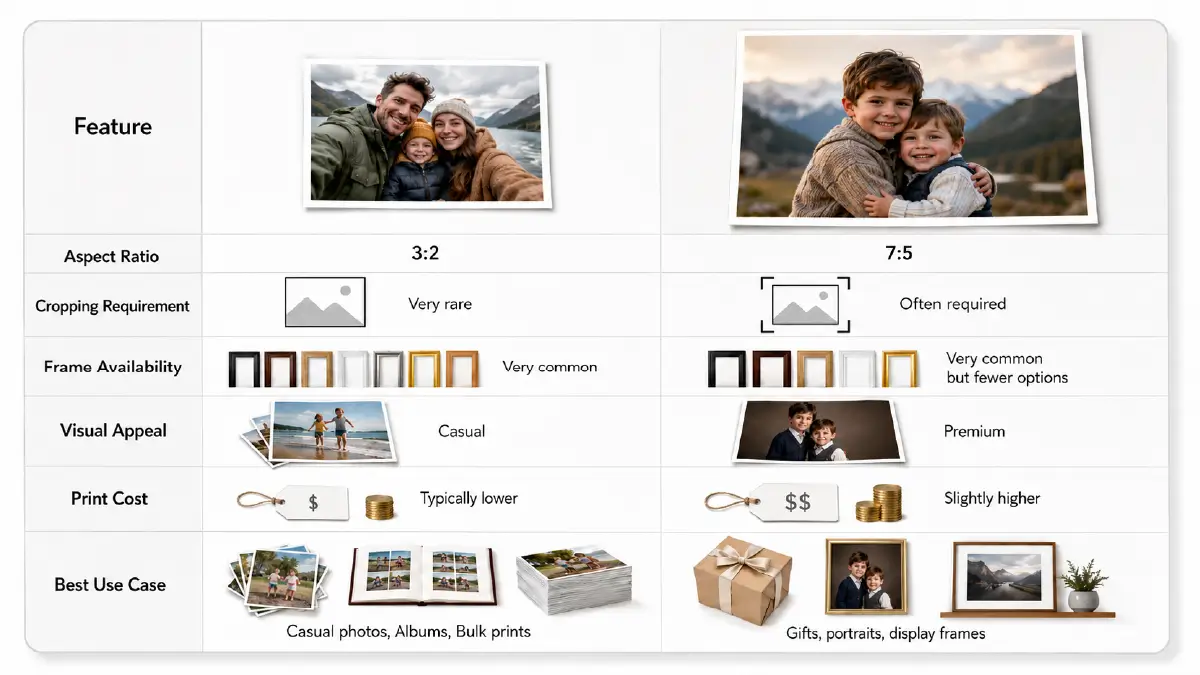
| Feature | 4×6 Photo Size | 5×7 Photo Size |
| Aspect Ratio | 3:2 | 7:5 |
| Cropping Requirement | Very rare (matches most cameras; DSLR/Mirrorless) | Often required |
| Frame Availability | Very common | Very common but comparatively fewer options |
| Visual Appeal | Casual | Premium |
| Print Cost | Typically lower | Slightly higher |
| Best Use Case | Casual photos, Albums, Bulk prints | Gifts, portraits, display frames |
Why Aspect Ratio Matters More Than Size
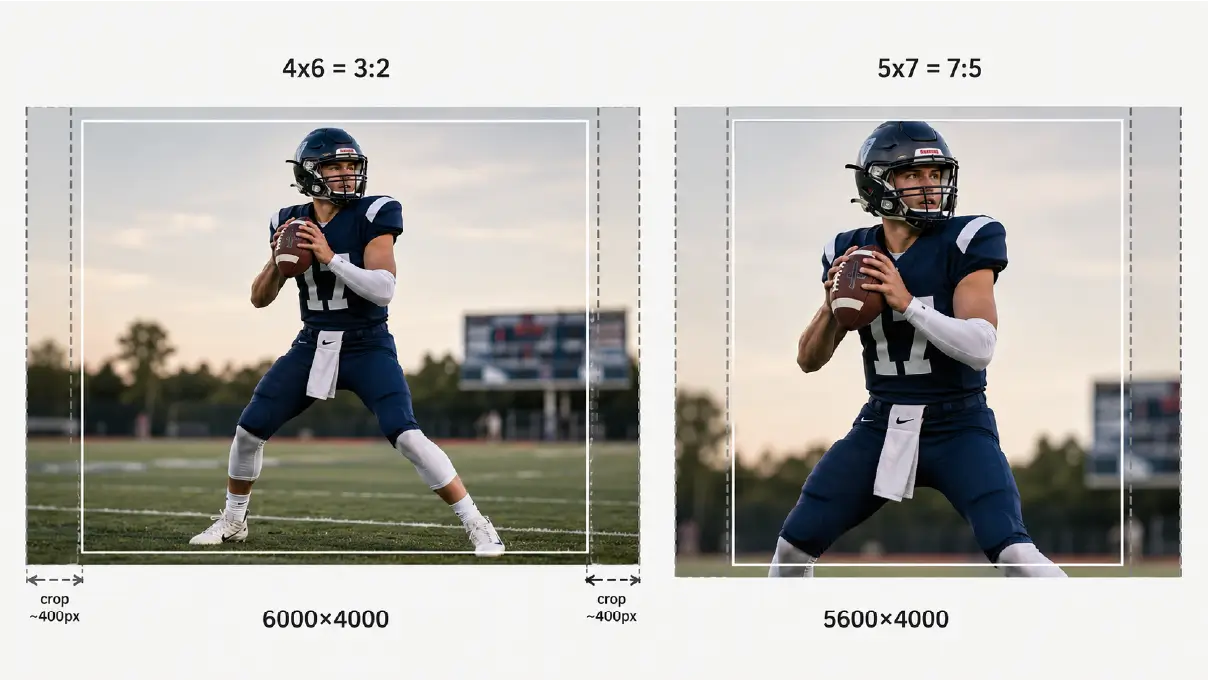
4×6 = 3:2
It’s very common that it matches the image size of your DSLR or mirrorless camera. Canon, Nikon, Sony Alpha, you know, shoot in a 3:2 aspect ratio.
So you can print a photo taken with a DSLR in 4×6 format; the result on the printer won’t be much different from what you see in your viewfinder.
5×7 = 7:5
When you take a 3:2 image and force it into a 7:5 frame, the lab has to crop it. You’re losing roughly 6.7% of the image area along the long edge.
That might not sound dramatic, but if your subject is close to the frame edge. You took a lifestyle shot of a football player, but the lab results show that the football player’s legs are missing from the frame.
You can get it clear with the following math:
- Original 3:2 image at 6000×4000 px
- To fit 7:5, the effective crop becomes approximately 5600×4000 px
- ~400 pixels trimmed from each side of the width
The fix?
Shoot with “print breathing room” in mind. Leave intentional space around your subject when you know a 5×7 is the destination.
What About Smartphones?
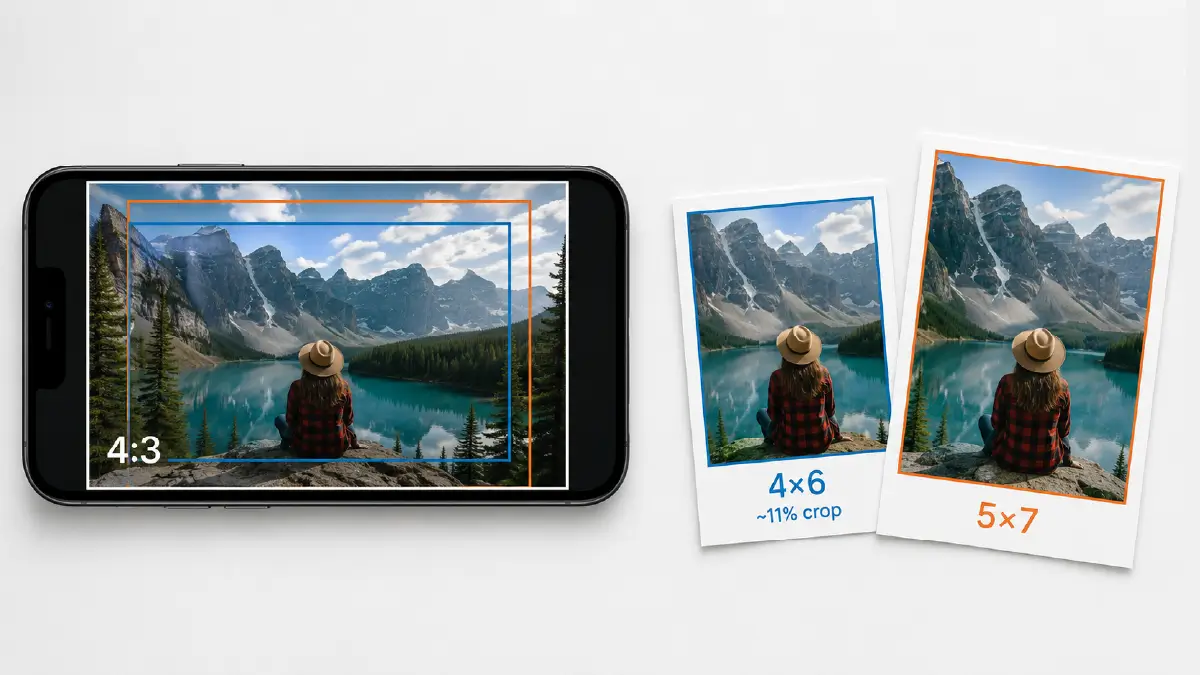
Since the X series, iPhones shoot at a 4:3 aspect ratio natively. That’s neither 3:2 nor 7:5, so both print sizes require cropping from a phone shot. A 4×6 crops off about 11% of a 4:3 image, while a 5×7 crops slightly less on the long dimension but more on the short one.
Neither is perfect from a phone. If you’re printing iPhone photos frequently, consider shooting in square or manually adjusting your crop in your phone’s editor before sending to print.
When 4×6 Is the Right Call
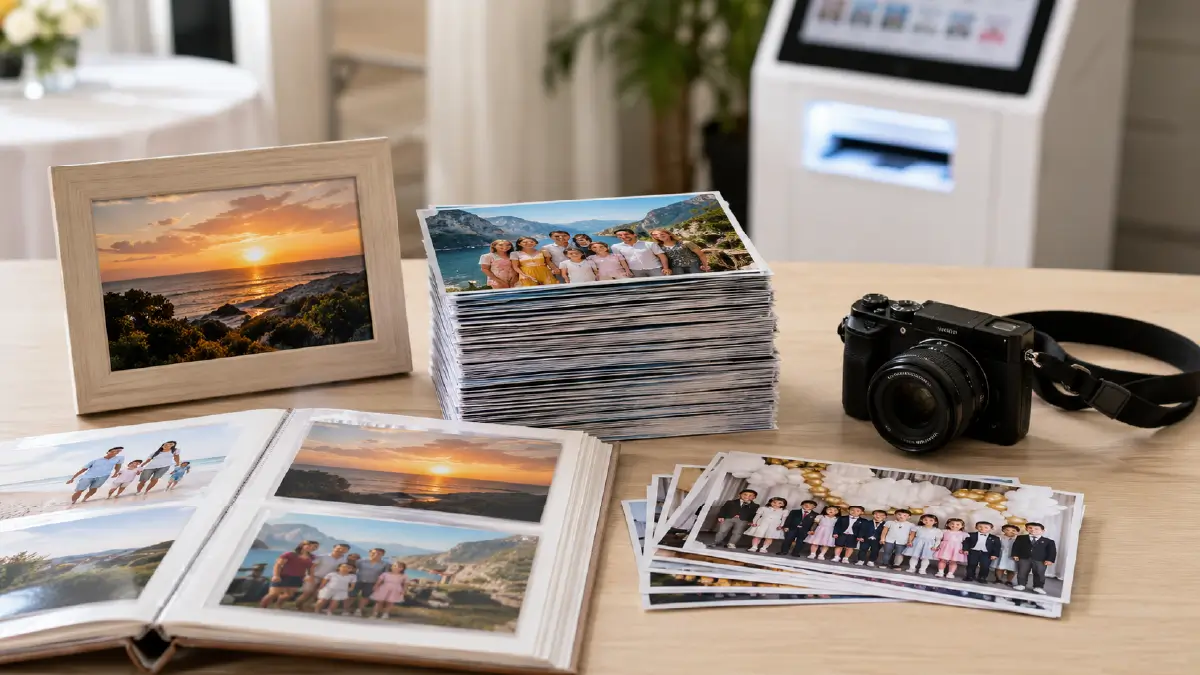
If you’re printing 200 photos from a family vacation or a school event, 4×6 is your format. It’s the universal standard for a reason- nearly every drugstore, photo kiosk, and online print lab defaults to it. Albums are designed around it. Frames are everywhere. The cost per print is the lowest in the industry.
For event photographers, wedding second shooters, and anyone running a “shoot and share” photo booth business, 4×6 is practically the only sensible option. Fast turnaround, low cost, easy distribution.
The format also handles landscape photos particularly well. Horizontal shots of sunsets, group photos, and travel landscapes print with excellent proportions at 4×6- the wider ratio gives the image room to breathe.
When 5×7 Wins
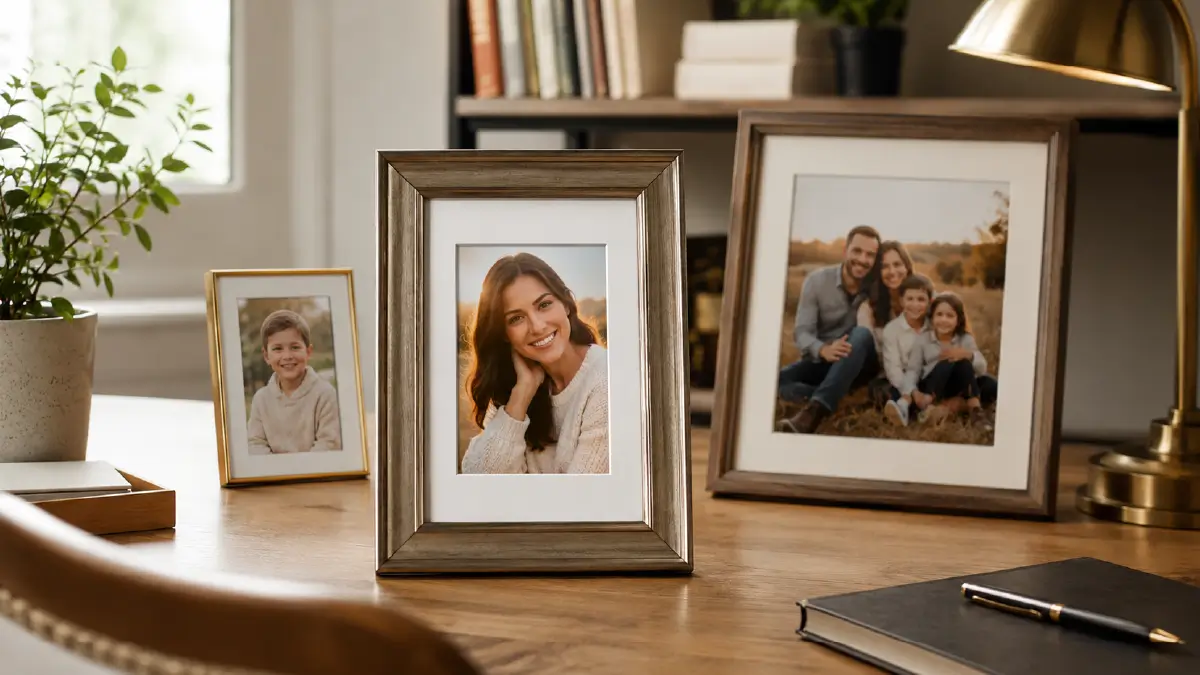
Pull up any well-decorated home office or living room bookshelf, and you’ll likely spot a 5×7 frame. There’s a reason for that: the proportions are just pleasant. The 7:5 ratio sits closer to classic portrait painting proportions, which is why it feels more “finished” and gift-worthy than a 4×6.
For portrait photography specifically- headshots, senior portraits, newborns, pet portraits- 5×7 is frequently the entry-level print product in a professional package. It’s large enough to show off expression and detail, small enough to be affordable, and it displays beautifully on a desk without dominating a space the way an 8×10 would.
If you’re giving prints as gifts, 5×7 is almost always the better choice. It feels substantial in hand, frames nicely, and communicates that you put thought into it.
Frame Availability: A Practical Reality Check
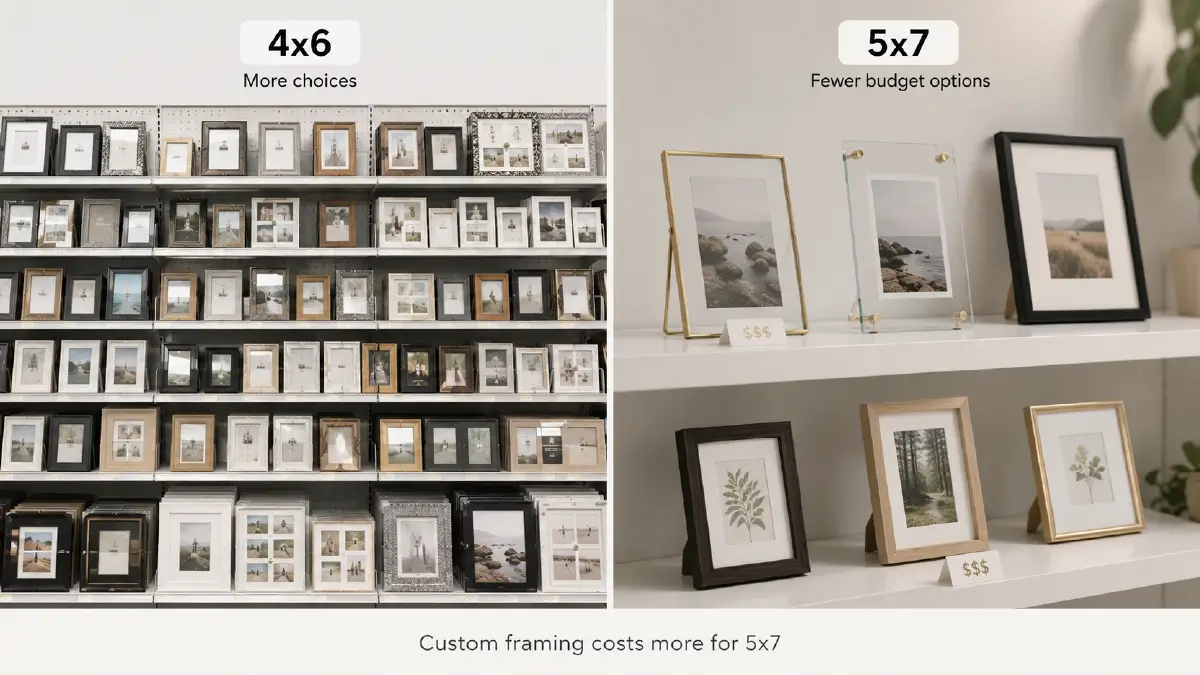
Walk into any Target, Walmart, or home goods store, and you’ll find entire walls of 4×6 frames- cheap ones, nice ones, multi-photo collage frames, magnetic ones. Supply is essentially unlimited.
5×7 frames are common too, but you’ll have fewer choices at the budget end. If you want a specific finish, say, a thin brass frame or a floating acrylic mount, you may need to order online or visit a specialty framing shop.
That’s not a dealbreaker, just a planning consideration. Custom framing for 5×7 is also noticeably more expensive than for 4×6, so factor that in if you’re planning a gallery wall.
Loss of Detail: A Real World Case
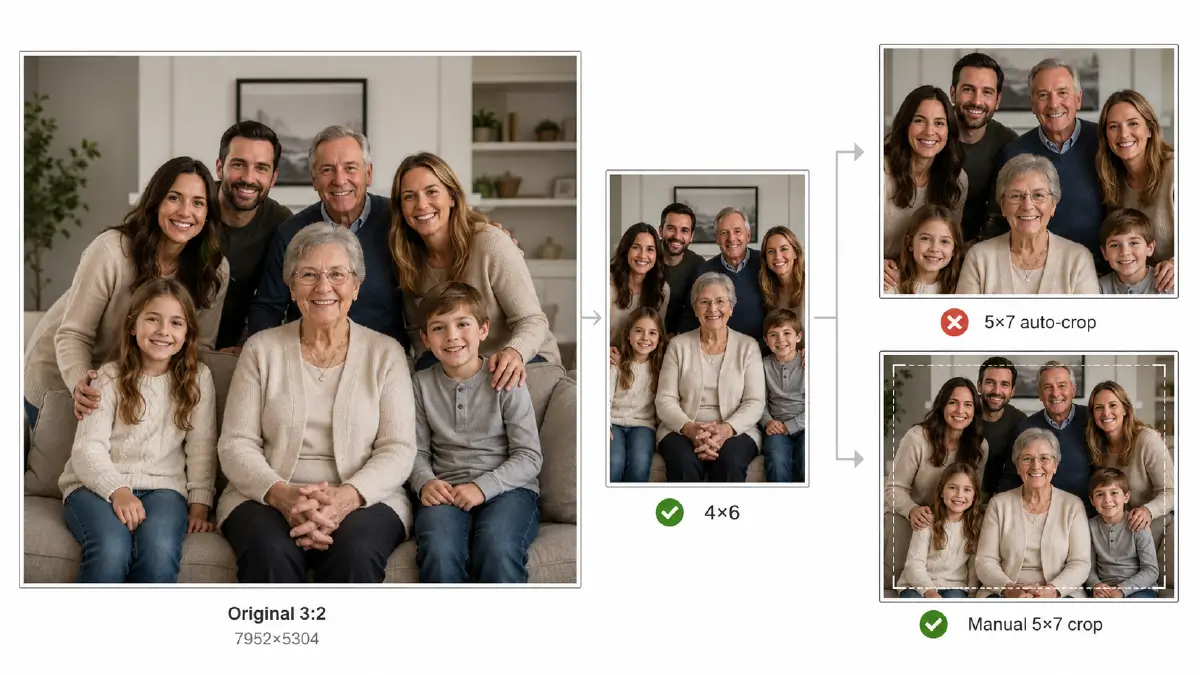
Say you photographed a family portrait with your Sony A7 III (native 3:2 sensor). The image is 7952×5304 pixels. You’ve composed the shot so grandma’s hands clasped together at the bottom of the frame are included because that detail matters to the family.
- At 4×6: Full image prints. Grandma’s hands are in.
- At 5×7: The lab crops 7:5. Depending on how the crop falls, those hands might get trimmed.
The professional solution is to re-crop the image manually before submitting it, centering the composition within the 7:5 frame deliberately. Never let the lab auto-crop a meaningful portrait. Most print services let you preview and adjust the crop before checkout. Always use that tool.
Common Mistakes to Avoid
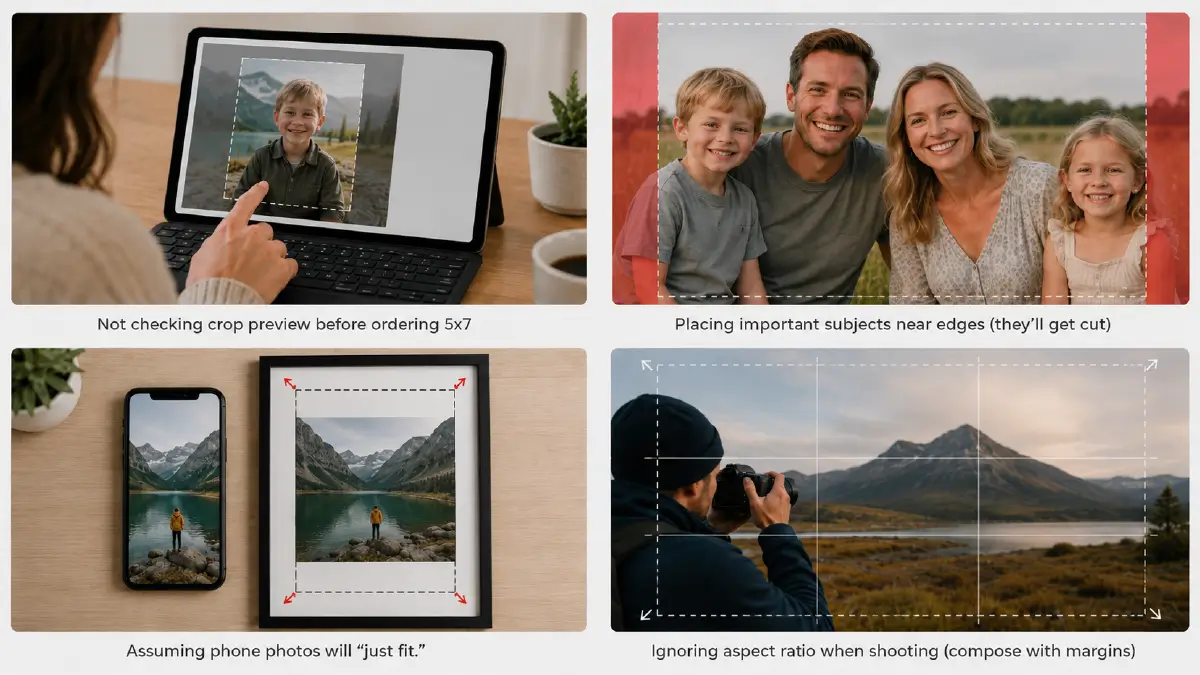
- Not checking crop preview before ordering 5×7
- Placing important subjects near edges (they’ll get cut)
- Assuming phone photos will “just fit.”
- Ignoring aspect ratio when shooting (compose with margins)
Quick Decision Guide
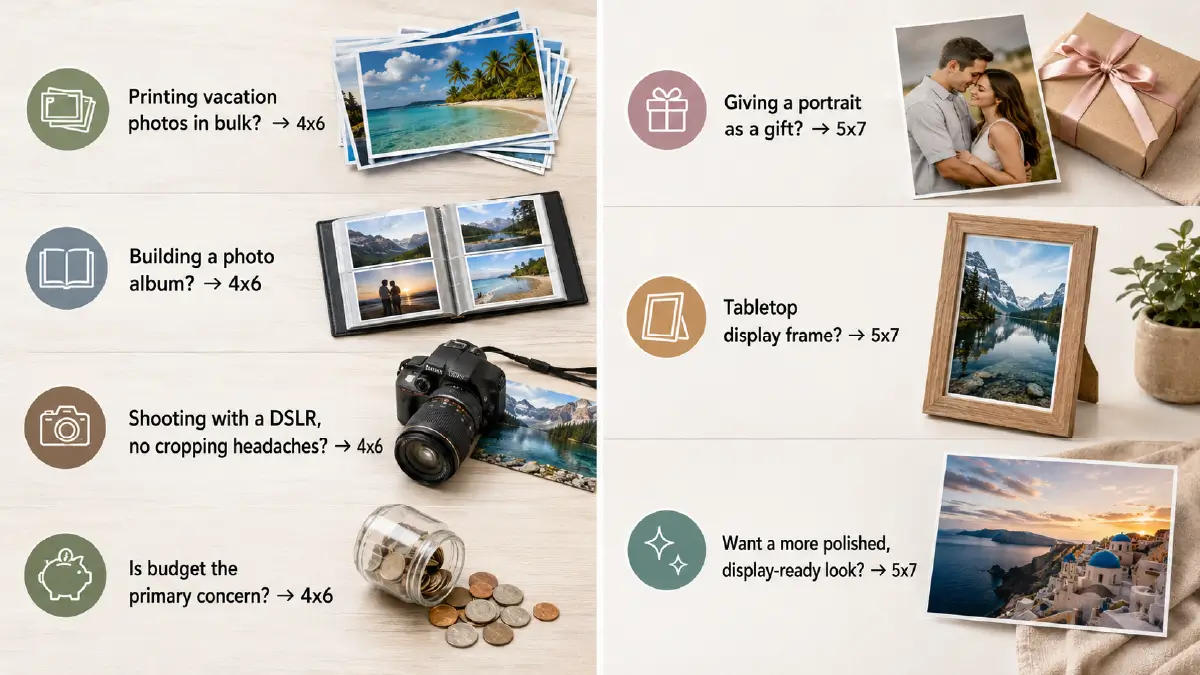
- Printing vacation photos in bulk? → 4×6
- Giving a portrait as a gift? → 5×7
- Building a photo album? → 4×6
- Tabletop display frame? → 5×7
- Shooting with a DSLR, no cropping headaches? → 4×6
- Want a more polished, display-ready look? → 5×7
- Is budget the primary concern? → 4×6
Frequently Asked Questions
1. Is 5×7 bigger than 4×6?
Yes. A 5×7 has 35 square inches of print area versus 24 square inches for a 4×6; that’s about 46% more surface area. The difference is visible and meaningful for display purposes.
2. Will my iPhone photo fit a 4×6 without cropping?
Not perfectly. iPhones shoot in a 4:3 aspect ratio, while 4×6 is 3:2. Some cropping will occur; typically a thin strip from the top and bottom (or sides in portrait mode). It’s minor, but if your subject is near the edge of the frame, check your crop before printing.
3. 5×7 or 4×6; Which size is better for photo albums?
4×6 is the universal standard for photo albums. Most consumer albums, scrapbooks, and photo book layouts are built around 4×6 dimensions. It’s also the default output size for most retail photo kiosks worldwide.
4. Can I print a 5×7 from a DSLR photo without losing quality?
Yes, easily. Modern DSLRs have far more than enough resolution. A 24MP camera produces images around 6000×4000 px; a 5×7 at 300 DPI only requires 2100×1500 px. The issue isn’t resolution; it’s the aspect ratio crop. You’ll lose a sliver of the frame, so compose with that in mind.
5. Can I avoid cropping on 5×7 prints?
Yes, you can, but only if you shoot or edit specifically for the 7:5 ratio. Otherwise, some trimming is unavoidable.