
A 2026 study by EightX found that apparel and clothing tops the eCommerce return rate chart at 25%. The most painful part? A large chunk of those returns aren’t about sizing or quality — they’re about disappointment. The customer expected the product to look exactly like the photo, and it didn’t.
That expectation gap is a photo editing problem. And it’s one that’s entirely fixable.
This guide walks you through the apparel photo editing practices that close that gap, build shopper confidence, and turn hesitant browsers into repeat buyers.
TL;DR: Great apparel photo editing starts with accurate color, moves through background cleanup and wrinkle removal, and peaks with the ghost mannequin effect. Done right, it reduces returns and drives conversions — consistently.
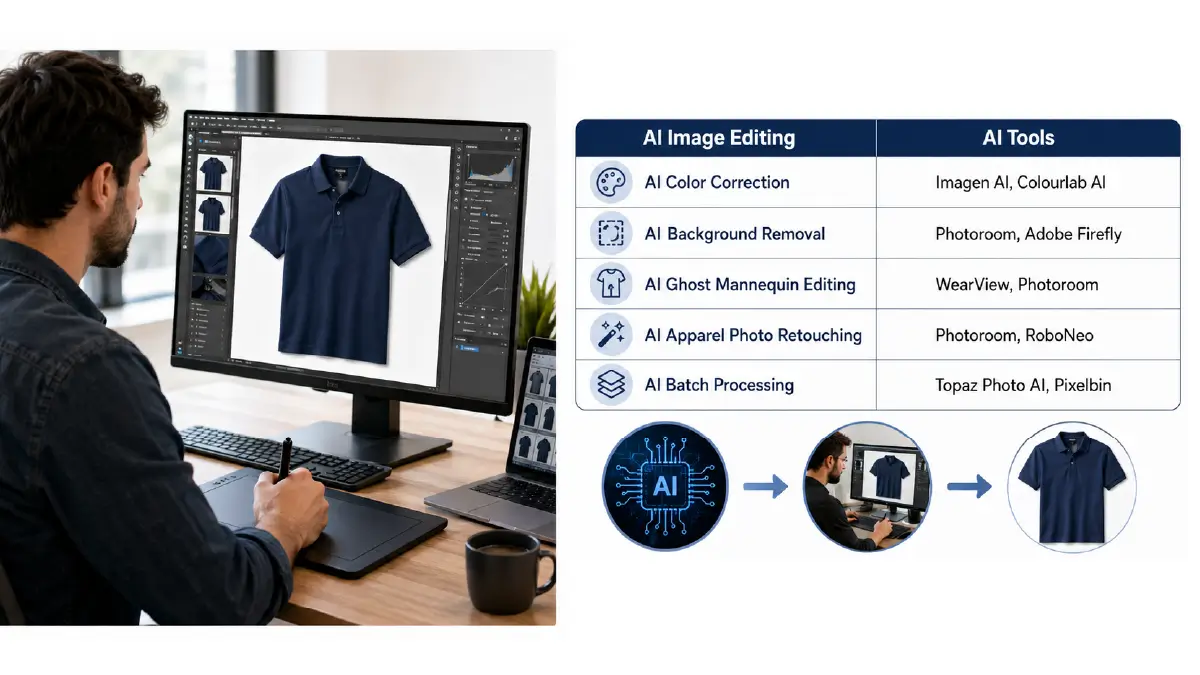
Start With Accurate Color Correction
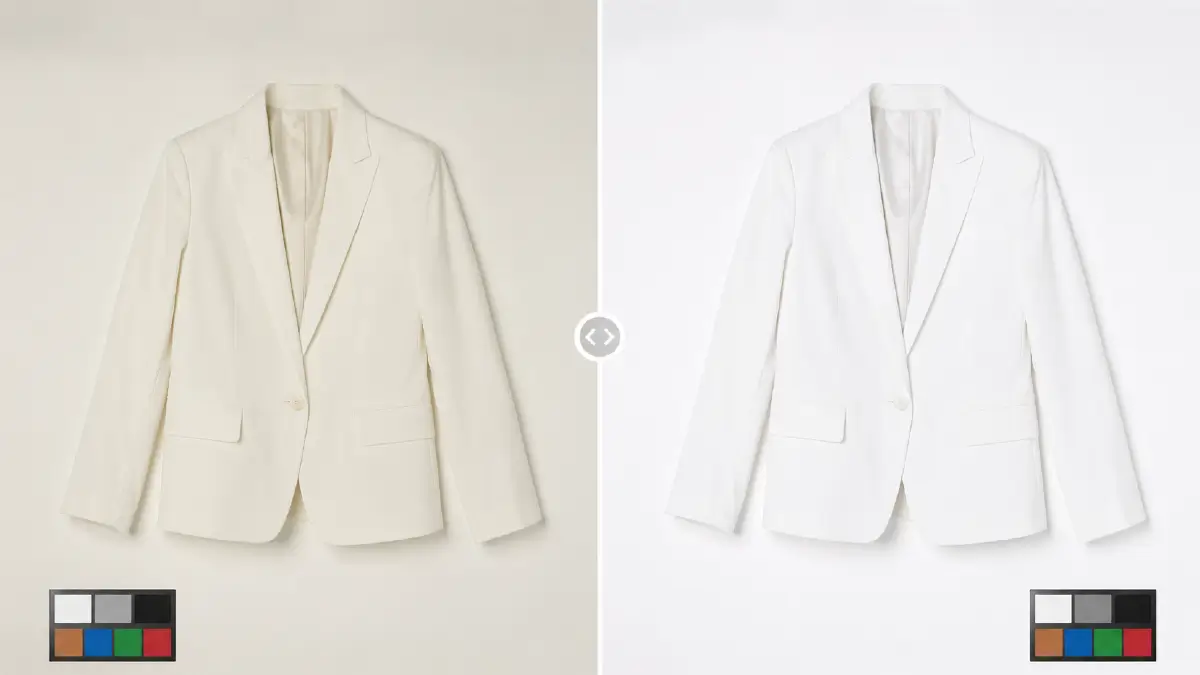
Color is the first thing a shopper notices, and the first reason they’ll return a product. If the burgundy blazer looks cherry red on screen, expect it back in the mail.
Skilled retouchers always start by adjusting white balance at a global level to neutralize any environmental color cast picked up during the shoot — whether that’s warm studio lighting or cool daylight from a window. The goal is a neutral baseline where whites look white and grays look gray. From there, individual hue and saturation adjustments bring the product color in line with its real-world appearance.
This isn’t about making the product look better than it is. It’s about making it look exactly as it is — which is what earns customer trust.
Remove Distractions With Clean Background Editing
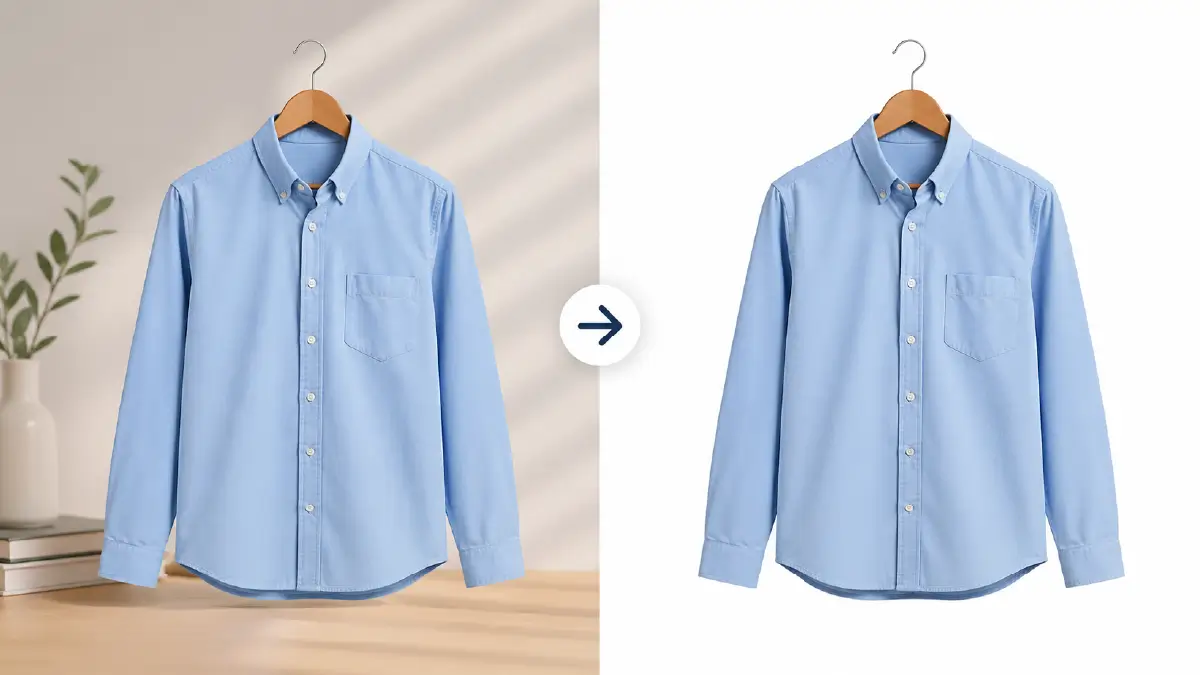
Most major eCommerce marketplaces — Amazon, Zalando, ASOS — require a clean white background for a reason. It removes visual noise and puts 100% of the viewer’s attention on the product itself.
The process typically begins with background removal, isolating the garment from whatever environment it was shot in. Once the product is cleanly separated, the background is replaced with a pure white or neutral tone, and any stray shadows, reflections, or surface blemishes are cleaned up.
The result is a product image that looks sharp, professional, and marketplace-ready — on any screen, at any size.
Use Ghost Mannequin Editing for a Better Fit View
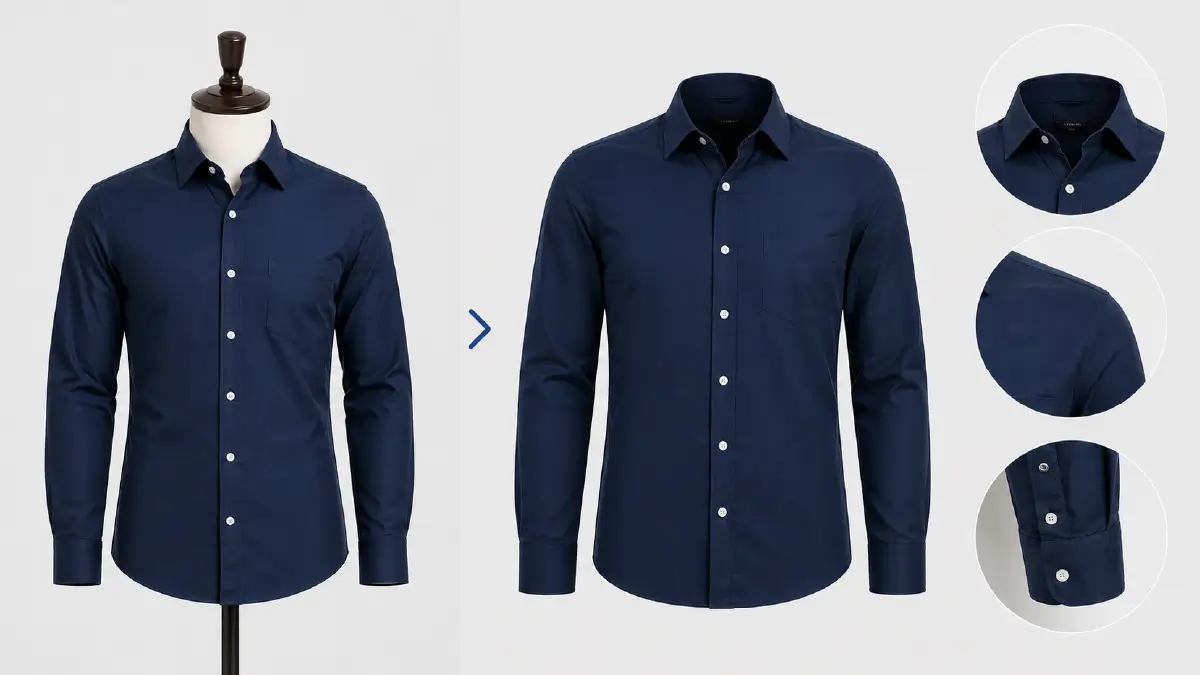
Flat-lay photos show a garment. Ghost mannequin photos show how a garment fits. That’s a meaningful difference for shoppers trying to visualize themselves in a product.
The ghost mannequin effect — also called the invisible mannequin or hollow man effect — works by photographing the garment on a model or mannequin, then editing out the figure entirely in post-production. Editors typically combine multiple shots (front, back, interior label) to reconstruct a seamless 3D shape that appears to float naturally in space.
The payoff is significant: shoppers can clearly see the neckline, shoulder structure, sleeve shape, and interior construction — all without the distraction of a model. It’s one of the most conversion-friendly edits in fashion eCommerce.
Refine Wrinkles, Texture, and Fabric Details
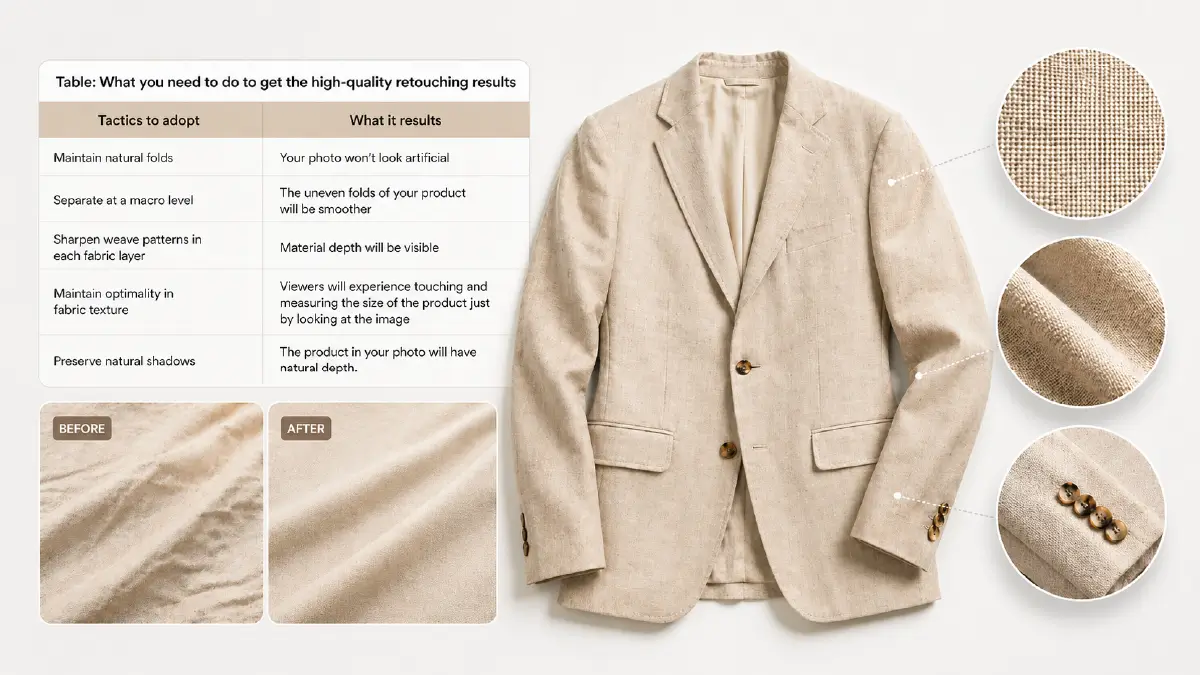
Even a beautifully styled product can look cheap if the photo shows creases, uneven folds, or muddy fabric texture. Retouching at this level is what separates catalog-quality images from everything else.
The goal isn’t to make the garment look wrinkle-proof — it’s to make it look well-presented. Natural folds and drape should be preserved; only the distracting, accidental wrinkles get smoothed out. Here’s a quick breakdown of what high-quality fabric retouching looks like in practice:
| Technique | What It Achieves |
|---|---|
| Maintain natural folds | Keeps the image looking realistic, not artificial |
| Smooth uneven drape | Garment looks properly fitted and neat |
| Sharpen weave patterns | Material depth and fabric quality become visible |
| Optimize fabric texture | Shoppers can almost feel the material through the screen |
| Preserve natural shadows | Product retains dimensional, lifelike depth |